
TASTY HANGUL · KOREAN FOOD GUIDE
Quick Help: Sikgu Q&A #1
- Bulgogi vs. galbi: it’s all about the cut of meat!
- Dak bulgogi: not a name you hear very often!
- Ramyeon vs. ramen: ramyeon is instant; ramen is a broth dish made at the restaurant.
- Banban chicken: two flavors, half a chicken each!
- Guk, jjigae, tang: guk is all about the broth, jjigae is ingredients and broth together, and tang is ingredients simmered for deep flavor.
- Kimchi jjigae vs. kimchi jjim: the amount of broth! Jjim has very little.
Hey, Sikgu!
Wondering what “Sikgu” means? Find out here →
Today, let’s tackle the Korean foods that are easy to mix up.
You know those “Wait, what is this??” moments? I’ll explain them the easy way, from a Korean’s point of view.
Q1. Bulgogi vs. Galbi: What’s the Difference?
It’s the cut of meat!
The biggest difference between bulgogi and galbi is the cut of meat.
Galbi is beef or pork ribs. Bulgogi is beef — cuts like loin, chuck, or shoulder — sliced thin and marinated. Walk into a butcher shop and you’ll really see it: the two dishes use completely different cuts.
Both use a soy sauce–based marinade, so they’re similar there. But because the cuts are fundamentally different, they taste different too.
And galbi can be grilled, braised, or made into soup, while bulgogi is mostly grilled~~
Q2. Is Dak Bulgogi (Chicken Bulgogi) Bulgogi Too?
It’s not a name you hear very often!
Honestly, I’d never heard of dak bulgogi before, but apparently it’s everywhere outside Korea. If you marinate chicken in a soy sauce–based sauce and stir-fry or grill it, why not call it that??
But when you come to Korea, give dakgalbi and dakbokkeumtang a try, hehe.
They’ll open your eyes to a whole new flavor.
Q3. Ramyeon vs. Japanese Ramen: What’s the Difference?
They’re different! Ramyeon is instant; ramen is a broth dish made at the restaurant.
Totally different!!! Korean ramyeon is usually instant noodles made by big companies, and its flavor comes from the soup packet in the bag. Japanese ramen, on the other hand, is built on broth the restaurant simmers for hours, like tonkotsu.
And go to any Korean supermarket and you’ll find a huge variety of ramyeon.
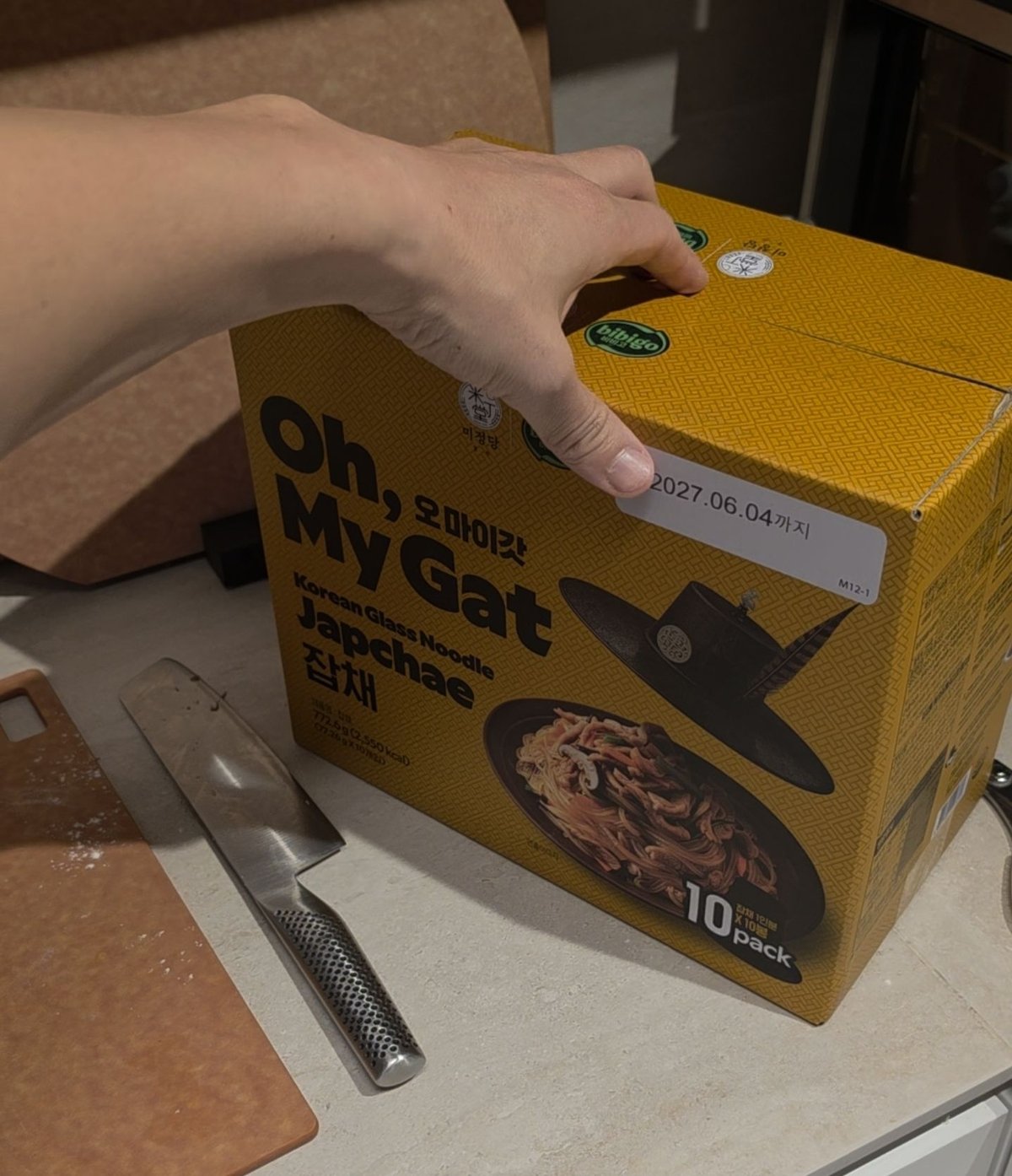
There’s even japchae that comes like instant ramyeon!!! Like bibigo’s “Oh My Gat Japchae,” sold at Korean Costco.
Q4. What Is Banban Chicken?
It’s chicken where you order two flavors, half a chicken each!
Banban chicken!!! The hint is in the name.
Banban = half and half
LET’S READ HANGUL
반반 banban
| 반 ban ㅂ + ㅏ + ㄴ | 반 ban ㅂ + ㅏ + ㄴ |
반반 = 반 + 반
반 = ㅂ + ㅏ + ㄴ · b + a + n → ban
반반 banban
In other words, you can build one whole chicken from half + half, in whatever flavors you want.
Pretty great, right??
- Half yangnyeom + half fried
- Half soy sauce + half yangnyeom
It doesn’t have to include fried chicken — any flavors you like can go banban.
Just note that, depending on the shop, some charge extra compared to a regular whole chicken.
SAY THIS
양념 반 후라이드 반 주세요.
Yang-nyeom ban huraideu ban juseyo.
Half yangnyeom, half fried, please.
Q5. Jjigae, Guk, and Tang: What’s the Difference?
Wow, this one’s tough. Jjigae, guk, tang…
Koreans just tell them apart by feel, so trying to explain it is actually hard!
Going simply by feel:
| Type | What’s the star? / Examples |
|---|---|
| 국 Guk | The broth is the star! 미역국 miyeokguk, 콩나물국 kongnamulguk |
| 찌개 Jjigae | The ingredients are the star! 김치찌개 kimchi-jjigae, 된장찌개 doenjang-jjigae |
| 탕 Tang | Ingredients simmered long for deep flavor! 갈비탕 galbitang, 삼계탕 samgyetang, 설렁탕 seolleongtang |
Think of it this way:
“With guk, you eat the broth. With jjigae, you eat the ingredients and broth together. With tang, you enjoy the flavor drawn out by simmering the ingredients for a long time!”
LET’S READ HANGUL
Look at the end of the menu name:
국 guk
| 국 guk ㄱ + ㅜ + ㄱ |
미역국 · miyeokguk
찌개 jjigae
| 찌 jji ㅉ + ㅣ | 개 gae ㄱ + ㅐ |
김치찌개 · kimchi-jjigae
탕 tang
| 탕 tang ㅌ + ㅏ + ㅇ |
갈비탕 · galbitang
Q6. Kimchi Jjigae vs. Kimchi Jjim: What’s the Difference?
The amount of broth! Jjim has very little.
Kimchi jjigae and kimchi jjim are… hmm… a little alike, but different.
Try them at a restaurant and you’ll get it.
First, kimchi jjigae sometimes comes out of the kitchen ready to eat, and sometimes you cook it yourself at the table.
Kimchi jjim almost always comes out already cooked. That’s because kimchi and pork have to be slow-braised for a long time before it’s done.
And compared to jjigae, jjim has very little broth.
Also, kimchi jjigae comes in different kinds, like pork or tuna, but kimchi jjim is mostly kimchi slow-braised with pork.
So, Sikgu! Can you tell them apart a little better now??
More Korean Food Guides
- Sikgu Q&A #1 (You are here)
- All Korean Food Guides