If there’s one dish that deserves to be called Korean comfort food, kimchi jjigae (김치찌개) is definitely one of them!
Korea has all kinds of stews, but two stand out as all-time favorites: kimchi jjigae and doenjang jjigae (soybean paste stew).
Kimchi jjigae or doenjang jjigae?
Now that’s a tough choice, even for Koreans!
Let me ask you something.
When you come home from a long trip abroad, what’s the first food you crave?
For me, it’s a steaming bowl of spicy, tangy kimchi jjigae.
It’s the kind of food Koreans grow up eating at home, and you’ll find it in countless neighborhood restaurants across the country.
If you’re visiting Korea, I really hope you’ll give it a try!
So, let’s talk about kimchi jjigae!
What Exactly Is Kimchi Jjigae?
Korean food names are often surprisingly straightforward.
Many dishes are named after their main ingredients.
김치 (Gimchi) + 찌개 (Jjigae) = Kimchi Stew!
Pretty simple, right?
But does that mean you just throw some kimchi into a pot of water and call it a day?
Haha, not quite!
There are several kinds of kimchi jjigae, but two are especially popular.
Pork Kimchi Jjigae vs. Tuna Kimchi Jjigae!
Here are the Korean names you might see on a menu.
| Hangul | How to say it | English meaning |
|---|---|---|
| 김치찌개 | Gimchi-jjigae | Kimchi stew |
| 돼지고기 김치찌개 | Dwaejigogi gimchi-jjigae | Pork kimchi stew |
| 참치 김치찌개 | Chamchi gimchi-jjigae | Tuna kimchi stew |
| 라면 사리 | Ramyeon sari | Extra ramen noodles |
Pork kimchi jjigae can be made with different cuts of pork, including pork belly, pork shoulder, and other cuts. Each adds a slightly different flavor and texture.
And tuna kimchi jjigae?
No, we’re not talking about the fresh tuna you’d find at a sushi restaurant!
We’re talking about good old canned tuna!
Pork gives the stew a rich, meaty flavor, while tuna adds its own savory taste.
Both are delicious in their own way.
Which one would you choose?
Can You Read This? Let’s Learn Some Hangul!
Here’s a Korean word you’ll see on lots of menus: 찌개 (jji-gae) — stew.
Hangul letters fit together into syllable blocks. Look!
ㅉ + ㅣ → 찌
ㄱ + ㅐ → 개
Put them together: 찌 + 개 → 찌개 (jji-gae, stew).
Now try finding those two blocks at the end of 김치찌개 (gimchi-jjigae, kimchi stew)!
And what about 된장찌개 (doenjang-jjigae, soybean paste stew)? Yep, the same ending!
You just learned to recognize a word that shows up in more than one Korean dish. Nice!
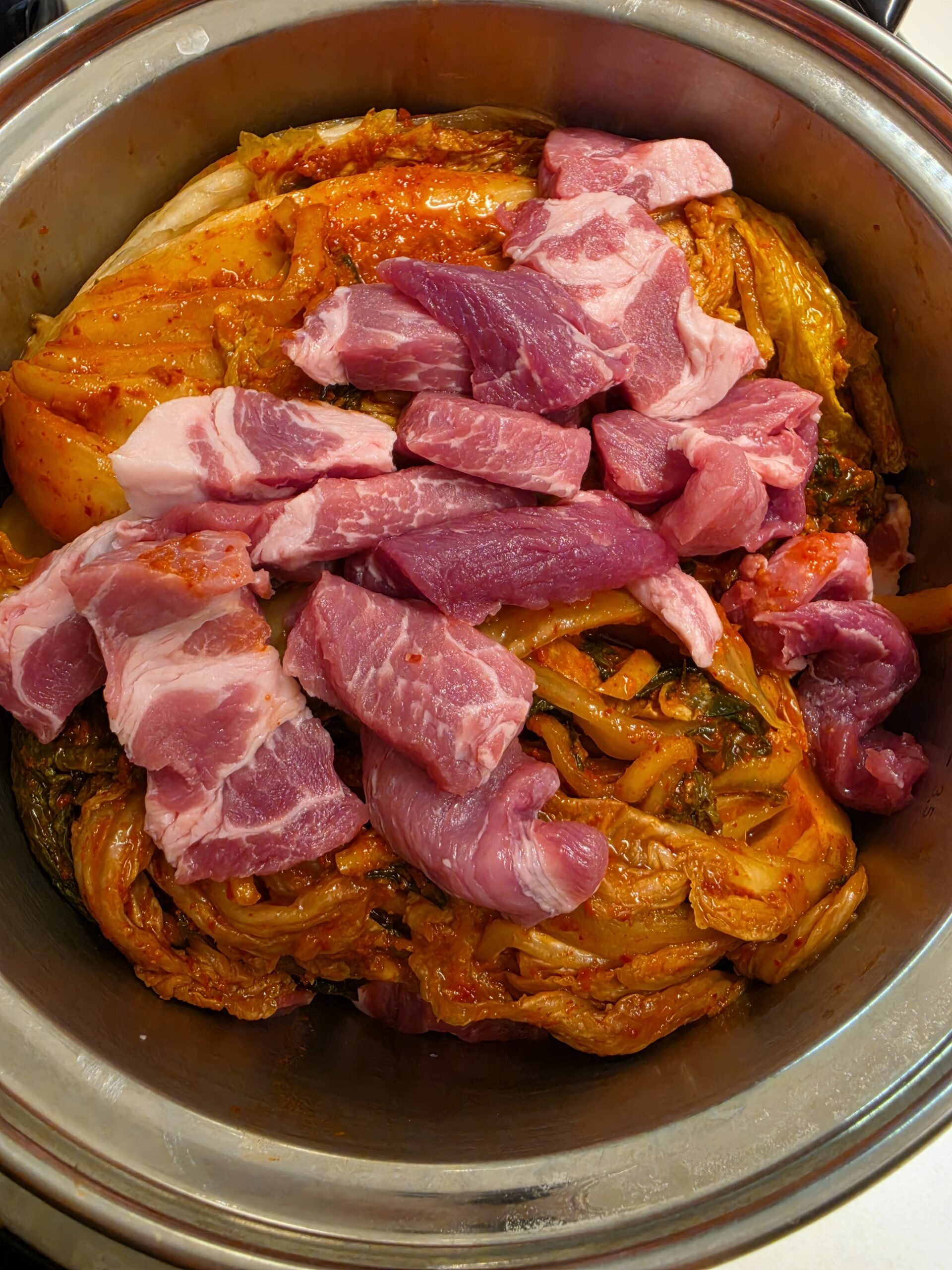
Why Does Kimchi Jjigae Taste Tangy?
If it’s your first time trying kimchi jjigae, its combination of sour and spicy flavors might surprise you.
But that’s exactly what makes it special!
Kimchi is a fermented food.
As it ferments over time, it develops a stronger sour taste.
Koreans call this well-fermented, sour kimchi sin-kimchi (신김치).
And it’s one of the secrets to a great kimchi jjigae.
When the tanginess of fermented kimchi meets the rich flavor of pork, you get a wonderfully bold, flavorful broth.
That’s also why kimchi jjigae tastes a little different from one home or restaurant to another.
Some versions are tangier, while others have a deeper, meatier flavor.
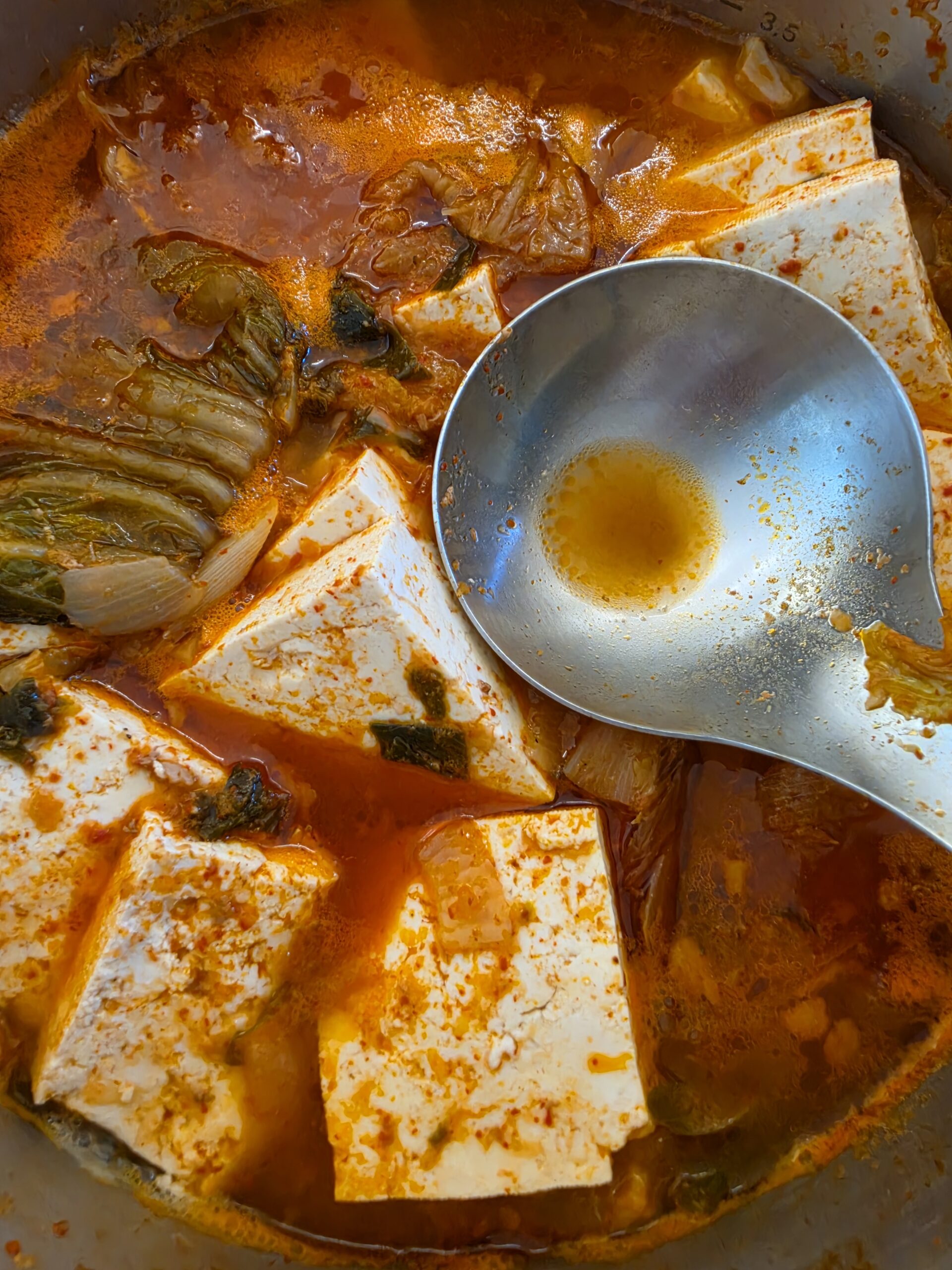
This is a pot of pork kimchi jjigae I made at home.
In Korea, every household has its own way of making this dish, often with slightly different ingredients and flavors.
Ordering Kimchi Jjigae in Korea: What You Should Know
Here’s something worth knowing before you walk into a restaurant.
Not every restaurant serves kimchi jjigae the same way!
At a typical Korean neighborhood restaurant, you might get an individual portion served bubbling hot in a small pot, along with rice and side dishes.
But at some restaurants specializing in kimchi jjigae, a large pot is brought to your table, where the stew continues cooking right in front of you.
A bit like Korean-style hot pot!
These places sometimes require a minimum order for two people.
So if you’re traveling alone, here’s a useful question:
| Hangul | How to say it | English meaning |
|---|---|---|
| 김치찌개 1인분 되나요? | Gimchi-jjigae irinbun doenayo? | Can I order kimchi jjigae for one person? |
| 돼지고기 추가 | Dwaejigogi chuga | Extra pork (menu option) |
| 라면 사리 하나 추가해 주세요! | Ramyeon sari hana chugahae juseyo! | One order of extra ramyeon noodles, please! |
One more thing!
Some restaurants include rice with your stew, while others charge separately for it.
It’s worth checking the menu before ordering.
And if you love meat as much as I do, look for the extra-pork option on the menu.
A little extra pork never hurts!
How to Make Kimchi Jjigae Even More Delicious!
All right! Your kimchi jjigae has arrived.
It’s already delicious on its own.
But pair it with a few good friends, and things get even better!
Here are some of my favorite ways to enjoy it.
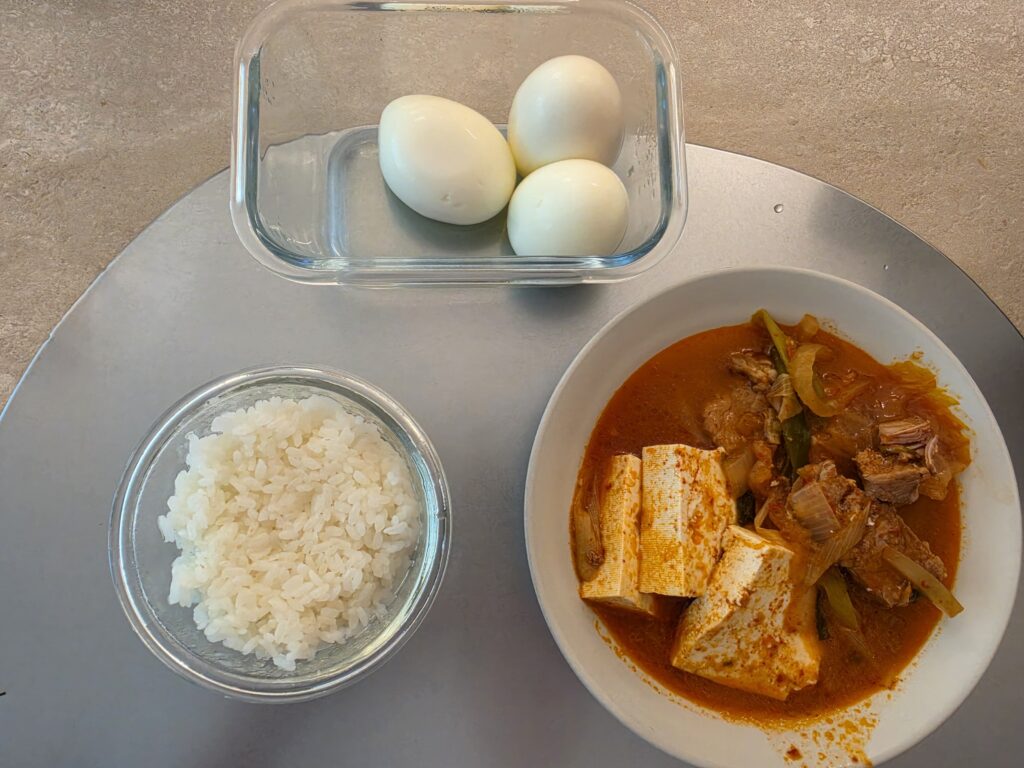
1. Steamed Rice: Kimchi Jjigae’s Best Friend!
First things first. Rice!
Take a bite of warm, fluffy rice, followed by a spoonful of kimchi jjigae.
Simple. Delicious.
But here’s another way to try it.
Scoop a little rice into your stew and mix it with the broth.
As the rice soaks up that spicy, tangy flavor, it becomes a completely different experience!
2. Tofu: The Unsung Hero!
There’s one ingredient you’ll often find in Korean stews.
Tofu!
Soft tofu soaks up the rich flavors of kimchi jjigae beautifully.
But I have an even better way to enjoy it.
Tofu + Pork + Kimchi!
Stack all three together and take one big bite.
The soft tofu, savory pork, and tangy kimchi are an amazing combination.
Oh, that’s good!
3. Fried Eggs and Roasted Seaweed: An Unexpectedly Perfect Match!
Fried eggs with kimchi jjigae?
Sounds a little unusual?
Well, trust me on this one!
When I was a kid, all I needed was kimchi jjigae, rice, and a fried egg to finish an entire bowl of rice.
The rich, mild flavor of the egg goes so well with the spicy stew.
And if you have some gim (김), Korean seasoned roasted seaweed, even better!
Wrap a little rice in the seaweed, take a bite, follow it with some kimchi jjigae, and then a bite of fried egg.
Wow!
It’s like a little party in your mouth!
Of course, not every restaurant serves fried eggs or roasted seaweed with kimchi jjigae.
But if you get the chance, give this combination a try!
One More Friend of Kimchi Jjigae: Ramyeon!
Oh! I almost forgot something important!
Ramyeon sari (라면 사리)!
If you’re eating at a kimchi jjigae restaurant where the stew cooks at your table, check whether they offer ramyeon sari.
Here’s how I recommend enjoying it.
First, enjoy your kimchi jjigae with rice.
Have some pork, kimchi, and that delicious broth.
Take your time and enjoy the stew as it is.
Then, once you’ve eaten a good portion of it…
Here’s what to say!
라면 사리 하나 추가해 주세요!
Ramyeon sari hana chugahae juseyo!
One order of extra ramyeon noodles, please!
Ramyeon sari means an extra portion of instant ramen noodles, usually without the seasoning packet.
If the restaurant offers it, add the noodles to the remaining stew and let them cook in the broth.
As the noodles absorb all that rich kimchi flavor…
You’ve got a whole new dish!
First, you enjoyed kimchi jjigae with rice.
Now you’re enjoying it with noodles!
Same stew, completely different experience.
Not every restaurant offers ramyeon sari, of course.
But if you spot it on the menu at a place where you cook the stew at your table, I highly recommend giving it a try!
Next time you’re looking at a Korean menu, see if you can spot a word you recognize from the tables above. You don’t have to read everything — recognizing just one dish is a great start!
One Korean word at a time. One delicious meal at a time.