Hey, Sikgu!
Wondering what “Sikgu” means? Find out here →
Today’s dish is bulgogi (불고기).
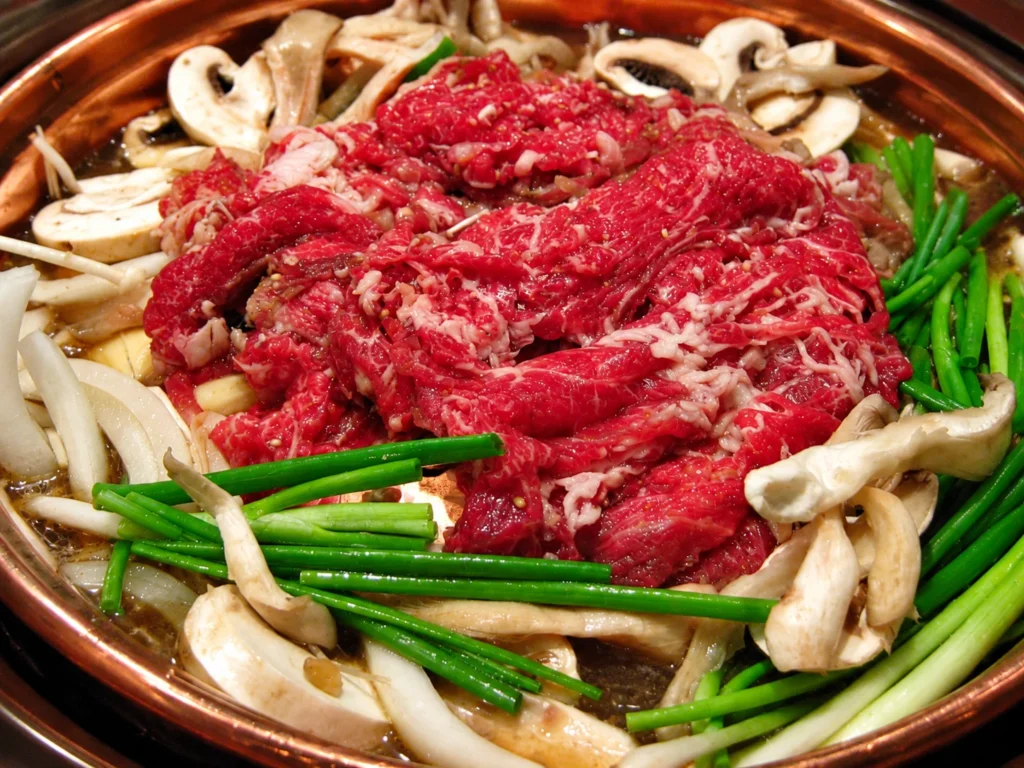
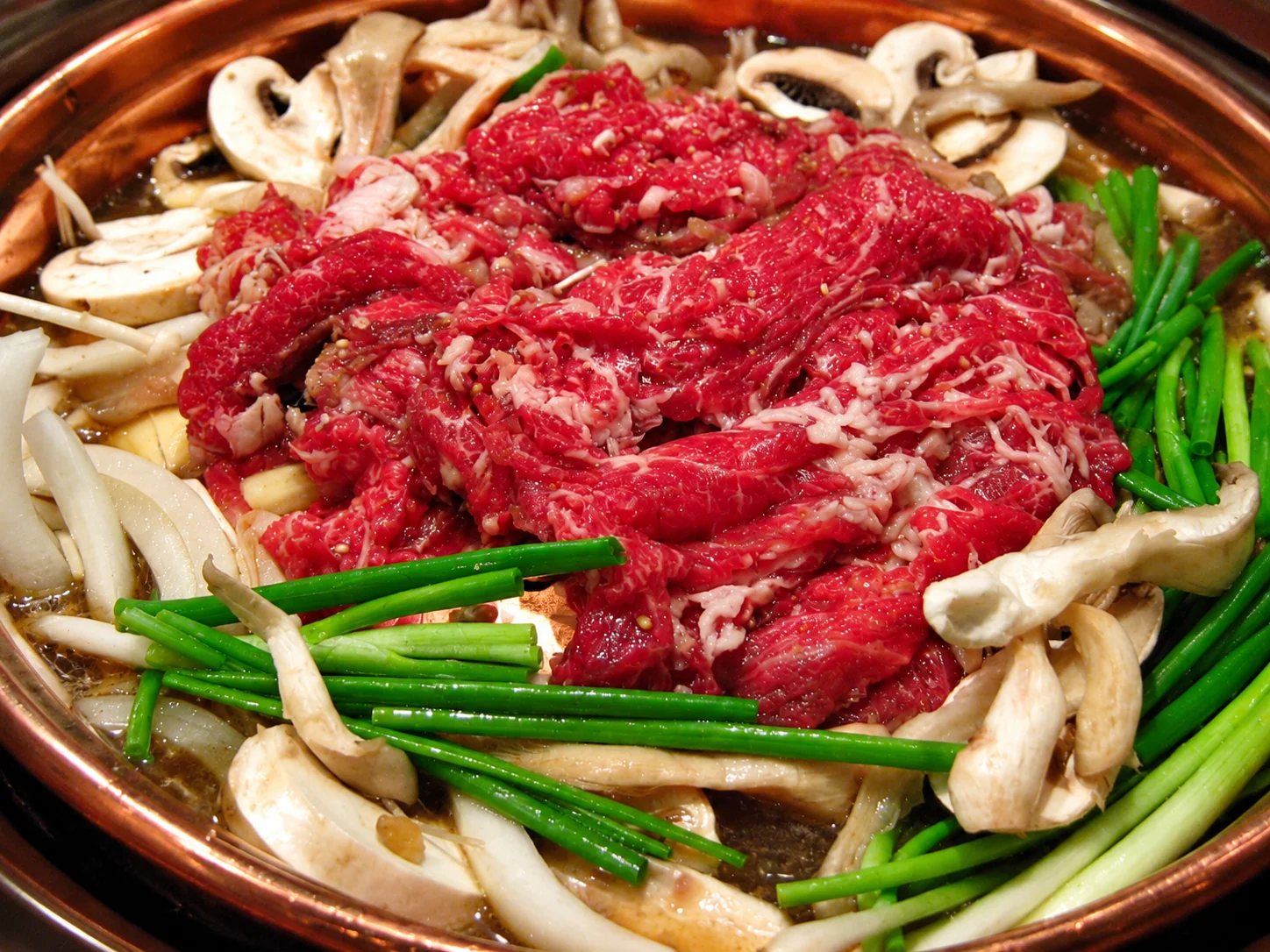
Bulgogi · Photo: ayustety / Wikimedia Commons (CC BY-SA 2.0). AI-edited adaptation, shared under the same license.
It’s thinly sliced beef marinated in a sweet-and-savory soy-based sauce, then cooked until tender.
But here’s the twist: at a restaurant it cooks on a grill, at home it goes in a pan, and sometimes it comes swimming in broth. Same bulgogi—three different looks?
1. Bulgogi—Can You Read the Name?
Korean food names often give you a clue. Bulgogi is a good example!
Read the Korean menu
불고기
Bulgogi
Marinated beef
불
bul · ㅂ + ㅜ + ㄹ
고
go · ㄱ + ㅗ
기
gi · ㄱ + ㅣ
Put it together: 불 + 고 + 기 = 불고기 (bulgogi)
A clue in the name: 불 (bul) = fire + 고기 (gogi) = meat.
Want to read more Korean menus? Visit our beginner Hangul guide.
On a menu, bulgogi usually means marinated beef. There’s also pork bulgogi (돼지불고기 · dwaeji bulgogi · marinated pork), but today we’re talking about beef.
2. What’s That Dome-Shaped Grill?
Some bulgogi restaurants use a round grill with a raised center. Thin slices of marinated beef and onions cook on top, while the sweet-and-savory juices collect around the edge.
Quite different from grilling plain pork belly, right? Not every restaurant uses the same grill or cooking method.
3. Three Easy Ways to Enjoy Bulgogi
1. With warm white rice!
Put a little bulgogi on a spoonful of rice and eat them together. Sweet, savory, and so good!
2. Make a ssam (쌈)!
Wrap bulgogi and a dab of ssamjang (쌈장, Korean dipping paste) in lettuce. One delicious bite!
3. Try it with naengmyeon!
Cool off with mul-naengmyeon (물냉면, cold noodles in chilled broth). Save a bite of bulgogi to eat with the noodles!
Lettuce and cold noodles aren’t available at every bulgogi restaurant.
4. But at Home, Bulgogi Looks Different!
In Korean homes, we often skip the special grill and cook bulgogi in a frying pan or wok with onions and other vegetables. Sometimes a little sauce collects in the pan.
Mix that leftover sauce into rice—so good! And if you have bread, try turning your bulgogi into a sandwich.
5. Ttukbaegi Bulgogi? What’s That?
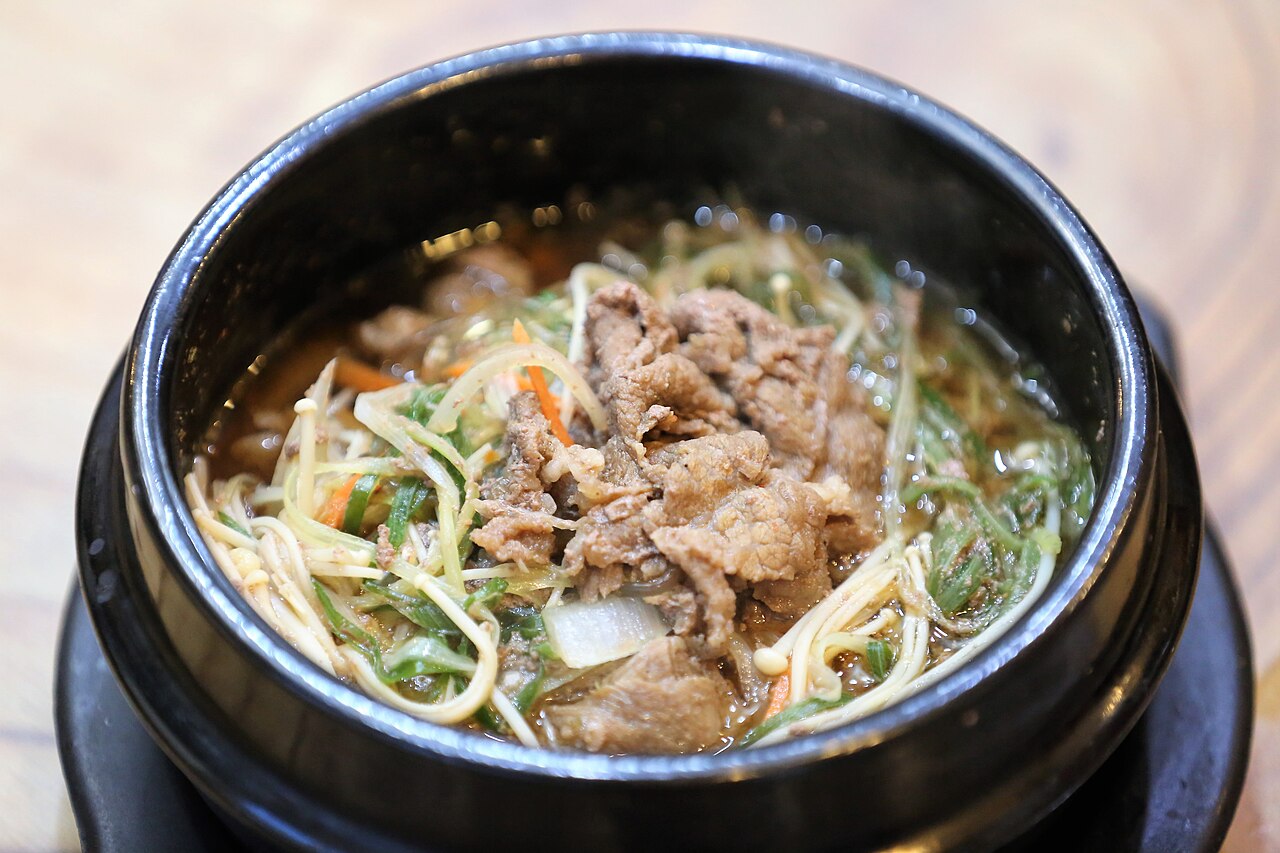
Ttukbaegi bulgogi · Photo: hyun chun kim / Wikimedia Commons (CC0).
Eating alone and spotted ttukbaegi bulgogi on the menu? Good news!
Read the Korean menu · One new word
뚝배기불고기
Ttukbaegi bulgogi
Bulgogi in an earthenware pot
뚝
ttuk · ㄸ + ㅜ + ㄱ
배
bae · ㅂ + ㅐ
기
gi · ㄱ + ㅣ
New word: 뚝배기 (ttukbaegi) = earthenware pot
Put them together: 뚝배기 + 불고기 = 뚝배기불고기.
It’s a single-serving meal of bulgogi, vegetables, and flavorful broth in a hot pot. Enjoy the beef, then add some rice to the broth. Ahh—comfort food!
Koreans sometimes shorten its name to ttukbul (뚝불). It’s a great choice if you want bulgogi without gathering around a tabletop grill.
6. Now, Order It in Korean!
All right, Sikgu! Found bulgogi on the menu? Try saying one of these phrases out loud.
Ordering three servings of bulgogi
Use this after finding bulgogi on the menu.
불고기 3인분 주세요.
Bulgogi sam-inbun juseyo.
Three servings of bulgogi, please.
Asking for more lettuce
상추 좀 더 주실 수 있을까요?
Sangchu jom deo jusil su isseulkkayo?
Could we have some more lettuce, please?
Ordering like a local: “Ttukbul!”
뚝불 하나 주세요!
Ttukbul hana juseyo!
One ttukbul, please!
Local tip: “Ttukbul” is a nickname, and not every restaurant uses it. If you’re unsure, say the full menu name: ttukbaegi bulgogi (뚝배기불고기).
On a domed grill, in a home frying pan, or bubbling in an earthenware pot—bulgogi has more than one delicious side!
Next time you’re in Korea, try reading the menu and ordering it yourself.