Hey, Sikgu!
Wondering what “Sikgu” means? Find out here →
Finally! We’re talking about something you probably know already.
RAMYEON!!!
Remember how 면 (myeon) means noodles?
But wait! Don’t mix it up with Japanese ramen. In Korea, we’re talking about ramyeon (라면)—usually instant noodles, and a whole lot of delicious memories.
LET’S READ HANGUL
라면
ramyeon
Korean instant noodles
라
ra · ㄹ + ㅏ
면
myeon · ㅁ + ㅕ + ㄴ
The final ㄴ in 면 is a batchim (final consonant). Put the syllables together: 라 + 면 = 라면 (ramyeon)! Explore our Hangul reading guide for more.
Now, here’s a question: when does ramyeon taste its absolute best?
- After a long day of swimming!
- After a grueling 40-kilometer military training march carrying a full pack!
Ask someone who’s served in the Korean military, and they might have a hard time choosing. It’s like being asked, “Who do you love more, Mom or Dad?” Impossible! Haha!
Ramyeon, Ramyeon Everywhere… But Which Kind?
Two Keys to Understanding Korean Ramyeon
STEP 1 · How is it packaged?
봉지 vs 컵
bongji vs keop
Packet vs Cup
STEP 2 · Broth or no broth?
국물 vs 비빔
gungmul vs bibim
Brothy vs Mixed (no broth)
These are two different ways to sort ramyeon. Today, we’re sticking with the classic: packet ramyeon served in a hot broth!
Ramyeon at a Bunsikjip? Get Gimbap Too!
Two familiar names are Shin Ramyun and Jin Ramen. Shin is spicy, while Jin comes in both spicy and mild versions. Plenty of Korean ramyeon is hot, so check before you pick!
Traveling in Korea and craving a freshly cooked bowl? Try a 분식집 (bunsikjip · casual Korean snack eatery).
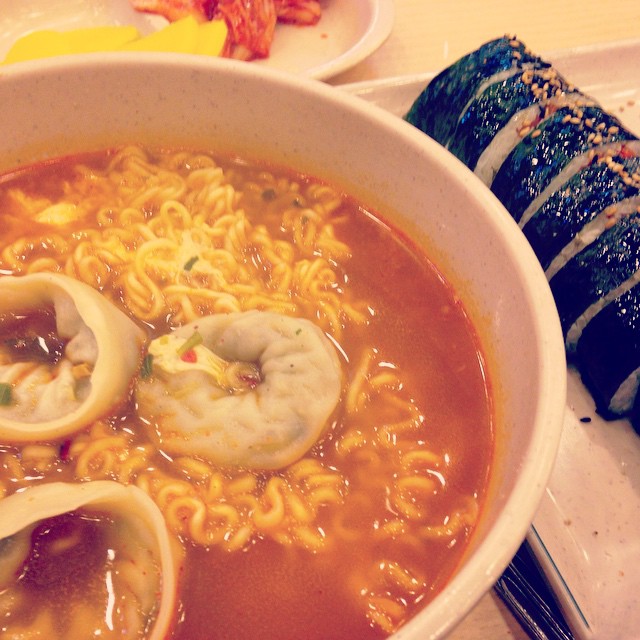
Remember the combo from our gimbap article? Ramyeon + gimbap! Dip a piece of gimbap into that spicy broth. A little dip, a whole new flavor!
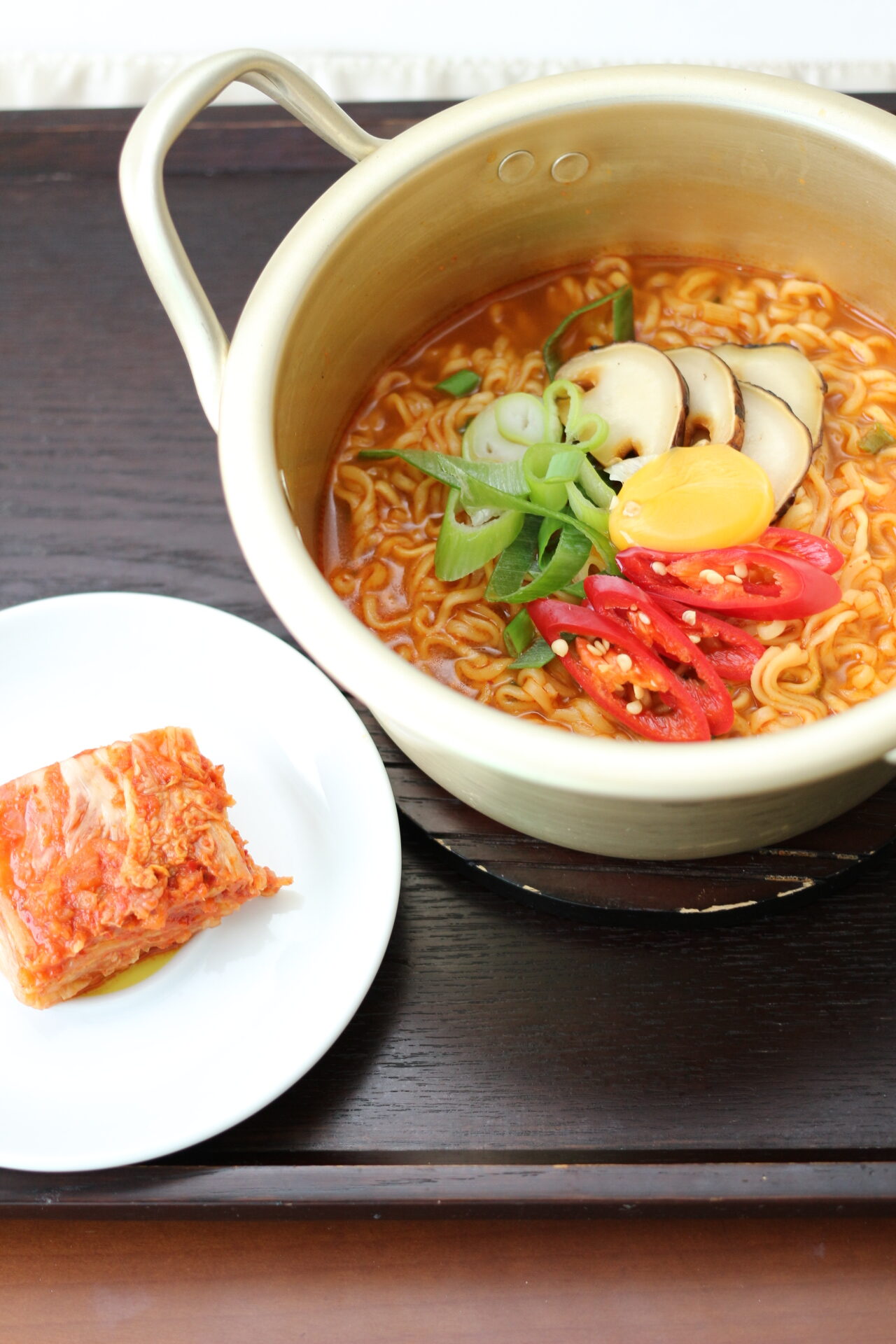
Making It Yourself? Here’s My Little Trick!
Do you have to go to a restaurant for ramyeon? Nope, nope! If your accommodation has a kitchen, grab a packet and give this a try.
| Step | How I cook and eat my ramyeon |
|---|---|
| ① Water | Use the amount written on the packet. |
| ② Noodles | Once the water boils, add the noodles, soup powder, and dried vegetables. |
| ③ Egg | Add an egg and let it set like a poached egg. Keep that yolk intact! |
| ④ Final 30 seconds | Turn off the heat 30 seconds early, cover the pot, and let it rest for 30 seconds. |
| ⑤ Time to eat | First, taste the noodles and broth. Then lift some noodles and the egg into a separate small bowl. Break the yolk there and mix it into the noodles. |
| ⑥ Finish strong | Kimchi is a must! Still hungry? Add a little rice to the leftover broth. |
One rule: NEVER break that yolk in the soup! I want my broth nice and clear.
This is just how I like mine. Cooking instructions vary by product, so check your packet first.
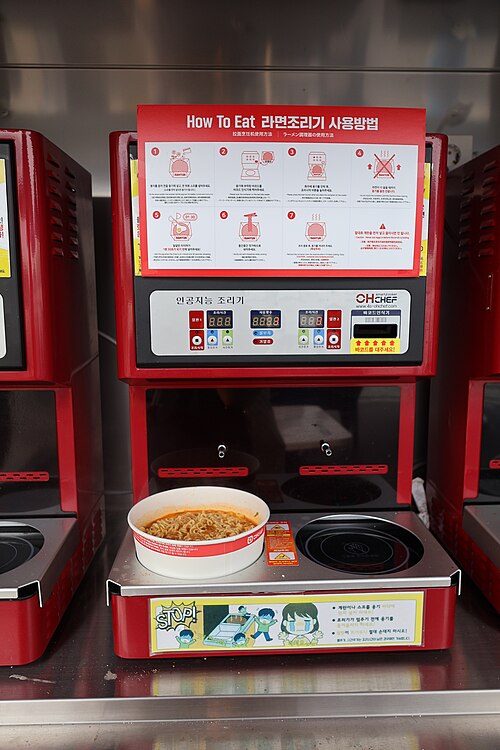
No Kitchen? Find a Self-Service Ramyeon Shop!
Korea has self-service ramyeon shops where you can pick a packet, pay, and use a special cooking machine and container. Follow the instructions at the shop—machines can work a little differently.
And Then There’s… Han River Ramyeon!
Han River ramyeon!!! Some convenience stores in Seoul’s Han River parks have cooking machines that make a hot bowl of noodles right there.
Pick your packet, cook it, and find a spot with a view of the river. Hot ramyeon, a cool breeze… Ahhh. You really have to try it!
And if a bowl of ramyeon doesn’t quite hit the spot? You could enjoy some Korean fried chicken, too!
Not every Han River convenience store has a cooking machine. Check before you go. The photo above was taken at Magok pier, not at every Han River park store.
All Right, Sikgu. Let’s Order in Korean!
Now it’s your turn. Here are four useful phrases to say at a bunsikjip.
① One bowl of ramyeon
사장님, 여기 라면 하나 주세요.
Sajangnim, yeogi ramyeon hana juseyo.
Excuse me, one ramyeon, please.
② Ramyeon and gimbap together
사장님, 라면 하나랑 김밥 한 줄 주세요.
Sajangnim, ramyeon hanarang gimbap han jul juseyo.
One ramyeon and one roll of gimbap, please.
③ More kimchi, please
사장님, 김치 좀 더 주세요.
Sajangnim, gimchi jom deo juseyo.
Could I have some more kimchi, please?
④ More danmuji, please
사장님, 단무지 좀 더 주세요.
Sajangnim, danmuji jom deo juseyo.
Could I have some more danmuji (yellow pickled radish), please?
Find Your Favorite Ramyeon, Sikgu!