
TASTY HANGUL · KOREAN FOOD GUIDE
Quick Help: Gukbap
- What it is: Korean soup with rice (국 + 밥). The word in front tells you the main ingredient: sundae, pork, beef head, or bean sprouts.
- Order: Order by the table tablet or call the owner over. 특 (teuk) means a bigger, heartier bowl.
- Contains: Ingredients vary by type. Some feature pork or beef, while others are made with bean sprouts. Sundae-gukbap may include pork offal and Korean blood sausage. Recipes vary by restaurant, so ask if you have allergies.
- Spice: The broth is usually mild. Add dadaegi or cheongyang peppers to make it spicy.
- Say this: 순대국밥 하나 주세요! (One sundae-gukbap, please!)
Hey, Sikgu!
Wondering what “Sikgu” means? Find out here →
Do you know gukbap? Cook-bap? Nope! It’s GUK-bap (국밥) haha.
Sure, it’s soup with rice. But in Korea, it’s so much more.
Ever heard the joke about the three soul foods of Korean guys? Donkkaseu, jeyuk bokkeum, and… gukbap!
Today we’re talking about the one that fills you up with a single steaming bowl of broth: gukbap. Gukbap isn’t just one dish. It’s a whole family. Let’s crack the Hangul code hidden in the name, then learn how to eat it like a real Korean.
01 Gukbap: Read the Name, See the Food
Remember the golden rule of Korean menus? Everything is in the name!
LET’S READ HANGUL
국밥 gukbap · soup + rice
| 국 guk ㄱ+ㅜ+ㄱ | 밥 bap ㅂ+ㅏ+ㅂ |
국 + 밥 = 국밥
Guk + Bap = Gukbap
Soup + Rice = Gukbap
국 (Guk): Korean-style soup
밥 (Bap): cooked rice
Spot 국밥 on a Korean menu? Now look at the word right before it!
In English it’s usually called “soup with rice,” but Korean guk isn’t exactly the same as Western soup. “Soup” is just the closest word we’ve got.
The important part is the word in front of gukbap. That’s the star of the bowl.
| Hangul | Say it | What it is |
|---|---|---|
| 순대국밥 | sundae-gukbap | Gukbap with sundae (Korean sausage) and pork |
| 돼지국밥 | dwaeji-gukbap | Gukbap in a rich, slow-simmered pork broth (Busan is famous for it) |
| 소머리국밥 | someori-gukbap | Gukbap with beef head meat in a long-simmered broth |
| 콩나물국밥 | kongnamul-gukbap | Gukbap with bean sprouts in a clean, refreshing broth (a hangover classic) |
Read just a little Hangul, and you can already guess what’s coming to your table, right?
Quick note: sundae is Korean sausage, but it’s not like Western sausage. It’s usually made with glass noodles, and some kinds include blood. Also, some places serve the rice already in the soup, while others bring it in a separate bowl. Either way, it’s a seriously filling meal.
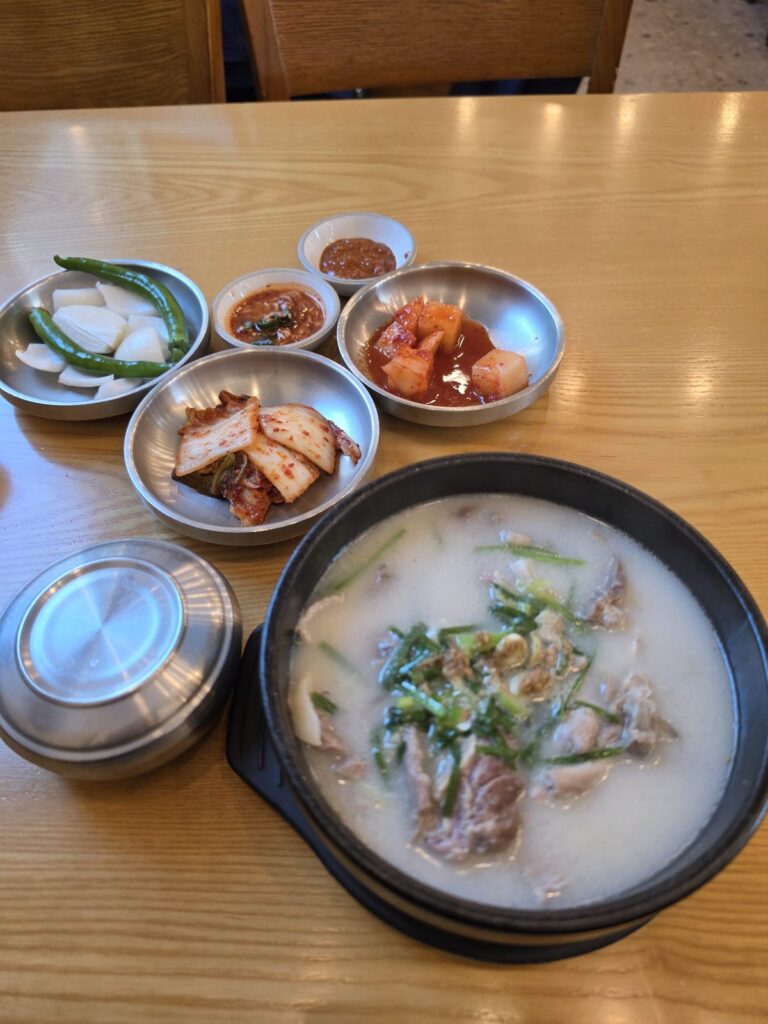
Photo: Tasty Hangul
02 When Do Koreans Eat Gukbap?
On a freezing winter day when you’re craving hot broth!
At lunchtime when you just can’t be bothered to decide what to eat!
And the morning after drinking way too much, when your head feels like it’s about to split!
In Korea, eating to soothe your stomach after a night of drinking is called haejang (해장). And soupy dishes are the go-to. Gukbap isn’t a hangover cure, of course, but one hot bowl somehow makes your body and mind feel a lot better.
03 Gukbap’s Best Friend: Kkakdugi!
At many gukbap places, you’ll meet the same two buddies: kimchi and kkakdugi.
Kkakdugi (깍두기) is cubed radish kimchi. When I walk into a gukbap place, I try the kkakdugi first. One bite and you can tell how good their gukbap is going to be haha.
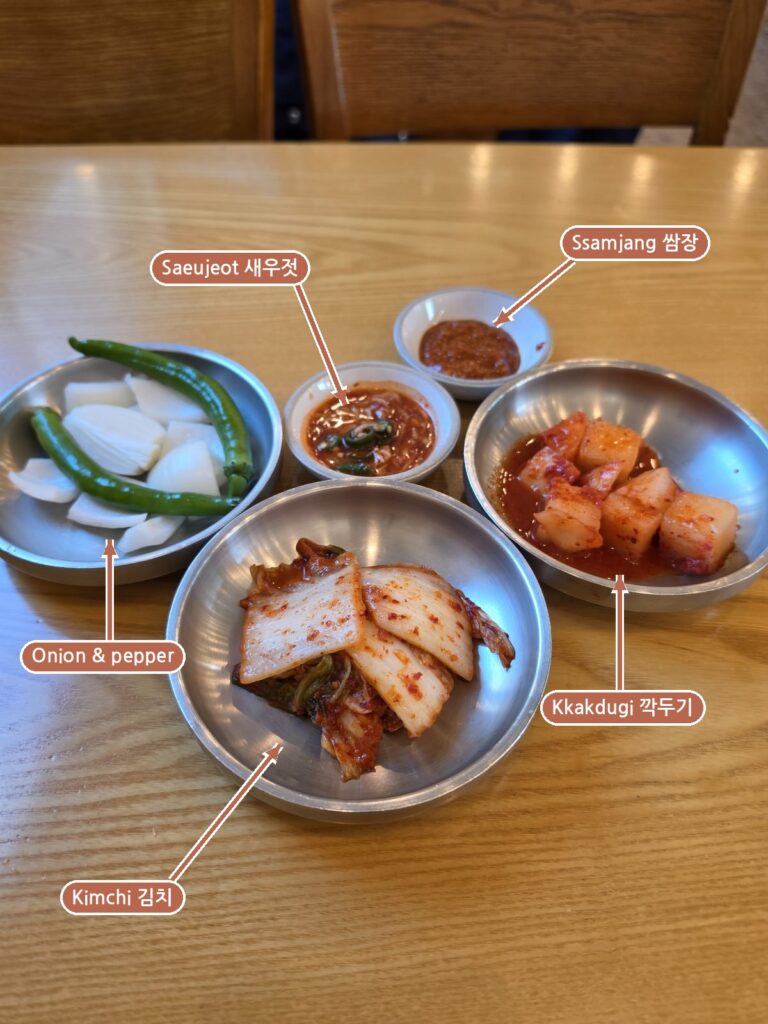
Photo: Tasty Hangul
Crunchy, tangy kkakdugi with rich gukbap is a perfect match. And at most gukbap places, kimchi and kkakdugi refills are free. If there’s a self-serve bar, help yourself. If not, just ask the owner for more.
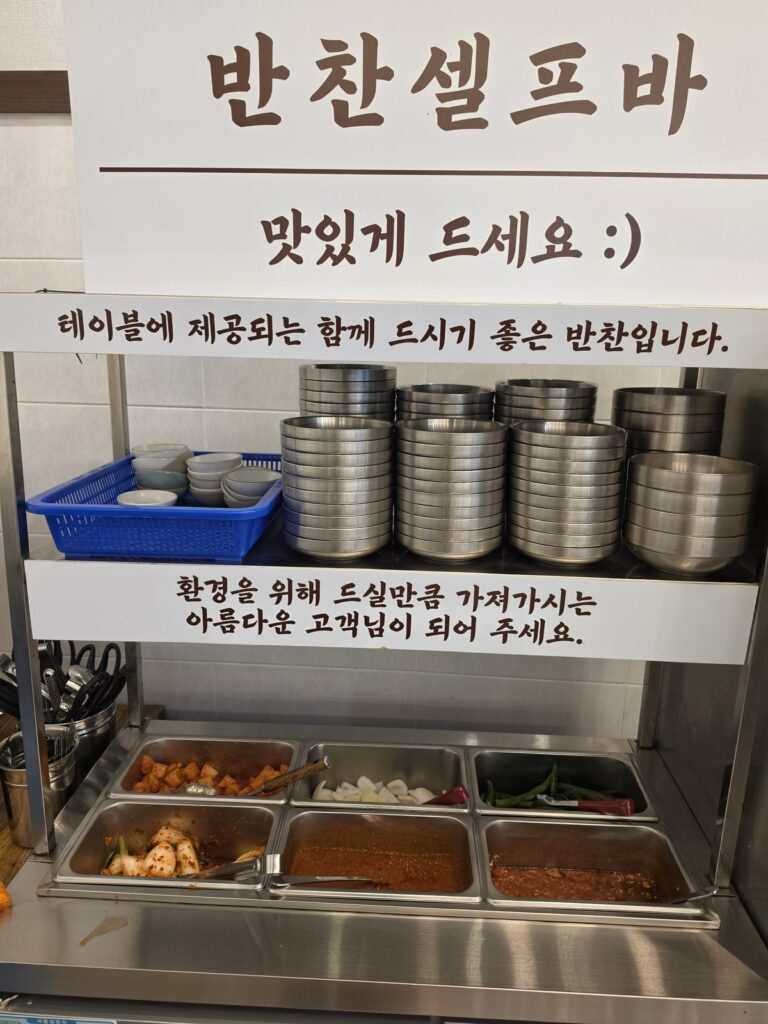
Photo: Tasty Hangul
04 One Bowl, Two Flavors
Most gukbap tables have salt, pepper, saeujeot, and dadaegi. Many places also give you cheongyang peppers.
- Saeujeot (새우젓): tiny salted, fermented shrimp. The classic way to season gukbap!
- Dadaegi (다대기): a spicy seasoning paste you stir into the soup (the standard Korean term is 다진 양념, dajin yangnyeom, but you’ll hear “dadaegi” everywhere)
- Cheongyang pepper (청양고추): small but seriously spicy Korean chili. Spice lovers, slice some in!
- Deulkkae garu (들깨가루): perilla seed powder, nutty and toasty. You’ll often find it at sundae-gukbap and gamjatang places. Stir some in and the broth gets thick and rich. Me? I love dumping in a lot haha. But some people skip it to enjoy the pure broth. In or out, a little or a lot, it’s 100% up to you!
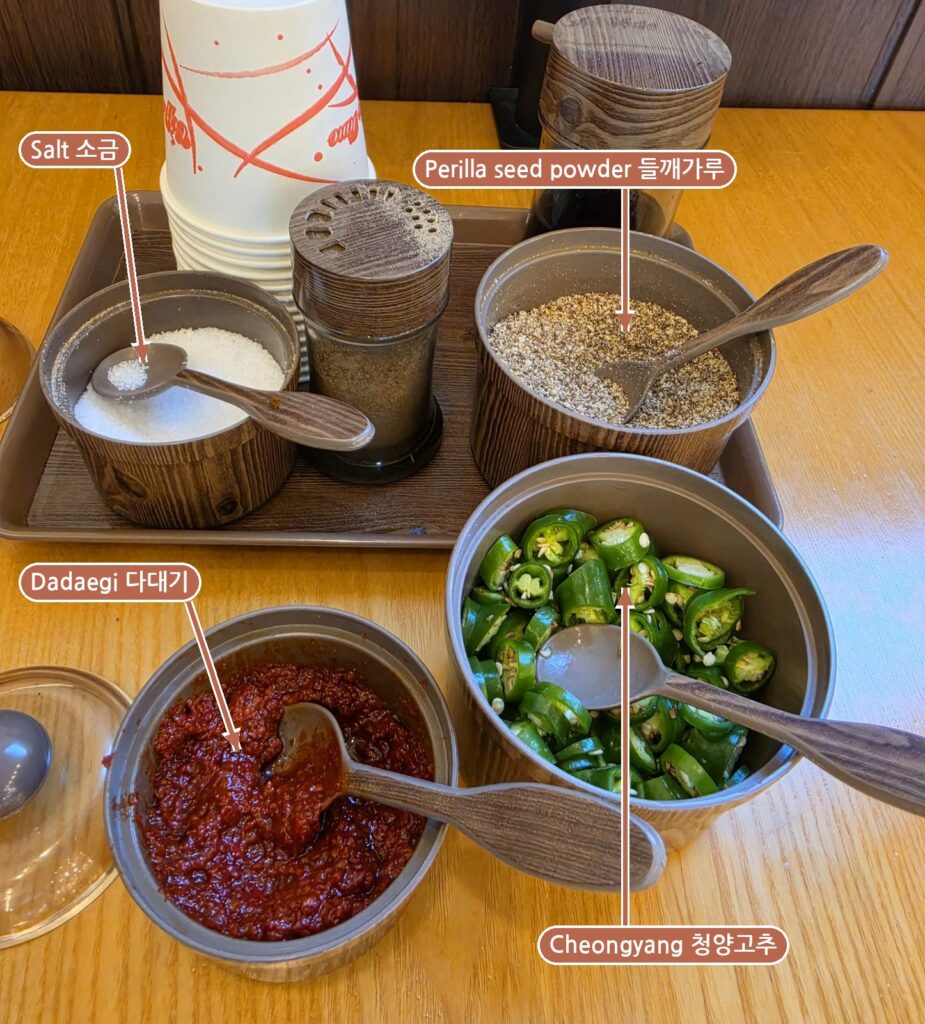
Photo: Tasty Hangul
Here’s my tip: don’t dump everything in at the start.
First, taste the broth on its own. If it’s a bit bland, add a little saeujeot or salt. Then, about halfway through, stir in the dadaegi. The broth turns reddish, and suddenly you’ve got a whole new flavor. Two flavors, one gukbap!
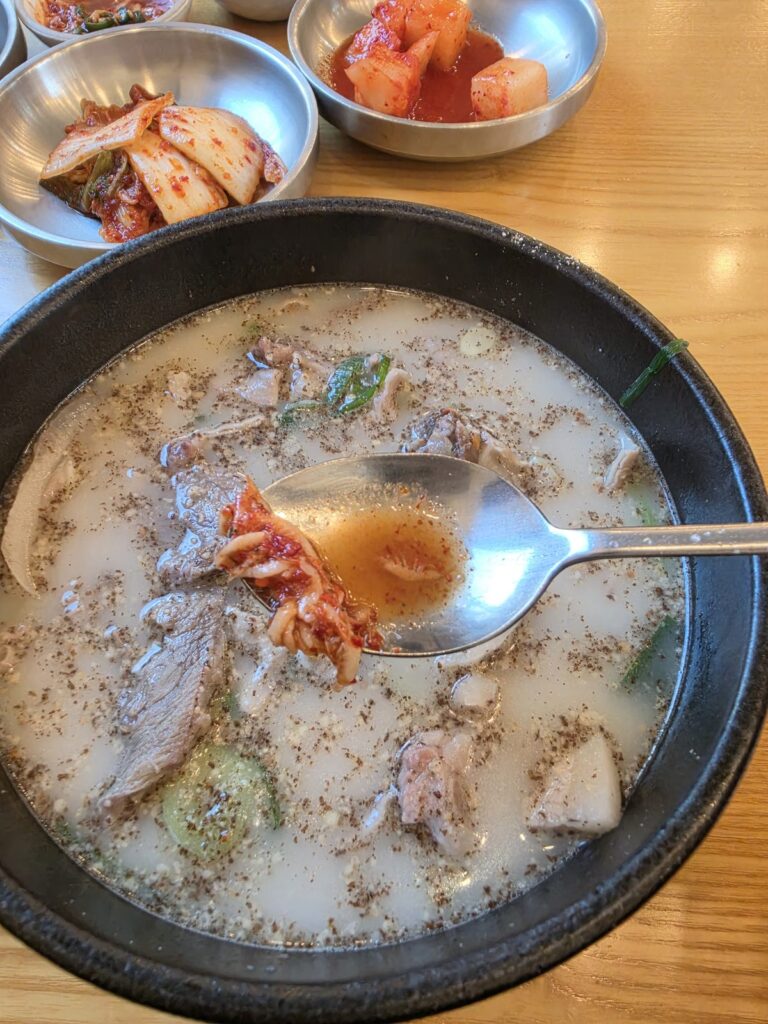
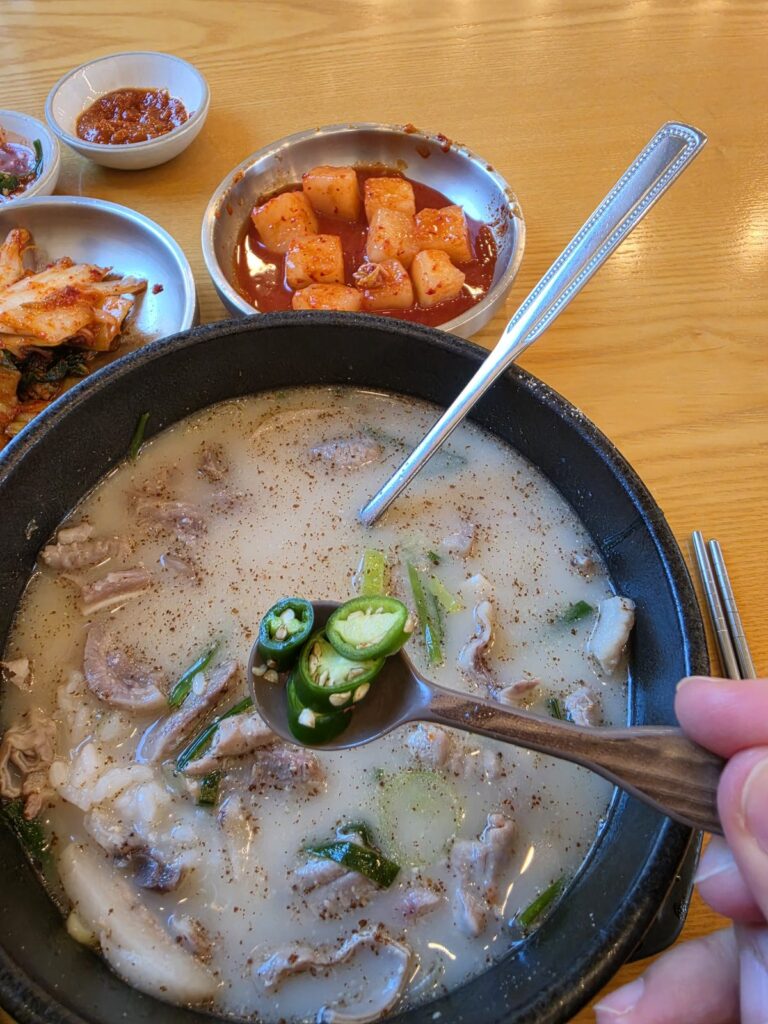
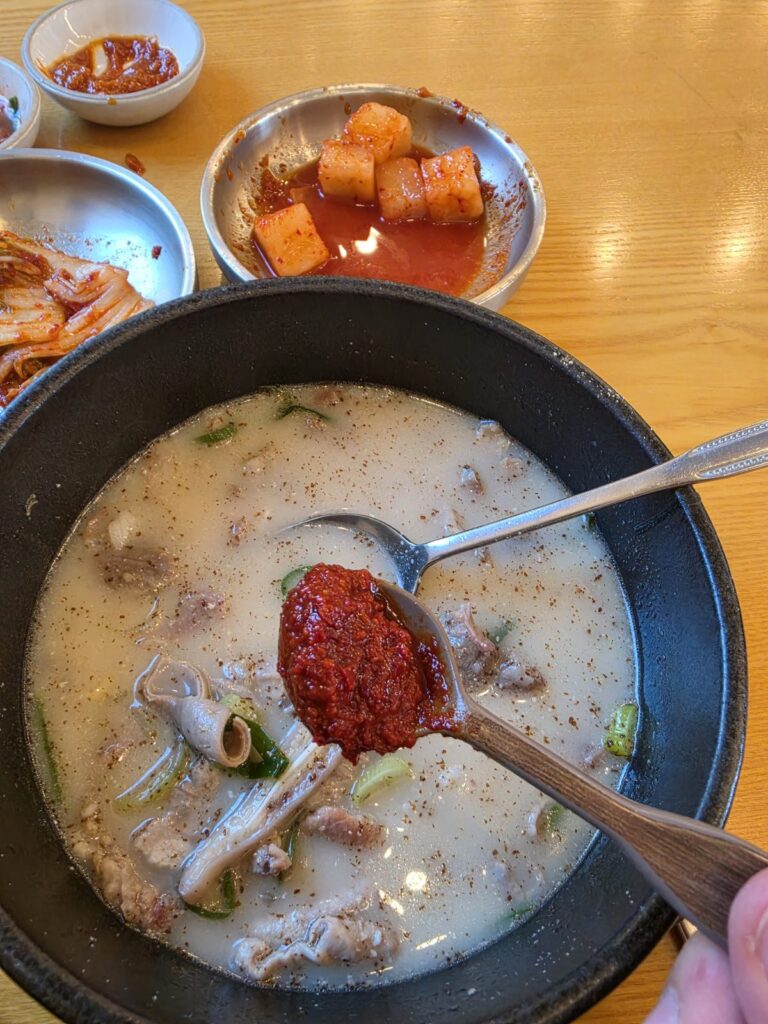
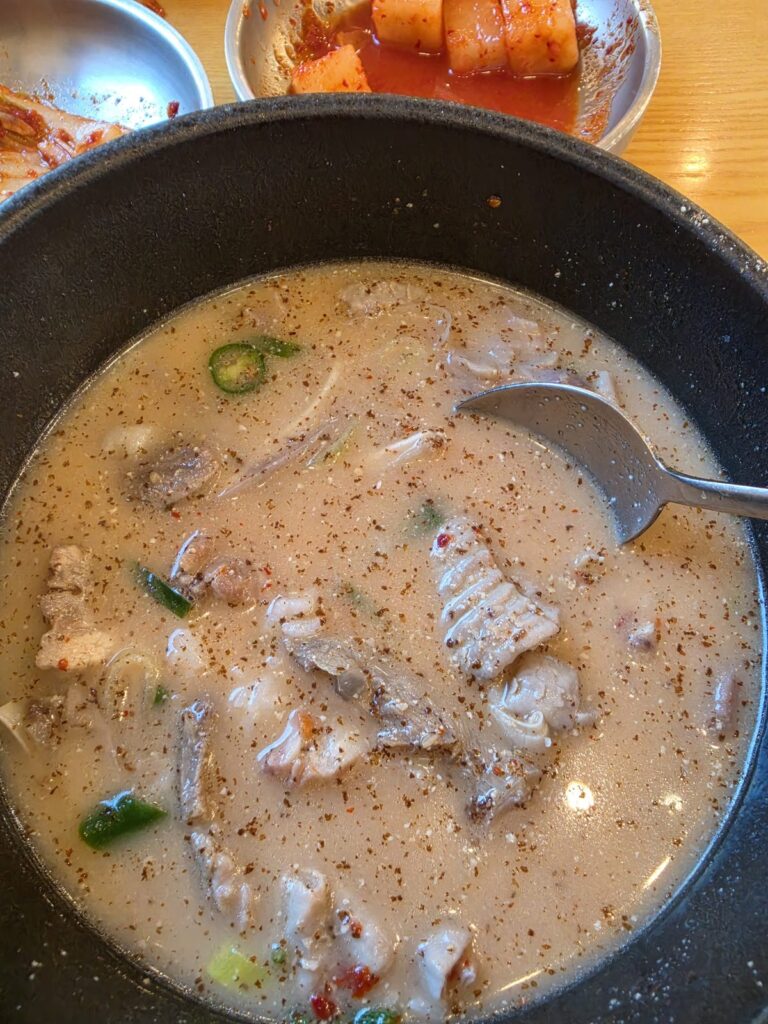
Just keep in mind every place has its own broth and seasoning, and some menus come out red from the start.
05 Pro Tip: Cool Your Sundae on the Rice Bowl Lid
The sundae in sundae-gukbap is HOT. Like, really hot. Don’t just pop it in your mouth.
You know the rice bowl lid? When rice comes separately, it’s usually in a stainless steel bowl with a lid. Flip that lid over, put your sundae on it, and let it cool a bit. It’s a handy little trick you’ll see at some Korean gukbap shops. No lid? A small plate works too.
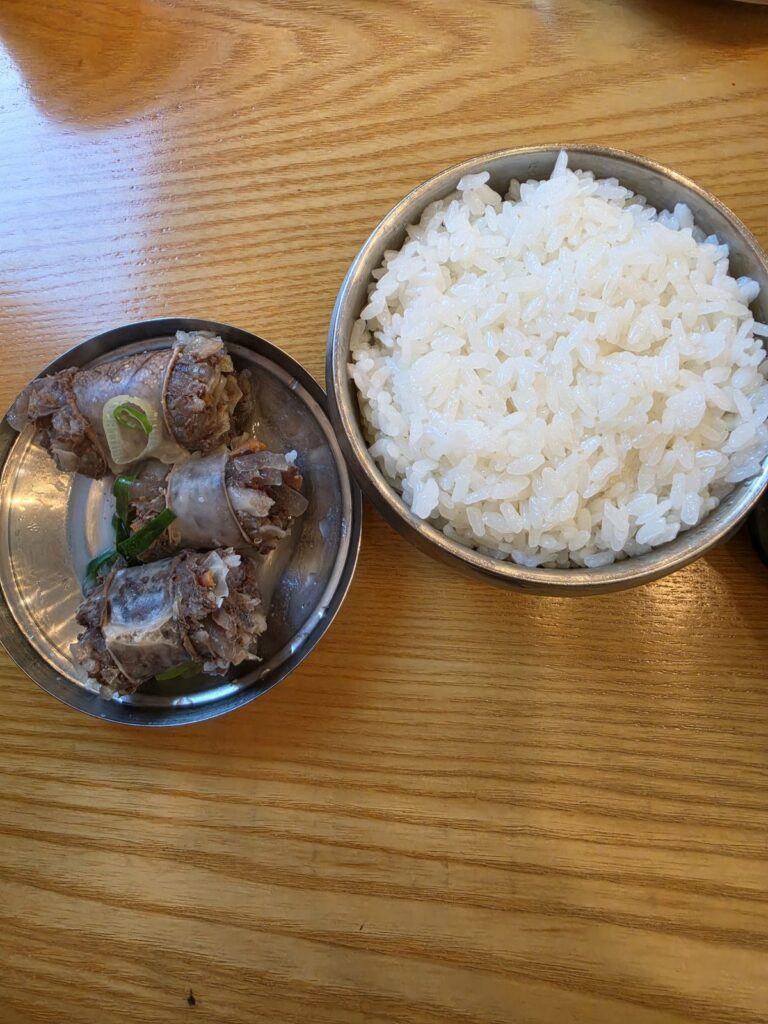
Photo: Tasty Hangul
06 When Should You Put the Rice In?
If your rice came on the side, here’s how I like to eat it.
Start with the soup and rice separately. A spoon of broth, a piece of meat, a spoon of rice.
Then, when about half your rice is left, dump the rest into the soup. In Korean, this is called mara meokda (말아 먹다), “to mix rice into soup and eat it.”
The rice soaks up all that hot broth and becomes a whole new taste. Finish a bowl like this on a cold winter day, and it feels like it warms you all the way to your soul.
07 Now You Can Read a Gukbap Menu!
You can order with the tablet (kiosk) on your table, or just call the owner over. On the menu, check the word in front of gukbap. Dwaeji-gukbap, sundae-gukbap, kongnamul-gukbap… Now you can guess what each one is just from the name, right?
You might also spot the word 특 (teuk), meaning “special.”
- 순대국밥: regular
- 순대국밥(특): a bigger, heartier bowl with more meat and toppings. How much more depends on the restaurant.
Hungry? Go for the teuk!
08 Order Like a Local
SAY THIS
사장님~ 여기 순대국밥 하나 주세요!
Sa-jang-nim~ yeo-gi sun-dae-guk-bap ha-na ju-se-yo!
Excuse me~ One sundae-gukbap here, please!
SAY THIS
사장님, 돼지국밥 두 개 주세요!
Sa-jang-nim, dwae-ji-guk-bap du gae ju-se-yo!
Two dwaeji-gukbap, please!
SAY THIS
사장님, 깍두기 좀 더 주세요.
Sa-jang-nim, kkak-du-gi jom deo ju-se-yo.
Could I get some more kkakdugi, please?
Sajangnim (사장님) means the owner of the restaurant, and calling out to them like this fits right in at a small gukbap place. Not sure who to call? “Jeogiyo~” (저기요) is always the safest choice. More tips in How to Eat at a Korean Restaurant.
09 How About a Bowl of Gukbap This Winter?
Winter is coming. If the cold wears you out on your Korea trip, open the door to a gukbap place.
Read the menu, add your seasonings, and finish by mixing in the rest of your rice. Empty one bowl like that, and you’ll understand why Korean guys call gukbap their soul food.
So, Sikgu!
Korean Guys’ Soul Food Trio
- Donkkaseu
- Jeyuk Bokkeum
- Gukbap (You are here)