
TASTY HANGUL · ORDERING GUIDE
Quick Help: How to Ask for Less Spicy Food in Korea
- “Mild” (순한맛) doesn’t mean zero spice. It means “less spicy” by Korean standards.
- Shin Ramyun too hot for you? Always start with the lowest level!
- Before ordering, ask: “안 맵게 되나요?” (an maep-ge doe-na-yo?) = “Can you make it not spicy?”
- Spice Rescue Squad: Coolpis, steamed egg, Jumeokbap (DIY rice balls)
- Not red doesn’t mean not spicy. See chili peppers? Ask first!
Hey, Sikgu!
Wondering what “Sikgu” means? Find out here →
Today, let’s talk about spicy Korean food. Haha.
Ever wondered how Koreans handle spicy food so easily? Hmm… is it in our DNA?
Anyway, once you start eating Korean food, you’ll notice some dishes look fiery red but aren’t spicy at all, and some look totally innocent but bite back. Haha.
So let’s learn how to ask about spice levels and adjust them when you order.
And for the brave ones who want to go full spicy… are you ready??
Top photo: jyleen21 / Wikimedia Commons (CC0)
01 “It Says Mild… So Why Is It Spicy?”
Okay, everyone, don’t relax just because the menu says “mild” (순한맛, sun-han-mat).
On a spice scale of 0 to 100, “mild” isn’t 0. It’s more like 30! Haha.
Of course, I totally made up these numbers. LOL. Every restaurant has its own standard.
In other words, it’s mild for Koreans, not mild for everyone else!
So don’t get fooled. Check if there’s a “chak-han-mat” (착한맛, literally “kind flavor”) or “not spicy” (안 매운 맛, an mae-un mat) option before you order.
My Totally Unofficial Korean Spice Meter
SPICE SCALE: 0 → 100
- Not spicy안 매운 맛 / 착한맛0-10
- Mild순한맛~30
- Regular보통맛 = Shin Ramyun~50
- Spicy매운맛~70
- Extra spicy아주 매운맛 / 최고 단계100+ Good luck! 🔥
(Made up by me. Every restaurant is different!)
Spice labels vary from place to place. Some use levels 1 to 5, and others use words like mild, regular, spicy, and extra spicy.
And some places even write it right on the menu: “Regular = Shin Ramyun level.”
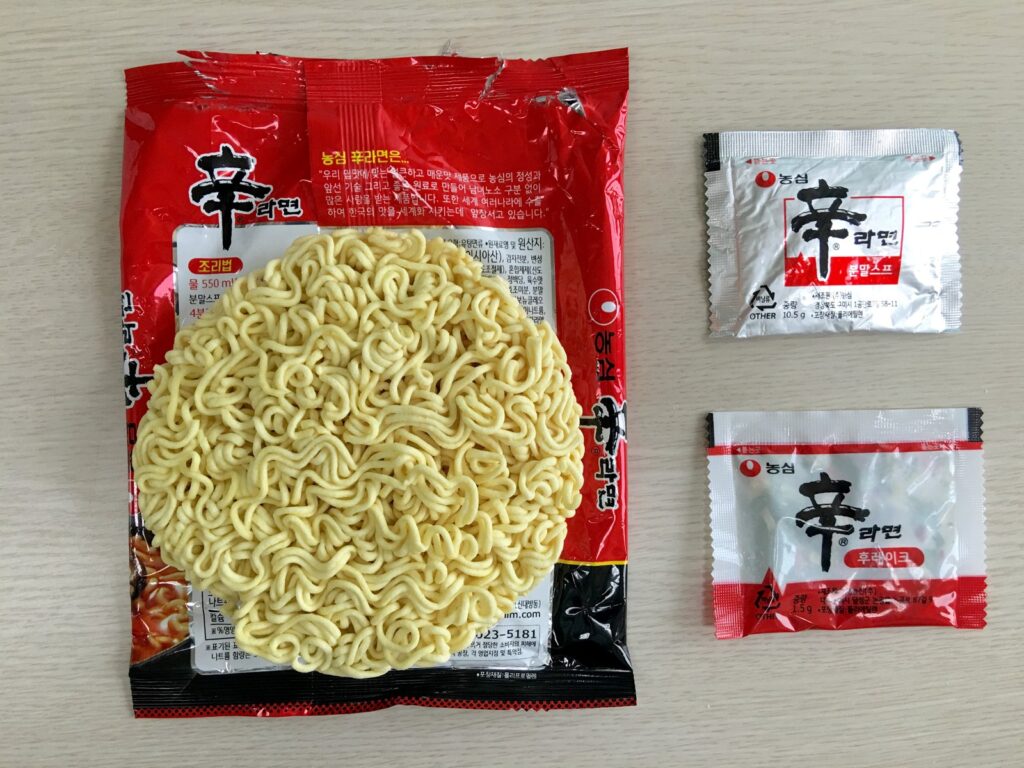
Photo: K-foodie / Wikimedia Commons (CC BY-SA 4.0)
So if you’ve eaten Shin Ramyun and thought “that’s not spicy”? You’re ready to try regular-level Korean food. Wow!
But if Shin Ramyun was too hot for you, start with the lowest level.
And if you’re thinking “I’m strong!” and order the hottest level… well, I can’t promise anything. ^^
02 “Sajangnim! Can You Make It Not Spicy?”
Quick tip: in Korea, we often call restaurant staff “사장님” (sa-jang-nim), which literally means “boss.” Trust me, it works.
Depending on the dish and the restaurant, some places can adjust the spice and some can’t. So let’s just ask!
SAY THIS
사장님, 안 맵게 되나요?
sa-jang-nim, an maep-ge doe-na-yo?
Can you make it as mild as possible?
This means “Can you make it as mild as possible?” (Heads up: that might still be Korean-style mild. Haha.)
If they say yes, ask them to make it not spicy. If they say no, order some of the rescue squad below! ^^
Some dishes aren’t red but can still be spicy. If something looks suspicious, just ask: “이거 매워요?” (i-geo mae-wo-yo?) = “Is this spicy?”
Not Red, Still Spicy
| Dish | Why it can be spicy | Ask this |
|---|---|---|
| Kimchi | Some kimchi is spicier than you’d expect | 이거 매워요? |
| Banchan (side dishes) | Ones made with lots of chili or garlic | 이거 매워요? |
| Doenjang-jjigae (soybean paste stew) | Sometimes has Cheongyang peppers | 여기 청양고추 들어갔어요? |
About Cheongyang peppers:
These are the small green chilies, and they’re HOT. Koreans surprisingly love a little kick in their doenjang-jjigae, so some places toss them in. Ask “여기 청양고추 들어갔어요?” (yeo-gi cheong-yang-go-chu deu-reo-gass-eo-yo?). If the answer is yes… haha, maybe skip it?
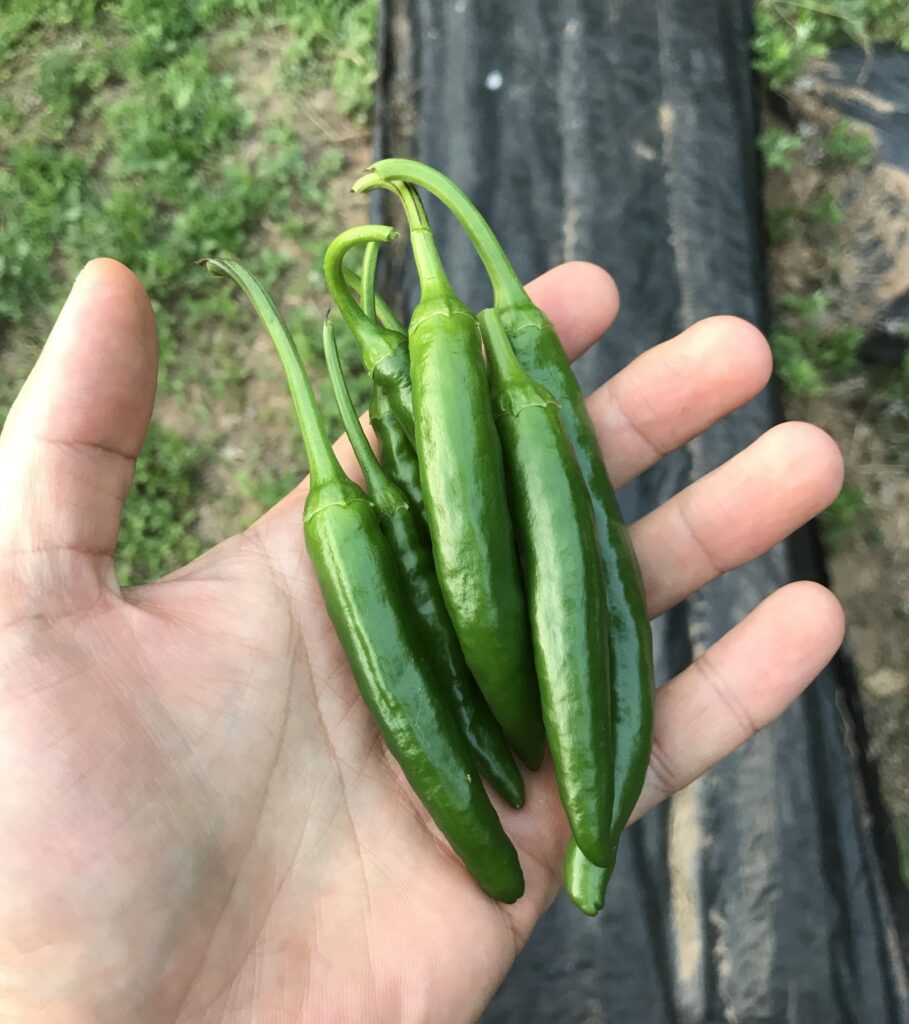
Photo: Herbeater / Wikimedia Commons (CC BY-SA 4.0)
03 Mouth on Fire? Call the Spice Rescue Squad!
| Rescue item | What is it? | When to have it |
|---|---|---|
| Coolpis (쿨피스) | A sweet Korean drink people love with spicy food | The moment your mouth catches fire |
| Gyeran-jjim (계란찜) | Soft, fluffy steamed egg | One bite after your Coolpis |
| Jumeokbap (주먹밥, DIY rice balls) | Rice you shape into balls yourself (varies by restaurant) | When you want to tone down the heat. Dip it in the sauce or not, your call! |
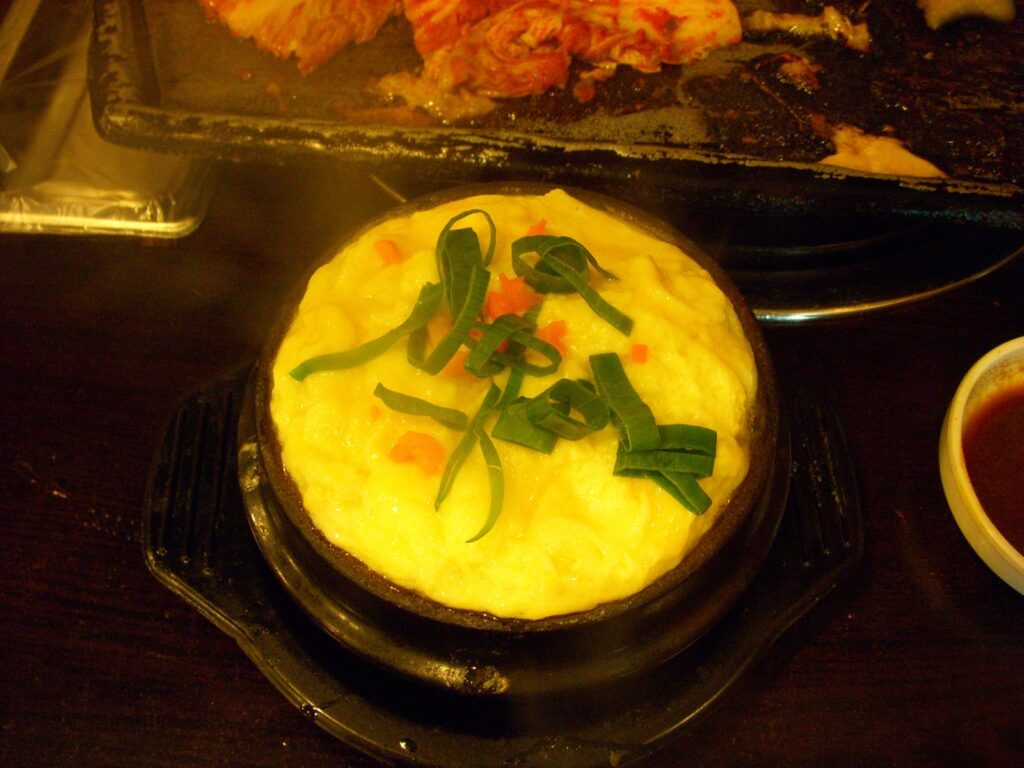
Photo: LWY / Wikimedia Commons (CC BY 2.0)
See Coolpis and steamed egg at a restaurant? There’s a good chance it’s a spicy food place. ^^ (Just my personal experience!)
Spicy food feels even hotter when it’s steaming, so feel free to let it cool a bit. When the heat hits, put out the fire with Coolpis, take a bite of steamed egg… and somehow you’ll want more spicy food again.
Haha. That’s the secret Korean spicy combo.
04 Were You Korean in a Past Life?
So why do Koreans eat spicy food anyway?
Most of us eat something spicy when we’re stressed. We sweat it out and let the stress go.
Plus, so many spicy dishes are just really delicious.
We even have a word for people who can’t handle spice: “맵찔이” (maep-jjil-i), basically a “spice wimp.” LOL
In Korea, handling spicy food feels like earning a badge of honor!
Once you get used to the heat, try dipping your jumeokbap into the sauce.
You might think, “Whoa, I had the spicy-food DNA all along!!” Or even… “I must have been Korean in a past life~ Korean blood runs through me!!”
SAY THIS
이거 매워요?
i-geo mae-wo-yo?
Is this spicy?
SAY THIS
안 맵게 돼요?
an maep-ge dwae-yo?
Can you make it not spicy?
SAY THIS
덜 맵게 해 주세요
deol maep-ge hae ju-se-yo
Less spicy, please
SAY THIS
순한맛으로 해 주세요
sun-han-ma-seu-ro hae ju-se-yo
Mild, please
SAY THIS
여기 청양고추 들어갔어요?
yeo-gi cheong-yang-go-chu deu-reo-gass-eo-yo?
Is there Cheongyang pepper in this?
Sikgu~ wishing you a happy spicy adventure!
1 thought on “Shin Ramyun Isn’t Spicy? Congrats, You Just Passed Korean Spice Level 1!”