Hey, Sikgu!
Wondering what “Sikgu” means? Find out here →
Remember when we talked about Korean ramyeon with broth? Well, there’s a whole other side to Korean instant noodles.
Ramyeon you mix with sauce instead of slurping from a bowl of soup!
Korea has all kinds of instant noodles inspired by familiar dishes, made for an easy meal at home. Today, let me introduce three Korean favorites.
Chapagetti, Bibimmyeon, and Buldak Bokkeummyeon!
None of them come with broth, but each one has its own flavor—and you make each one a little differently, too.
And, of course, Koreans have their own favorite ways to make them even better!
1. Chapagetti — More Than Just Instant Jjajangmyeon!
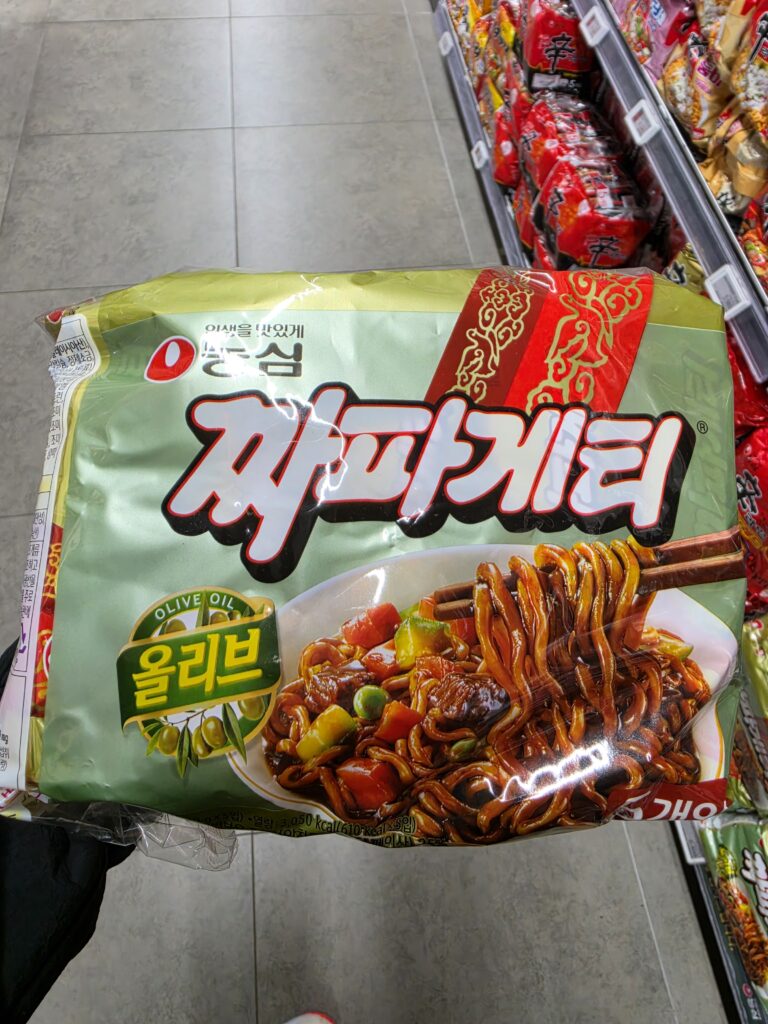
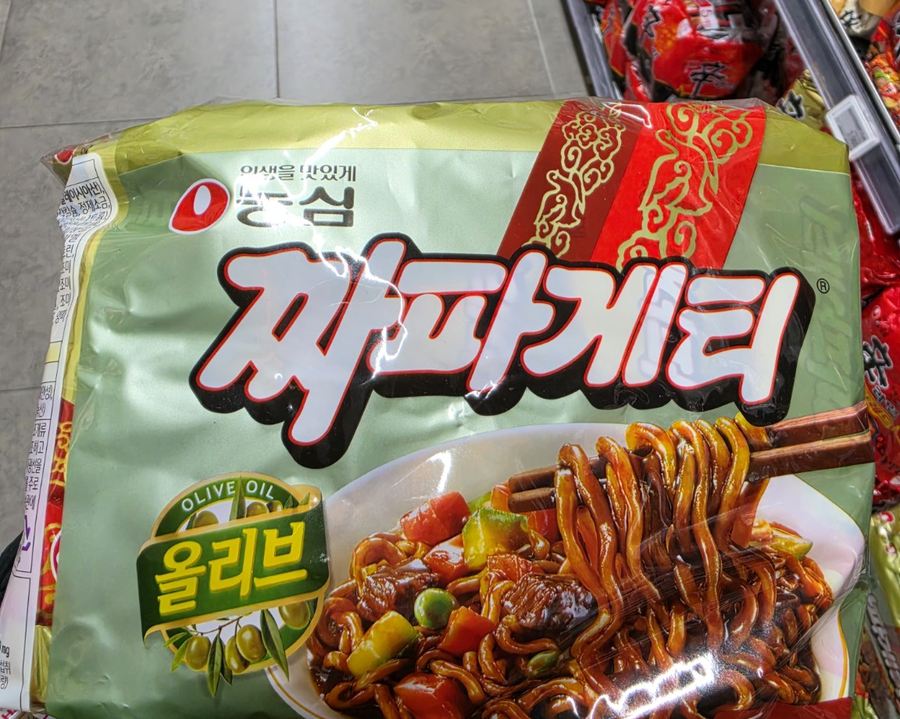
When Koreans think of instant black bean noodles, Chapagetti (짜파게티) is one of the first names that comes to mind.
It was created as a convenient way to enjoy the flavors of jjajangmyeon (짜장면), Korea’s beloved black bean noodles.
But calling Chapagetti just a copy of jjajangmyeon wouldn’t do it justice.
So what’s the biggest difference? The noodles. Jjajangmyeon comes with fresh, chewy noodles, while Chapagetti uses instant noodles with a bite all their own.
And the flavor? Close to jjajangmyeon, but subtly different—that classic big-brand, factory-made taste Koreans grew up with. Plus, it’s ready in minutes. No delivery needed!
Have you tried jjajangmyeon at a Korean restaurant?
Then give Chapagetti a try, too.
You’ll discover that jjajangmyeon and Chapagetti have their own distinct charms.
2. Bibimmyeon — Wait, You Eat This Ramyeon Cold?!
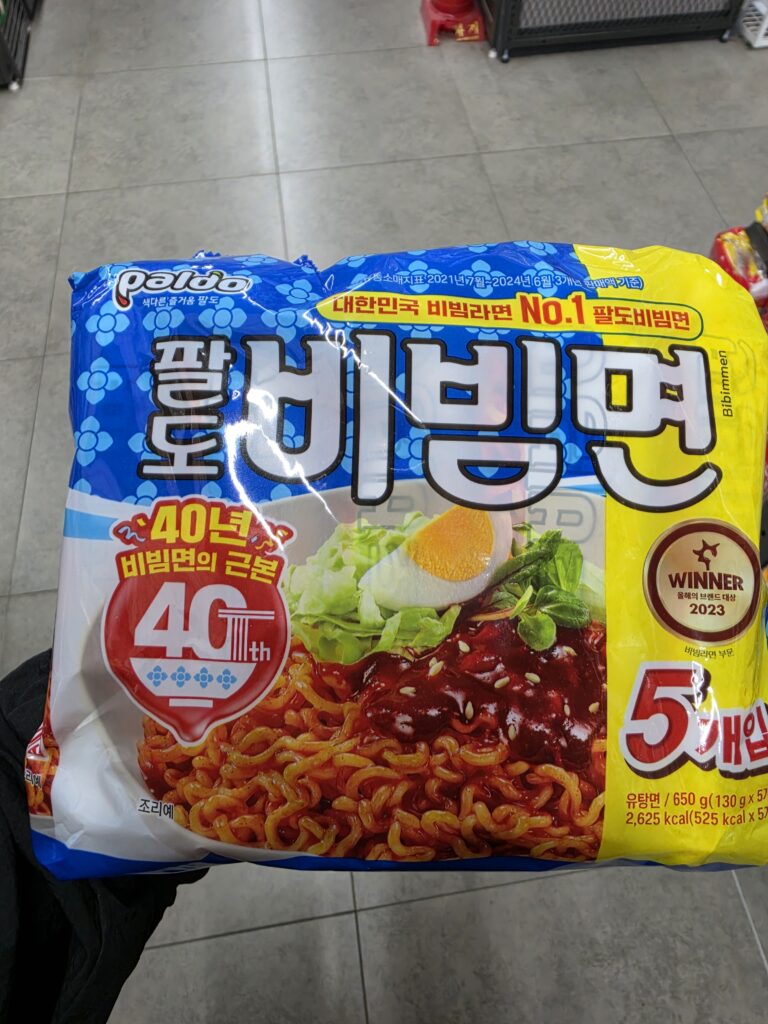
Bibimmyeon (비빔면) is an easy, instant-noodle take on Korean spicy mixed noodles, bibim-guksu.
One well-known example is Paldo Bibimmyeon.
Its sauce is sweet, tangy, and spicy all at once.
Personally, I think that sauce has a flavor all its own. It’s so popular that you can even buy the sauce separately!
But here’s the part you really need to know.
Bibimmyeon is meant to be eaten cold!
After boiling the noodles, rinse them thoroughly in cold water. Shake off the water really well, then toss them with the sauce.
If you leave too much water on the noodles, you’ll dilute that delicious sauce.
On a hot summer day? Even better!
3. Buldak Bokkeummyeon — Just How Spicy Can Ramyeon Get?!
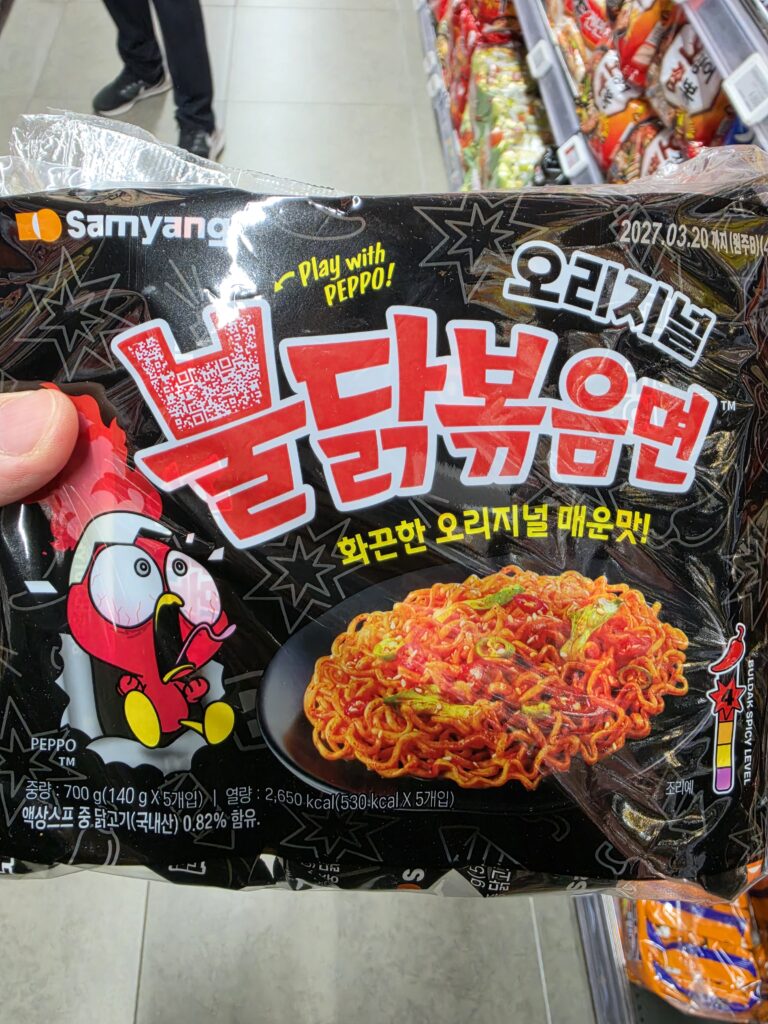
Now for a Korean instant noodle that’s famous around the world: Buldak Bokkeummyeon (불닭볶음면)!
Thanks in part to spicy-noodle challenges on YouTube, Buldak has become a familiar name far beyond Korea.
And the big attraction? That intense heat.
It’s the kind of spicy that makes your mouth feel like it’s on fire!
If you love spicy food, you might be up for the challenge.
But if you’re not used to serious heat, watch out.
It can be much hotter than you expect!
Not a spice lover? Try a milder version like Carbo Buldak, with a creamy, carbonara-style sauce.
One quick tip: Watch the water! With Chapagetti and Buldak, how much water you leave after cooking the noodles really matters. Too much makes the sauce watery; too little can make it hard to mix evenly. Follow the instructions on your specific package!
Here’s How Koreans Make Them Even Better!
① Chapagetti + Egg + Cheese = Jjagyechi!
Want to take Chapagetti up a notch?
Try jjagyechi (짜계치)!
It’s Chapagetti topped with an egg and cheese.
My suggestion? Fry the egg sunny-side up, keeping the yolk a little runny.
Add cheese to the hot noodles, place that egg on top, and you’re done!
Mix everything together and dig in.
There’s another fun combination, too: jjapaguri (짜파구리)!
It mixes Chapagetti with another Korean instant noodle brand, Neoguri (너구리). This combination became internationally famous through the movie Parasite. In the English subtitles, it was called “ram-don” (ramen + udon)!
Think of Chapagetti’s savory black bean flavor with Neoguri’s distinctive spicy kick.
② Bibimmyeon + Samgyeopsal = An Amazing Pair!
My favorite pairing for Bibimmyeon is samgyeopsal (삼겹살), Korean pork belly.
Try a bite of freshly grilled pork belly with some of those cool, tangy noodles.
The rich, savory pork and the sweet-spicy sauce work beautifully together.
Or wrap a little pork belly and Bibimmyeon in a lettuce leaf and eat them together. So good!
The next time you’re having samgyeopsal, try serving Bibimmyeon on the side!
③ Buldak + Cheese + Sausage!
How about a different way to enjoy Buldak?
My recommendation: add cheese and sausage.
String cheese and sausage turn a serving of Buldak into a quick, satisfying meal.
The cheese adds a creamy richness that softens the edge of the heat a little, while the sausage brings something savory and salty.
Spicy + creamy + savory!
Three flavors working together.
Using cup noodles? Check the cooking directions, and only microwave the noodles in a container marked as microwave-safe.
Let’s Read Hangul — Can You Decode These Ramyeon Names?
Sikgu, ready to read the Korean names of the three noodles we just met?
Read the Korean menu · ①
짜계치
Jjagyechi
Chapagetti + egg + cheese
| 짜 jja ㅉ+ㅏ | 계 gye ㄱ+ㅖ | 치 chi ㅊ+ㅣ |
짜 (jja) — from 짜파게티 (Chapagetti) · black bean instant noodles
계 (gye) — from 계란 (gyeran) · egg
치 (chi) — from 치즈 (chijeu) · cheese
Put them together: 짜 + 계 + 치 = 짜계치
Spelling tip: Nongshim calls its product Chapagetti in English. But the Korean name 짜파게티 starts with 짜 (jja = ㅉ + ㅏ). A brand’s English spelling doesn’t always match how Hangul is read!
Pretty clever, right? The name jjagyechi is made from the first Hangul syllable of each of its three ingredients. Koreans sometimes make new nicknames by combining the beginning of different words like this.
Read the Korean menu · ②
비빔면
Bibimmyeon
Cold, spicy mixed noodles
| 비 bi ㅂ+ㅣ | 빔 bim ㅂ+ㅣ+ㅁ | 면 myeon ㅁ+ㅕ+ㄴ |
비빔 (bibim) — mixed with sauce
면 (myeon) — noodles
비비다 (bibida) — to mix
Put them together: 비빔 + 면 = 비빔면
The name bibimmyeon comes from bibida (비비다), a Korean verb meaning “to mix.” Now the name makes sense, doesn’t it?
Read the Korean menu · ③
불닭볶음면
Buldak-bokkeummyeon
Fiery chicken-flavored stir-fried noodles
불닭 (Buldak)
| 불 bul ㅂ+ㅜ+ㄹ | 닭 dak ㄷ+ㅏ+ㄺ |
볶음면 (Bokkeummyeon)
| 볶 bok ㅂ+ㅗ+ㄲ | 음 eum ㅇ+ㅡ+ㅁ | 면 myeon ㅁ+ㅕ+ㄴ |
불 (bul) — fire
닭 (dak) — chicken
볶음 (bokkeum) — stir-fried
면 (myeon) — noodles
Put them together: 불닭 + 볶음 + 면 = 불닭볶음면
The final ㄺ in 닭 is a double final consonant. These boxes show how the word is written; some sounds change when syllables are spoken together.
One fun detail about buldak (불닭): the fire isn’t just about cooking over flames.
It’s about heat so intense your mouth feels like it’s on fire—which is why fiery chicken captures the idea so well!
Once you can recognize a few Hangul syllables, a food name can give you clues about what’s on the menu. Want to practice more? Try our beginner’s Hangul guide.
Now, Make It Like a Real Korean!
So, Sikgu! Have you discovered a whole new side of Korean ramyeon?
You can find the noodles we talked about today in Korean supermarkets and convenience stores.
Traveling in Korea? Many convenience stores have hot water and a microwave, so you can make cup noodles and eat them right there. It’s a very Korean experience!
If you’ve already tried ordering ramyeon with broth at a Korean eatery, why not try making broth-free ramyeon yourself this time?
For Bibimmyeon, rinse the noodles cold and shake off every last drop of water!
For Chapagetti and Buldak, remember to watch how much water you leave behind.
And with egg, cheese, or grilled pork belly on the side? Even better!
Now, Sikgu—let’s make some ramyeon the Korean way!