
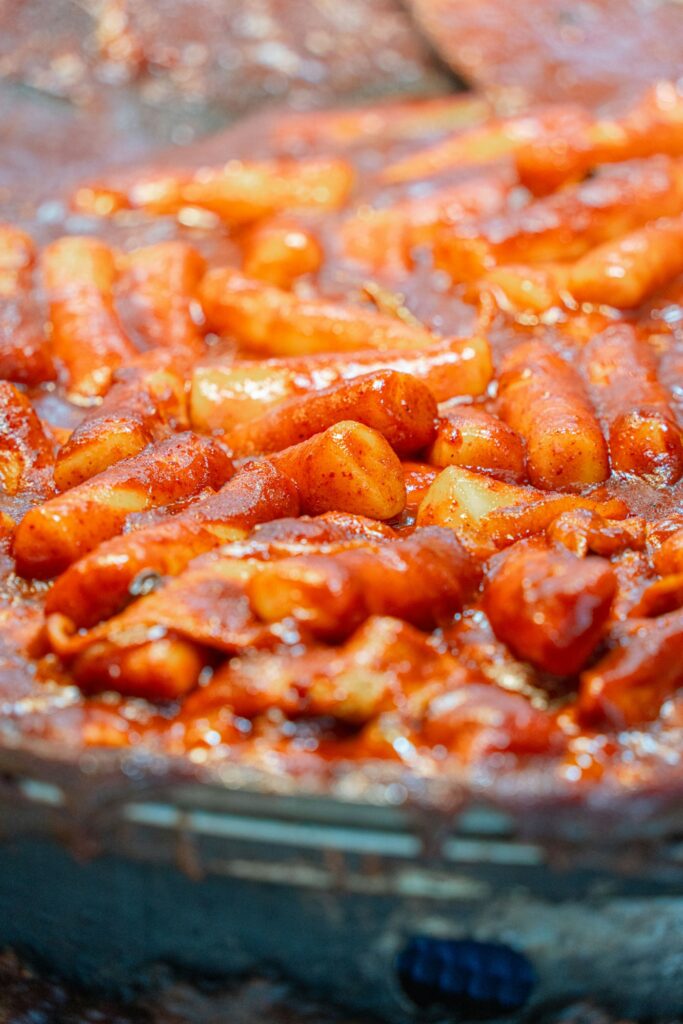
Photo by lee seunghyub on Unsplash.
Tteokbokki (떡볶이) is one of Korea’s most beloved street foods. It’s made with chewy rice or wheat cakes simmered in a sweet-and-spicy sauce.
For many Koreans, it’s more than just food. It’s a taste of childhood.
But there’s more to this simple-looking dish than you might think.
Let’s explore what makes this dish special, how Koreans enjoy it, and how you can order it yourself in Korea!
1. What Is Tteokbokki, Anyway?
The classic red version is made by simmering tteok (떡), chewy Korean rice or wheat cakes, in a sauce seasoned with:
- Gochujang (고추장): Korean red chili paste.
- Gochugaru (고춧가루): Korean red pepper flakes.
Despite its name suggesting stir-frying, the dish is usually simmered in sauce.
It looks incredibly spicy, doesn’t it?
But here’s the thing.
Tteokbokki isn’t just spicy. It’s sweet, too!
The sweetness balances the heat, creating a flavor that keeps you coming back for more.
Every snack shop has its own recipe. Some versions are sweeter, while others pack much more heat.
And that’s part of the fun — finding your favorite!
2. Rice or Wheat? The Tteokbokki Debate!
Here’s something you might not know.
Not every version uses the same kind of tteok!
Two kinds are especially common.
Ssal-tteok (쌀떡) — Rice Cakes
Made primarily from rice flour, these have a wonderfully chewy, springy texture.
Mil-tteok (밀떡) — Wheat Cakes
Made primarily from wheat flour, these tend to absorb the sauce well. For many Koreans, including me, they bring back memories of old-school snack shops.
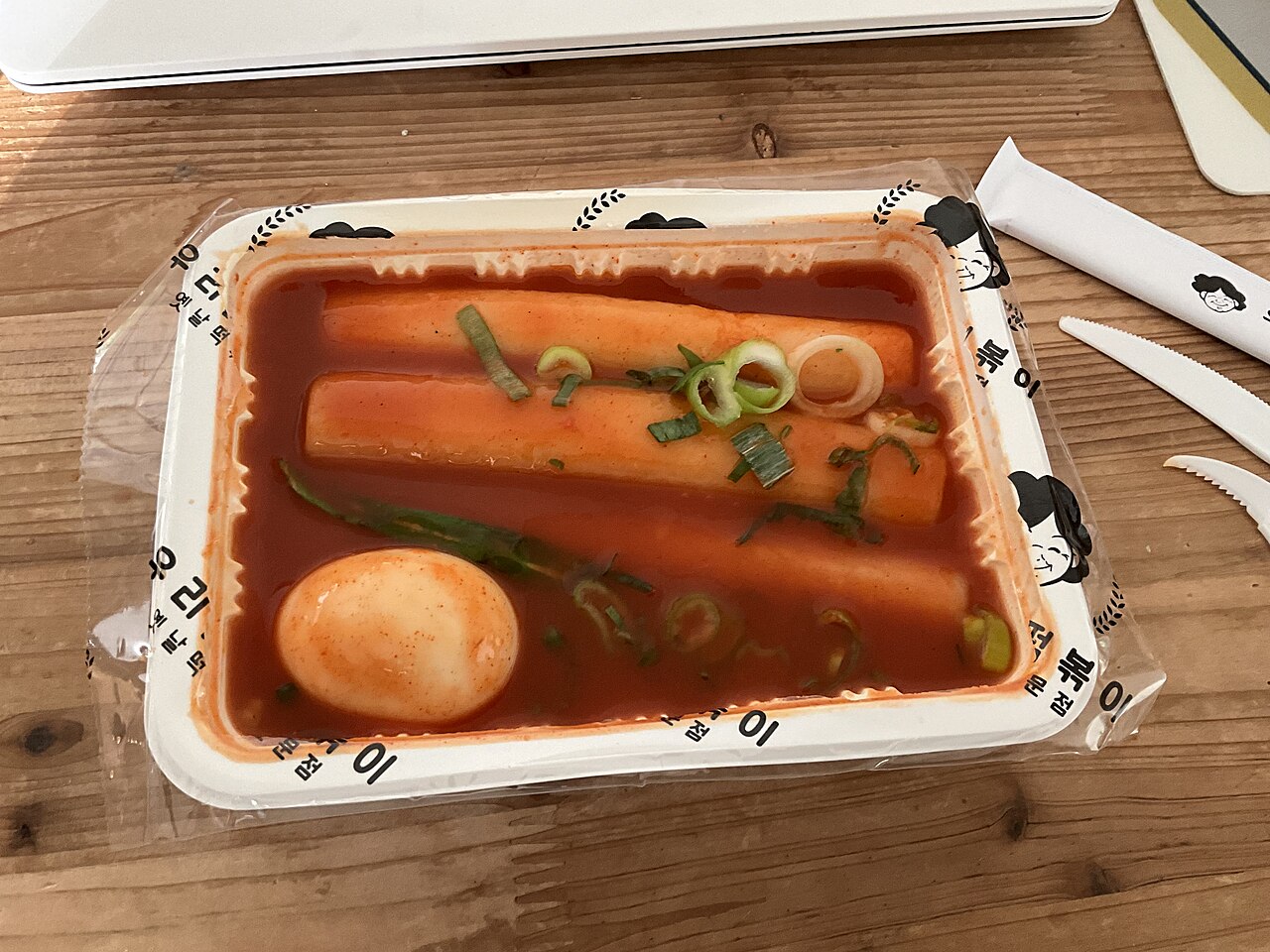
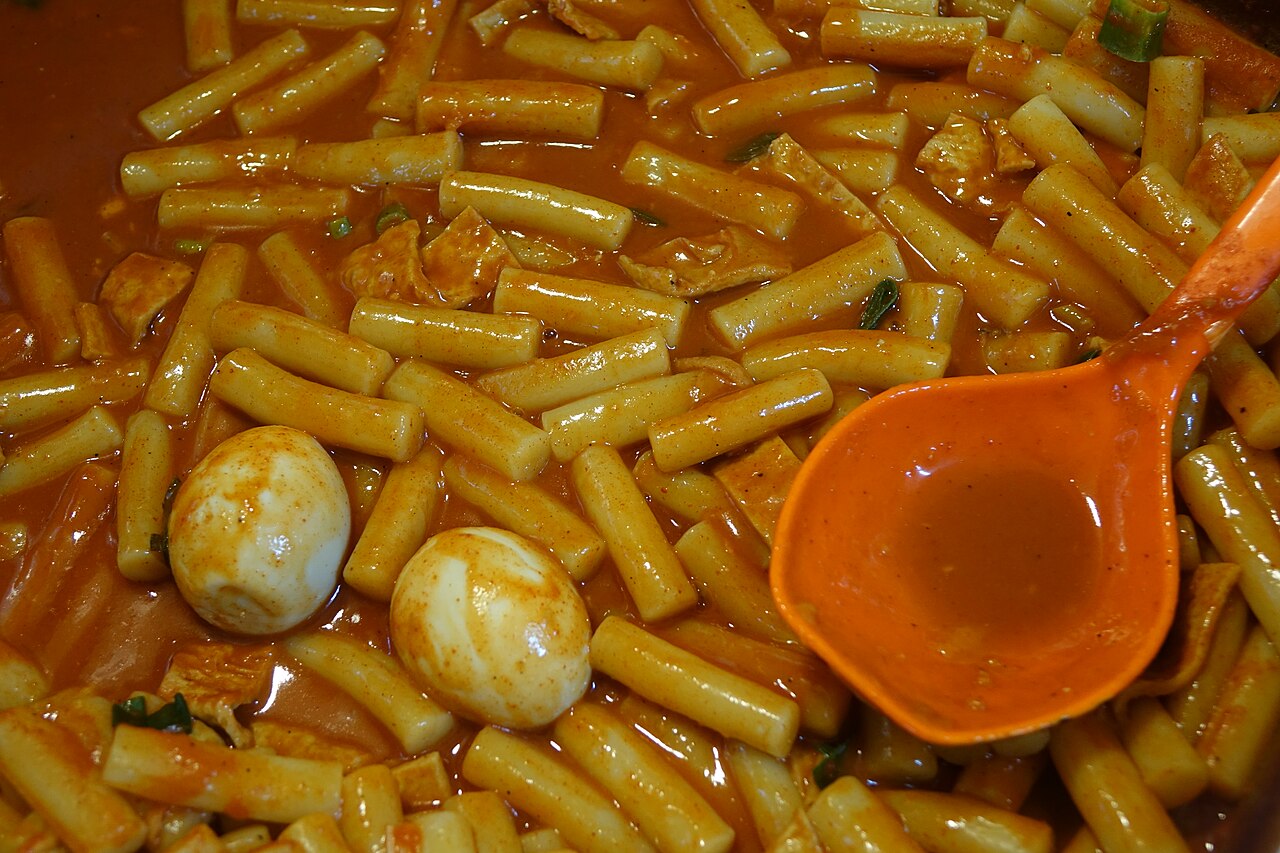
So, which one tastes better?
There’s no right answer. It all comes down to personal preference!
Try both and discover your favorite.
But wait. Is that the whole story?
No, no, no! The world of tteokbokki is much bigger than that!
3. One Dish, Two Ways to Enjoy It
Bunsikjip (분식집) — Korean Snack Shop
At a typical Korean snack shop, it’s prepared in advance and kept hot.
When you order, you’re served a portion right away.
Quick, simple, and delicious!
Jeukseok Tteokbokki (즉석떡볶이) — Cook-at-the-Table Tteokbokki
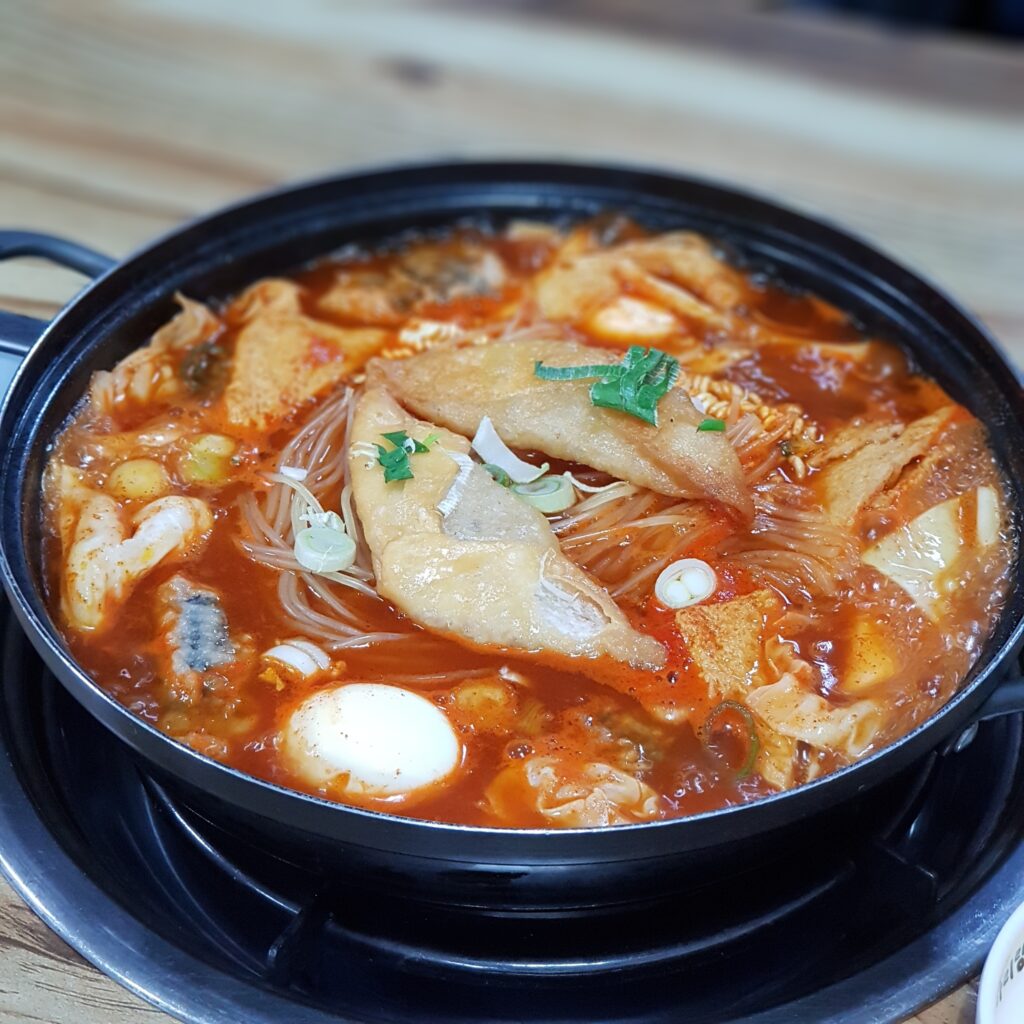
Photo by 박진영, via Wikimedia Commons (CC0).
Now, this is a different experience.
You choose your ingredients and toppings, then cook everything right at your table.
Think you’re done once the rice cakes are gone?
Not so fast. Here comes the fried rice!
After you’ve eaten, the remaining sauce is used to make bokkeumbap (볶음밥), Korean-style fried rice.
For me, this final course is one of the highlights of the meal.
Trust me, save some room for it!
Some restaurants also offer takeaway sets that you can cook at home.
4. Is Tteokbokki Always Spicy? Think Again!
Nope! Tteokbokki comes in different flavors.
- Classic Red Tteokbokki (떡볶이): The familiar sweet-and-spicy version.
- Jjajang Tteokbokki (짜장떡볶이): Made with Korean-style black bean sauce. I remember neighborhood shops that specialized in it!
- Rosé Tteokbokki (로제떡볶이): A rich, creamy variation with Korean spicy flavors.
There are also chains like Yeopgi Tteokbokki, famous for their intensely spicy versions.
Franchise restaurants offer relatively consistent flavors, but I’d also recommend exploring local snack shops.
Every shop has its own charm, and you never know where you’ll find your favorite!
How Spicy Is It?
That depends on the restaurant.
If you’re worried about the heat, ask before ordering.
많이 매워요?
Mani maewoyo?
“Is it very spicy?”
안 매운 떡볶이 있어요?
An maeun tteokbokki isseoyo?
“Do you have any non-spicy tteokbokki?”
Remember, many snack shops prepare it in advance, so adjusting the spice level of an individual serving usually isn’t possible.
5. What Goes with Tteokbokki? Meet Its Best Friends!
Tteokbokki is great on its own.
But here’s a little secret: it’s even better with friends!
And I don’t just mean the people you’re eating with.
Let me introduce you to its best food companions.
Eomuk (어묵) — Korean Fish Cakes
Fish cakes are often added directly to the dish, but you can also enjoy them in a warm broth.
A spicy plate with hot fish cake soup on a cold winter day?
Fantastic!
Twigim (튀김) — Korean Deep-Fried Snacks
Ahhh, fried snacks! One of my favorite combinations.
Popular varieties include:
- Yachae Twigim (야채튀김): Vegetable fritters.
- Goguma Twigim (고구마튀김): Fried sweet potato.
- Gimmari Twigim (김말이튀김): Fried seaweed rolls filled with glass noodles.
- Ojingeo Twigim (오징어튀김): Fried squid.
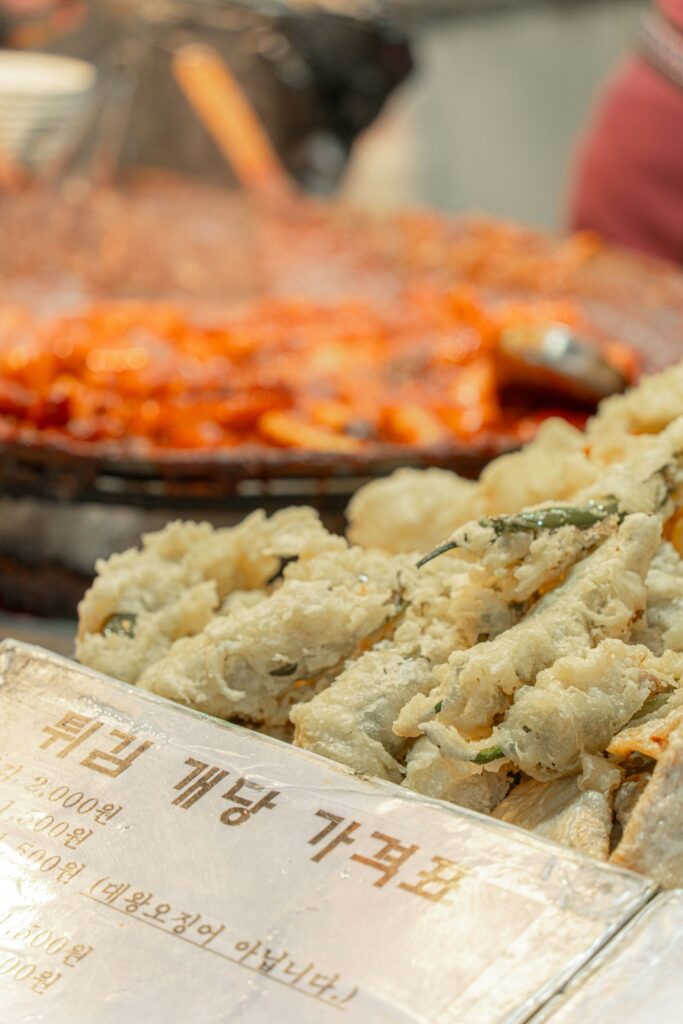
Photo by lee seunghyub on Unsplash.
Here’s my tip: Dip your twigim into the tteokbokki sauce!
Love crispy food? Dip it right before eating.
Prefer something softer? Let it soak up the sauce for a while.
Same fried snack, two completely different experiences!
Sundae (순대) — Korean Blood Sausage
No, not an ice cream sundae!
Korean sundae is a sausage commonly made with glass noodles and pig’s blood.
Try dipping it into the red sauce. It’s a classic combination!
Gimbap (김밥) — Korean Seaweed Rice Rolls
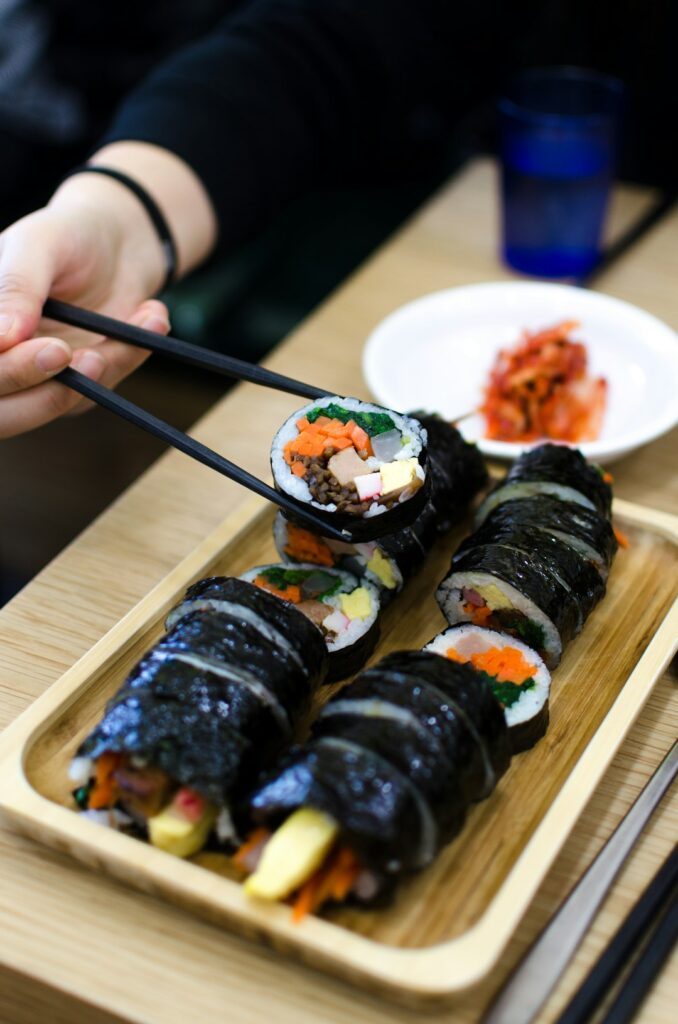
Photo by Filippo Faruffini on Unsplash.
Gimbap is made with seasoned rice and various fillings rolled in dried seaweed.
It’s delicious on its own, but dipping it into the sauce gives it a whole new flavor.
Come to think of it, that sweet-and-spicy sauce goes with almost everything!
Tteok-Twi-Sun (떡튀순) — The Ultimate Snack Trio
Koreans even have a nickname for this popular combination:
- 떡: Tteokbokki (떡볶이)
- 튀: Twigim (튀김)
- 순: Sundae (순대)
Put them together and you get Tteok-Twi-Sun!
You’ll also hear Gim-Tteok-Sun (김떡순), meaning gimbap, tteokbokki, and sundae.
Now you know a little Korean snack-shop lingo!
6. Ready to Order? Say It in Korean!
You’ve learned what to eat. Now let’s order it!
Ordering Tteokbokki
떡볶이 1인분 주세요!
Tteokbokki irinbun juseyo!
“One serving of tteokbokki, please!”
Ordering With a Side Dish
떡볶이 1인분이랑 튀김 1인분 주세요!
Tteokbokki irinbun-irang twigim irinbun juseyo!
“One serving of tteokbokki and one serving of fried snacks, please!”
You can order sundae or gimbap instead of twigim, too.
If you’re with a friend, sharing different dishes is a great way to enjoy Korean snack-shop food!
Two useful Korean menu words:
- 1인분 (irinbun): One serving.
- 한 줄 (han jul): One roll, commonly used for gimbap.
That’s it! You’re ready to give it a try.
7. My 100-Won Tteokbokki Memory
When I was a child, I used to buy 100 won’s worth of tteokbokki from a little street cart near my school.
The woman selling it would serve the tteokbokki on a green plastic plate covered with a thin plastic sheet. After we finished eating, she’d throw away the sheet and reuse the plate.
Later came cup tteokbokki (컵떡볶이), a smaller, cheaper portion we could enjoy while walking home from school.
Today, you’ll find countless varieties, from neighborhood snack shops to big restaurant chains.
But to me, it still brings back memories of that little street cart and my childhood.
That’s why this dish will always be more than just food to me.
If you visit Korea, don’t forget to try it with its best friends!
What’s your favorite tteokbokki combination?
1 thought on “Tteokbokki! The Inside Scoop from a Korean Who Grew Up Eating It!!!”