Quick Help
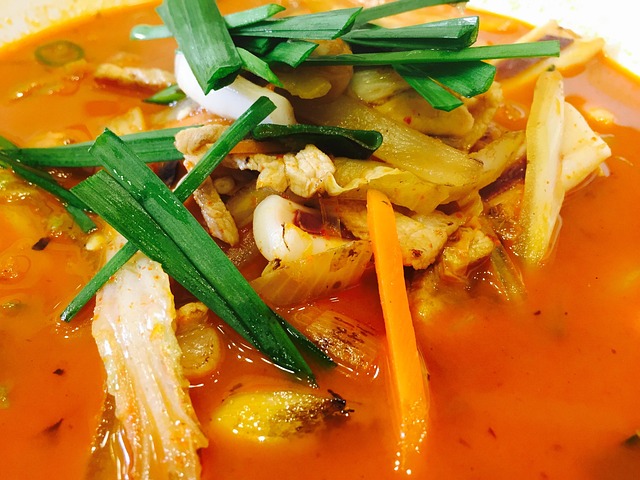
- What it is: Jjamppong (짬뽕), a Korean-Chinese noodle soup commonly made with vegetables and seafood in a spicy broth.
- Can’t choose? Look for 짬짜면, a half-jjamppong, half-jjajangmyeon combination.
- Prefer rice? Order 짬뽕밥, jjamppong-style soup served with rice instead of noodles.
- Watch the heat: 백짬뽕 can still be spicy even though the broth isn’t red.
- Contains: Vegetables and seafood are common; versions may include beef brisket or oysters, with noodles or rice. Recipes vary by restaurant, so ask if you have allergies.
Hey, Sikgu!
Wondering what “Sikgu” means? Find out here
Today, we’re facing the question that always comes up at a Korean-Chinese restaurant:
“Jjajangmyeon or jjamppong?”
Jjajangmyeon is the black bean sauce noodle dish; jjamppong is the spicy noodle soup. I want both, and you’re asking me to choose just one?
Let’s get to know jjamppong today!
1. Jjamppong? That’s an Interesting Name
In everyday Korean, people sometimes say “짬뽕이 됐다” when things have become all mixed up. That expression comes to mind when I see all the ingredients in a bowl of jjamppong.
So what’s in the restaurant dish?
Typically, vegetables and seafood are stir-fried, then combined with broth and seasonings such as gochugaru, Korean chili flakes, and served with noodles. That red broth is hard to miss—and it can be spicy!
Still can’t choose between the two noodle dishes? Check whether the menu has 짬짜면 (jjamjjamyeon).
Remember half-and-half chicken: half sauced, half plain fried? Jjamjjamyeon takes a similar approach. A divided bowl holds half jjajangmyeon and half jjamppong.
Take 짬 from 짬뽕, 짜 from 짜장면, and 면, meaning noodles. The first two are pieces of the dish names, not separate ingredient words.
Let’s Read Hangul!
짬뽕
Jjamppong
짜장면
Jjajangmyeon
↓
What happens when you combine the two?
짬짜면
Jjamjjamyeon
Half Jjamppong, Half Jjajangmyeon
Jjamppong + Jjajangmyeon in one bowl
Perfect for Sikgu who want to try both without ordering two full bowls! Haha.
2. There’s More Than One Kind of Jjamppong
Both Korean-Chinese restaurants and jjamppong specialists can have several versions. Look for these names:
| Menu name | What to expect |
|---|---|
| 짬뽕 — Jjamppong | The basic version. |
| 삼선짬뽕 — Samseon jjamppong | Various kinds of seafood, such as shrimp. |
| 차돌짬뽕 — Chadol jjamppong | With thinly sliced beef brisket. |
| 굴짬뽕 — Gul jjamppong | With oysters. |
| 백짬뽕 — Baek jjamppong | A version without red broth. It can still be spicy! |
| 볶음짬뽕 — Bokkeum jjamppong | Stir-fried, with little or no broth. |
| 짬뽕밥 — Jjamppongbap | Jjamppong-style soup with rice instead of noodles. |
Ingredients and cooking methods vary, even when the menu name is the same.
Especially remember: a broth that isn’t red isn’t automatically mild. If you’re concerned about heat, ask before ordering baek jjamppong.
When you feel like rice rather than noodles, look for 짬뽕 + 밥 → 짬뽕밥. Recognizing 밥 (bap), meaning rice, tells you what changes in this version.
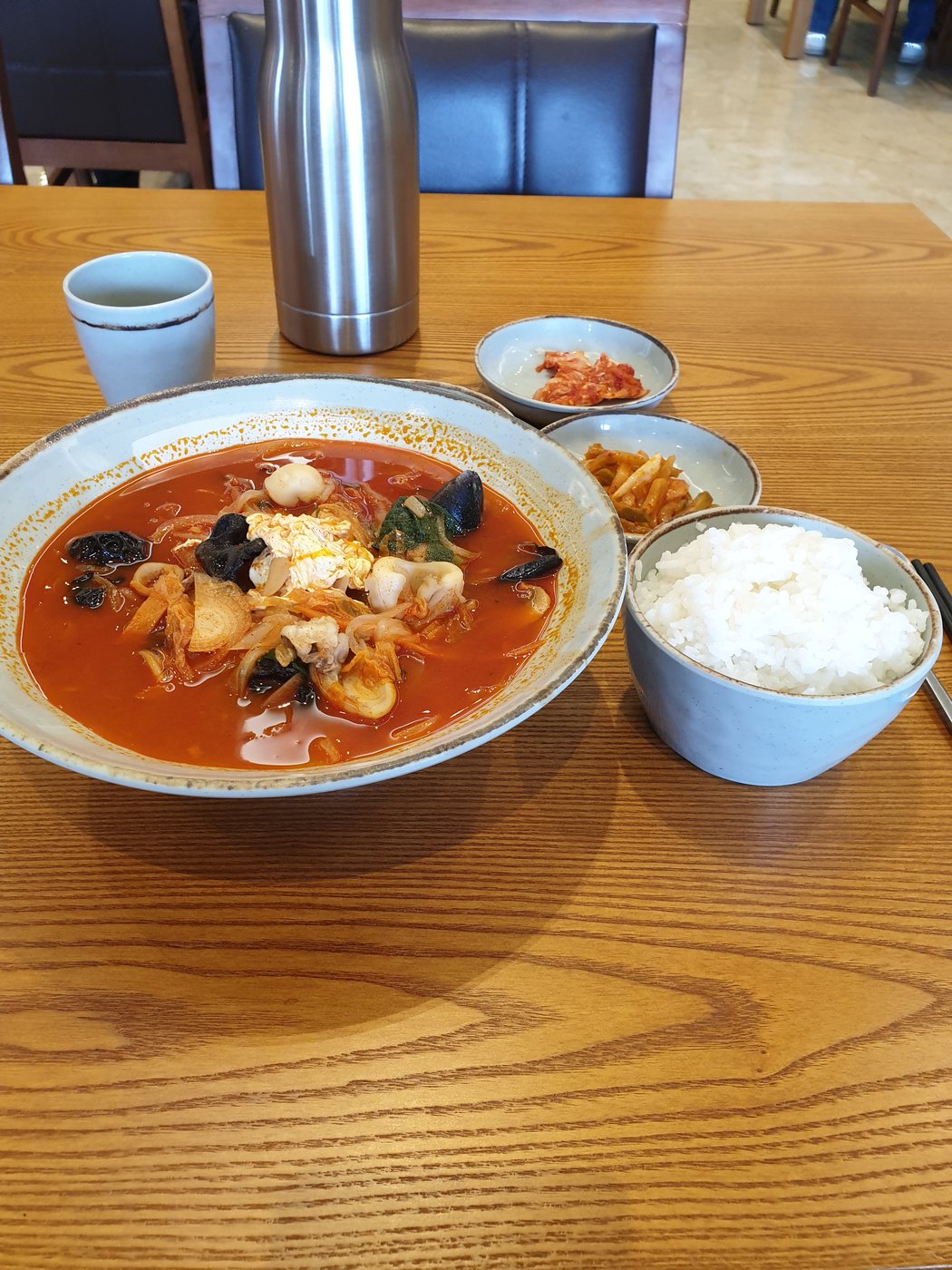
I order jjamppongbap often myself!
3. Say This When You Order
SAY THIS
“사장님, 여기 짬뽕 하나 주세요!”
Sajangnim, yeogi jjamppong hana juseyo!
“One jjamppong, please!”
SAY THIS
“사장님, 차돌짬뽕 하나 주세요!”
Sajangnim, chadol jjamppong hana juseyo!
“One beef brisket jjamppong, please!”
SAY THIS
“사장님, 짬뽕밥 하나 주세요!”
Sajangnim, jjamppongbap hana juseyo!
“One jjamppongbap, please!”
SAY THIS
“사장님, 짬짜면 하나 주세요!”
Sajangnim, jjamjjamyeon hana juseyo!
“One jjamjjamyeon, please!”