Hey, Sikgu!
Wondering what “Sikgu” means? Find out here →
Today’s dish is gamjatang (감자탕).
Wait. Gamja means potato. So… potato soup?
NOPE! Here’s the twist: the real star of gamjatang isn’t the potato. It’s pork backbone!
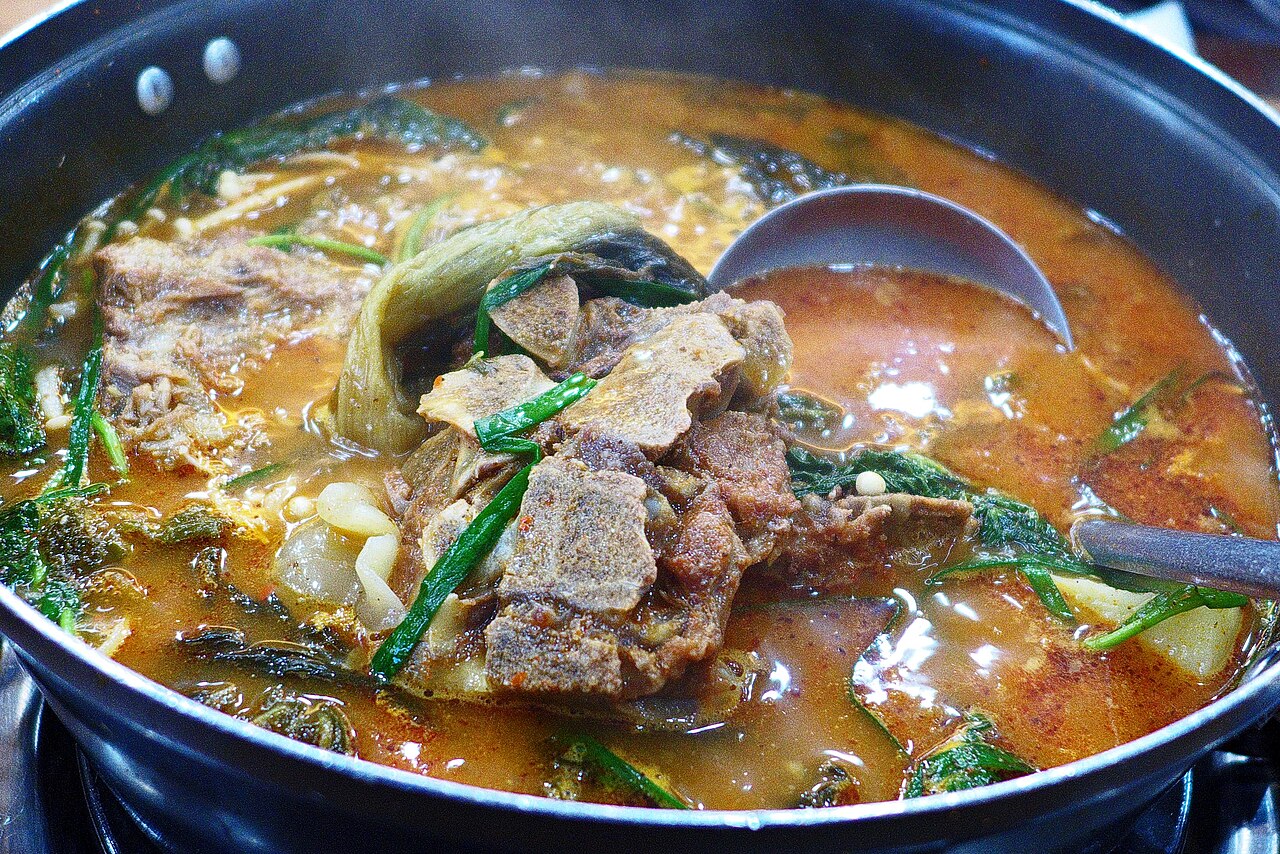
Gamjatang is a hearty Korean pork-bone stew, simmered with meaty bones, potatoes, greens, and a rich, often spicy broth. It’s usually brought to the table in a big pot to share.
Read the Korean menu
감자탕
Gamjatang
Korean pork backbone stew
감
gam · ㄱ + ㅏ + ㅁ
자
ja · ㅈ + ㅏ
탕
tang · ㅌ + ㅏ + ㅇ
Read it together: gam-ja-tang
New to Hangul? Learn the basics in our guide to reading Korean menus.
So why is it called gamjatang? There are several theories about the name, including ones involving old terms for parts of the pig. But its exact origin isn’t firmly established.
One thing is certain: those pork bones are the main event.
Now, let’s dig in.
1. Meet the REAL Star: Pork Bones!
On the menu, gamjatang usually comes in small, medium, or large pots. Some restaurants offer extra toppings too.
Inside? Pork bones, potatoes, leafy greens called ugeoji, and often ground perilla seeds for a nutty flavor. Mushrooms or sujebi (hand-torn dough) may be added, depending on the restaurant.
Let it bubble at your table. Then comes the real question: How do you eat those enormous bones?
2. How to Eat Gamjatang Like a Local
Forget the fancy table manners—this meal gets hands-on!
| How to eat it | Local tip |
|---|---|
| Pull off the meat | Use your hands, or disposable gloves if provided. Tender pork usually comes off the bones easily. |
| Meat + broth | Enjoy the meat with a little broth in your own bowl. |
| Mash the potato | Crush a potato into the rich broth. Heavenly! |
| Dipping sauce | If there's a soy-and-mustard dipping sauce, try it with the pork. |
All done? Not so fast.
3. Leaving Already?! Not Without Bokkeumbap (볶음밥)!
The pork is gone, but that rich, concentrated broth is still in the pot.
Time to leave? NO, NO, NO!
Here comes the Korean grand finale: bokkeumbap (볶음밥)!
At many gamjatang restaurants, rice is stir-fried in the leftover broth and seasonings, soaking up all that flavor. It’s practically a whole new dish.
And here’s the magic: you’re already full, but somehow there’s still room for bokkeumbap!
If the restaurant offers it, share a portion—even just one if they’ll let you.
Promise me you won’t forget the bokkeumbap finale!
4. Wait… What’s Ppyeo-haejangguk (뼈해장국)?
You’ll also spot ppyeo-haejangguk (뼈해장국) on the menu. It has similar ingredients and flavors to gamjatang, but comes as a single serving in a hot earthenware bowl.
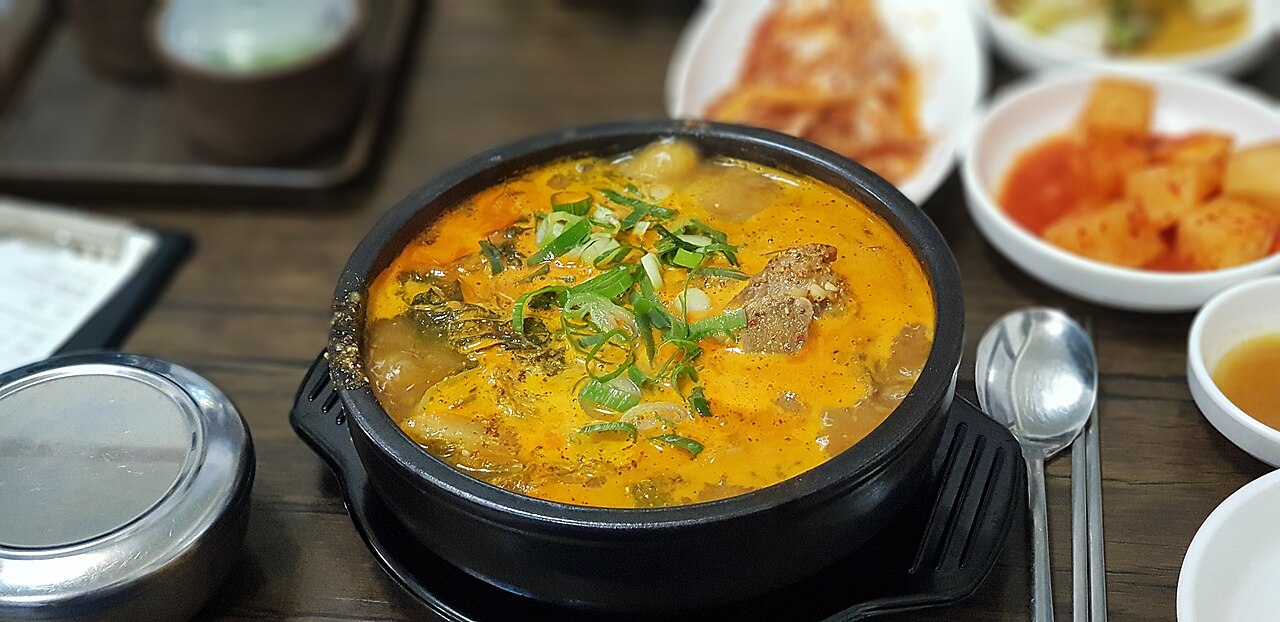
The name combines 뼈 (bone), 해장 (hangover relief), and 국 (soup)—but you don’t need a hangover to enjoy it.
Traveling alone? This one’s for you!
Read the Korean menu
뼈해장국
Ppyeo-haejangguk
Pork bone soup for one
뼈
ppyeo · ㅃ + ㅕ
해
hae · ㅎ + ㅐ
장
jang · ㅈ + ㅏ + ㅇ
국
guk · ㄱ + ㅜ + ㄱ
Read it together: ppyeo-hae-jang-guk
The only downside? Usually, no bokkeumbap finale.
Ah… the bokkeumbap…
5. Ready to Order in Korean?
You’ve learned how to eat it. Now let’s order it like someone who knows their way around a Korean restaurant.
On many menus, sizes are written as 소 / 중 / 대:
- 소 (so) — small
- 중 (jung) — medium
- 대 (dae) — large
But here’s a fun local detail: when speaking, Koreans often say 소짜 (sojja), 중짜 (jungjja), 대짜 (daejja) for the different sizes.
Try one of these:
Ordering a small pot to share
사장님, 여기 감자탕 소짜 하나 주세요!
Sajangnim, yeogi gamjatang sojja hana juseyo!
Excuse me! One small gamjatang, please!
In a casual Korean restaurant, calling out sajangnim (boss/owner) like this sounds wonderfully local. Imagine saying it with confidence!
Eating alone? Order the single-serving soup
뼈해장국 하나 주세요!
Ppyeo-haejangguk hana juseyo!
One bowl of pork-bone soup, please!
The all-important bokkeumbap finale
볶음밥 2인분 주세요!
Bokkeumbap i-inbun juseyo!
Two portions of bokkeumbap, please!
Need more kimchi?
김치 좀 더 주세요!
Gimchi jom deo juseyo!
Could we have some more kimchi, please?
See? You’re already sounding like you’ve done this before.
Craving something hot and comforting in Korea? Hungry enough for a seriously satisfying meal? Or just in the mood for something hearty after a late night?
Walk into a gamjatang restaurant and give it a try.
Pull that tender pork off the bones, enjoy the deep broth, and—if it’s on the menu—save a little room for bokkeumbap.
That’s how I’d want you to experience gamjatang.