Bibimbap! One of Korea’s most famous dishes. You’ve probably heard of it, even if you haven’t tried it yet.
It’s a bowl of rice topped with colorful vegetables, often an egg, sometimes meat, and a sauce that brings everything together.
Planning a trip to Korea? Let’s learn how to read bibimbap on a Korean menu, order it yourself, and enjoy it like a local!
But here’s something you might not know.
Did you know that bibimbap has been saving Korean moms from the daily struggle of preparing meals for their kids, especially during school vacations?
Yes, really!
In Korean Homes, Bibimbap Is a Little Different!
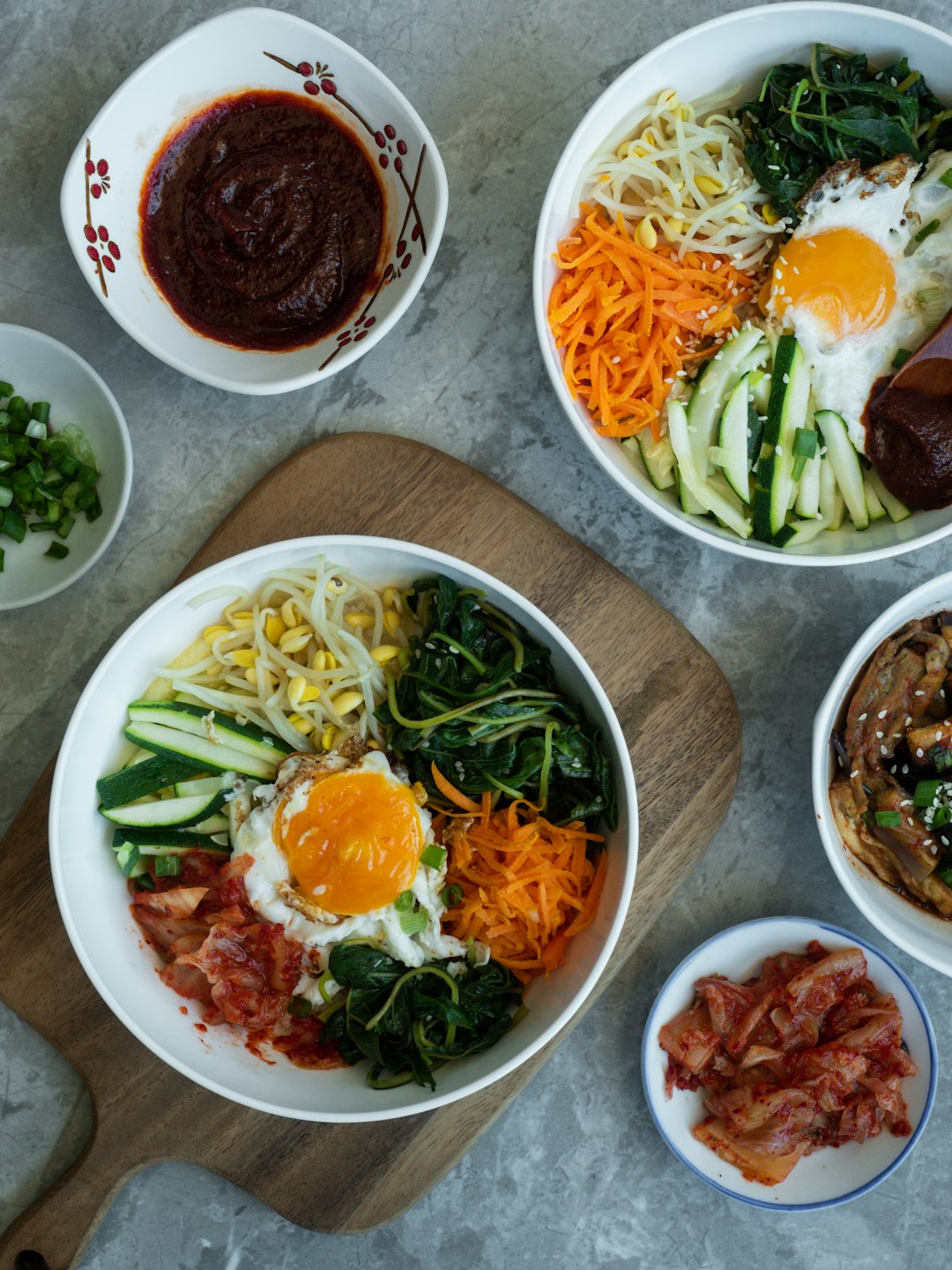
When you order bibimbap at a restaurant, everything looks beautiful. Colorful vegetables are neatly arranged over a bowl of rice.
Almost too pretty to mix, right?
But at home? That’s a different story!
Don’t feel like cooking? Too many side dishes left over? Need to clear out the fridge?
Bibimbap to the rescue!
In Korea, we have a casual expression called 냉털 (naeng-teol). It means using up whatever is left in the fridge.
And bibimbap is perfect for that.
Grab a bowl of rice, throw in some leftover vegetables or side dishes, add a fried egg, a little chili paste, and sesame oil.
Mix, mix, mix!
There you go. Lunch is ready!
Of course, not every leftover belongs in bibimbap. But that’s the fun part. You don’t need an exact recipe.
So while restaurant bibimbap might look like a carefully prepared masterpiece, at home, it’s often just a quick, delicious way to put a meal together.
Pretty clever, isn’t it?
Can You Read This? Let’s Learn Some Hangul!
Okay! Time for a little Korean. You don’t need to memorize the whole alphabet today. Let’s start with one food you already know!
비빔밥
Bi-bim-bap — mixed rice.
The name is actually pretty simple: 비빔 (bi-bim) means “mixing,” and 밥 (bap) means “rice.”
But here’s the fun part. Hangul letters fit together into little syllable blocks. See how this name has three blocks?
비 · 빔 · 밥 — bi · bim · bap.
First, let’s see how 비빔 (bi-bim) is built!
| Hangul | Letters | Sound |
|---|---|---|
| 비 | ㅂ + ㅣ | bi |
| 빔 | ㅂ + ㅣ + ㅁ | bim |
비 + 빔 = 비빔 (bi-bim). Together, the word means “mixed” or “mixing.” It comes from 비비다 (bibida — to mix). The two syllables are parts of one word, not two separate words with their own meanings.
Here’s a handy menu clue: 비빔국수 (bibim guksu — mixed noodles) also starts with 비빔. That’s one more Korean menu name you can figure out!
Now let’s zoom in on the last block: 밥 (bap) — cooked rice!
ㅂ + ㅏ + ㅂ → 밥
It’s one syllable made from three Hangul letters. Here, the first ㅂ sounds close to ‘b’, and the final ㅂ closes with a ‘p’ sound.
Now, your turn!
Can you spot 밥 (bap, rice) in 김밥 (gim-bap, seaweed rice roll)?
Yep! It’s the last block. You just recognized a Korean word in a totally different food name!
And look at 돌솥비빔밥 (dol-sot bi-bim-bap, hot stone-bowl bibimbap). You can already recognize 비빔밥 (bi-bim-bap, mixed rice) at the end.
See? A little Hangul goes a long way. Now let’s get back to the good stuff — eating it!
Want to read more Korean food names on your own? Start with our beginner’s guide to reading Korean menus →
So, What’s the Secret to Good Bibimbap?
Let’s say you’ve just ordered bibimbap at a Korean restaurant.
In front of you is a bowl of rice with bean sprouts, spinach, carrots, and other vegetables. There might be an egg or some meat on top, too.
Now what?
First, let’s talk about 고추장 (go-chu-jang) — Korean red chili paste.
This is one of the most common sauces used in bibimbap.
But here’s my advice.
Don’t dump it all in at once!!
Gochujang can be spicy and salty, so start with a little. Mix everything, take a bite, and add more if you want.
Some restaurants serve it separately, while others put it directly into the bowl.
And not every bibimbap uses gochujang. Some versions come with a soy-based sauce instead.
Now, there’s another ingredient I absolutely have to mention.
A very special oil!
참기름 (cham-gi-reum) — Sesame oil!!!
Oh, this stuff is important!
That rich, nutty aroma takes bibimbap to another level. For me, bibimbap just isn’t quite the same without it.
Many restaurants already add sesame oil, but if it’s served separately, give it a try!
Add your sauce, mix everything together, and enjoy!
One more thing. Bibimbap is packed with vegetables, so it can be a good option for vegetarians. Just remember that some versions contain meat, eggs, or animal-based ingredients in the seasoning.
It’s always worth checking before you order.
My Personal Favorite? Dolsot Bibimbap!
Now we’re talking!!
Have you ever seen 돌솥비빔밥 (dol-sot bi-bim-bap) on a Korean menu?
What’s the difference between regular bibimbap and dolsot bibimbap?
It’s the bowl!
Dolsot literally refers to a stone pot. But depending on the restaurant, your bibimbap might arrive in an actual stone bowl or a heated earthenware bowl.
Either way, it’s served piping hot!
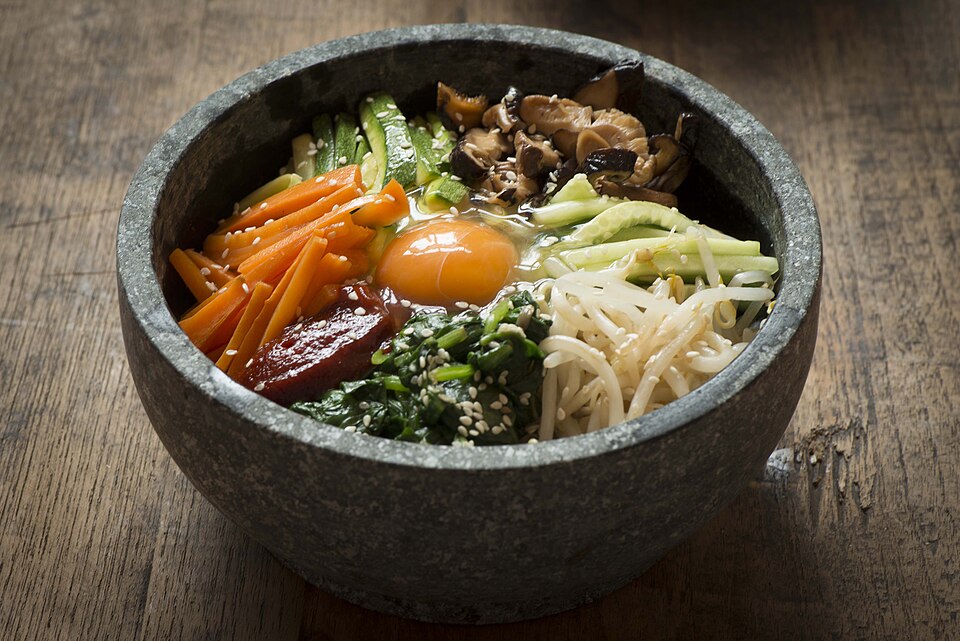
And that’s where the magic happens.
Here’s my personal trick.
When your dolsot bibimbap arrives, wait about 30 seconds before mixing!
Why?
One word.
누룽지 (nu-rung-ji) — Crispy, toasted rice!
Here’s what I do.
Instead of scraping all the way down to the bottom with my spoon, I leave a thin layer of rice touching the hot bowl.
Then I gently mix the rice and vegetables above it.
While I’m enjoying my bibimbap, the rice at the bottom keeps toasting.
And if everything goes well, that bottom layer turns golden and crispy.
Once you’ve finished the mixed rice, scrape up those delicious crunchy bits!
Trust me. That’s one of my favorite parts of the whole meal!!!
Of course, every restaurant is different. Some bowls are hotter than others, so you won’t always get the same crispy result. And you don’t want to leave the rice so long that it burns.
Oh, and one more thing!
Please don’t touch the hot bowl with your bare hands!
Seriously. It’s HOT.
Let’s Read the Menu and Order Bibimbap!
Alright! Now you know how to enjoy bibimbap.
But can you order it yourself?
You might see several different kinds of bibimbap on a Korean menu.
Start with these two names. You’ll spot the same Hangul blocks you just learned!
Reading the Korean Menu
Let’s Order in Korean!
Now, let’s order!
You don’t need a long Korean sentence. Just pick what you want and say it!
See? Not so difficult!
Now you’re ready to order bibimbap in Korean!
At a bibimbap specialty restaurant, you might find lots of other versions, too.
Take a look at the words before “bibimbap” on the menu. They often tell you which ingredient or style makes that bowl different.
A little Korean goes a long way!
That’s What I Love About Bibimbap!
Restaurant-style or fridge-cleanout style — that’s the fun of bibimbap. There are no strict rules! More gochujang? Go for it. Love sesame oil? Me too!
Next time you spot 비빔밥 (bi-bim-bap, mixed rice) on a Korean menu, try reading it and ordering it yourself. Then mix it up and enjoy it your way!
And if you choose dolsot bibimbap, don’t forget that crispy rice at the bottom.
You can thank me later!!
Want to read another Korean menu favorite? Check out my gimbap guide next — and learn how to enjoy and order it in Korea!
Photo credit: Vicky Ng / Unsplash.