
Quick Help
- What they are: Bossam (보쌈) is usually boiled pork served with kimchi and leafy wraps. Jokbal (족발) is braised pork trotters.
- How to eat: Enjoy bossam as ssam (쌈) with kimchi and a little saeujeot, salted fermented shrimp. Try jokbal with bibim makguksu, mixed buckwheat noodles.
- My picks: Front-leg jokbal for a first try; bossam with makgeolli, traditional Korean rice wine.
- Contains: Pork; accompaniments may include kimchi, leafy vegetables, fermented shrimp, buckwheat noodles, or raw oysters in gul bossam. Jokbal is often cooked in soy-based seasoning. Recipes vary by restaurant, so ask if you have allergies.
Hey, Sikgu!
Wondering what “Sikgu” means? Find out here
Korean meat dishes aren’t all about the grill. We enjoy boiled meat, too!
Curious? Meet bossam and jokbal.
Boiled meat is called suyuk (수육). It can be pork or beef. Think of bossam as usually boiled pork enjoyed with kimchi or leafy wraps.
Then what is jokbal?
Let’s Read Hangul!
| 족Jok | 발Bal |
족 (jok) — Foot (Sino-Korean)
발 (bal) — Foot (Korean)
족발 (Jokbal)
Foot… foot? “Foot-foot?” Haha!
Let’s just call it jokbal.
It’s made by cooking the pig’s lower leg and foot.
“Why would I want to eat a pig’s foot?”
Give it a try! It’s delicious.
1. Bossam vs. Jokbal: What’s Different?
They use different cuts, and the cooking methods and seasonings differ, too.
| Choice | What to expect |
|---|---|
| 보쌈 · Bossam | Bossam lets you enjoy the mild flavor of boiled pork. What goes into the cooking liquid varies by restaurant. |
| 족발 · Jokbal | Jokbal is usually cooked with seasonings including soy sauce, which gives it a brown color. Bones often come on the plate, too. |
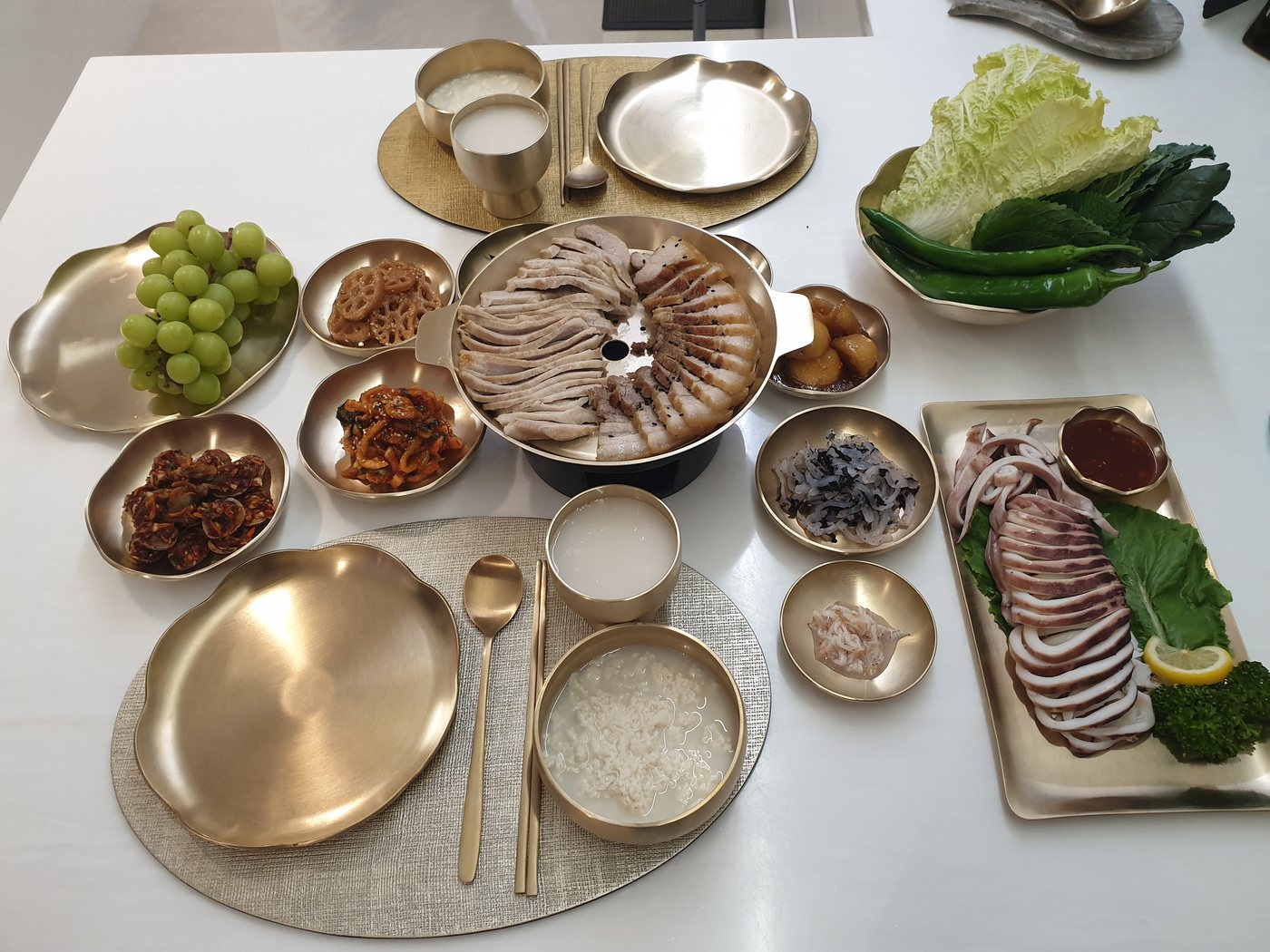
2. Bossam’s Best Friend: Kimchi!
Bossam has a very good friend: the kimchi served beside it!
What restaurants call bossam kimchi often has a touch of sweetness. Wrap it around a piece of pork, and you’ll see why Koreans keep coming back to kimchi.
And then there’s ssam, a leafy wrap.
Take a lettuce leaf or a piece of salted napa cabbage. Add bossam and kimchi, then a little saeujeot (새우젓)—salted fermented shrimp—and wrap it up.
One bite, and—ahh! A completely different pleasure from grilled meat.
If you see 굴 + 보쌈 → 굴보쌈 (gul bossam), the 굴 means oysters. This usually means bossam served with raw oysters and kimchi.
Oyster + bossam + kimchi in one bite?
Land meets sea, right in your mouth!
And with bossam, makgeolli (막걸리)—traditional Korean rice wine! This is a pairing I really recommend.
A bite of bossam, a sip of makgeolli. Please try it this way!
Bossam may be ordered by size or by servings. You may also see portions for two or three people. Choose according to your group and the amounts shown on the menu.
| Menu | Size |
|---|---|
| 소 (so) | Small |
| 중 (jung) | Medium |
| 대 (dae) | Large |
3. Jokbal Has a Friend, Too: Makguksu!
Does jokbal get its own perfect partner?
Of course! Meet makguksu (막국수), buckwheat noodles.
The bibim makguksu (비빔막국수) served at jokbal restaurants may look similar to bibimnaengmyeon. It combines buckwheat noodles, sweet-tangy seasoning, and plenty of vegetables.
Read the syllable blocks 막 + 국 + 수 → 막국수 (makguksu) on the menu. Together, they name the buckwheat noodle dish—not three separate ingredients.
Mix up the noodles and eat them with jokbal. Wow—how do I explain this combination?
Chewy jokbal with sweet-tangy makguksu. It makes me feel as though I could keep eating jokbal forever!
Sometimes bones with a little meat still attached come with your order, too.
Set the formalities aside for a moment, pick one up, and gnaw the meat off it. It’s a different experience from the sliced pieces.
4. Front Leg? Hind Leg? What Should I Order?
| Menu | Meaning |
|---|---|
| 앞다리 (apdari) | Front leg |
| 뒷다리 (dwitdari) | Hind leg |
Remember the spelling 뒷다리, rather than 뒤다리, when looking at the menu.
The cut—and sometimes the price—will differ.
For a first try, I recommend the front leg!
Some restaurants list front and hind legs; others use small, medium, and large. For four people, I’d start by looking at a large, but portions and other dishes matter, so ask the staff before choosing.
| Menu option | What you get |
|---|---|
| 매운 족발 (maeun jokbal) | Spicy-seasoned jokbal. It may be stir-fried or grilled, depending on the restaurant. |
| 반반 (banban) | Half regular and half spicy jokbal, where offered. |
Recognize 매운, meaning spicy, in 매운 + 족발 → 매운 족발. Want to try both regular and spicy? Look for 반반 (banban) on the menu.
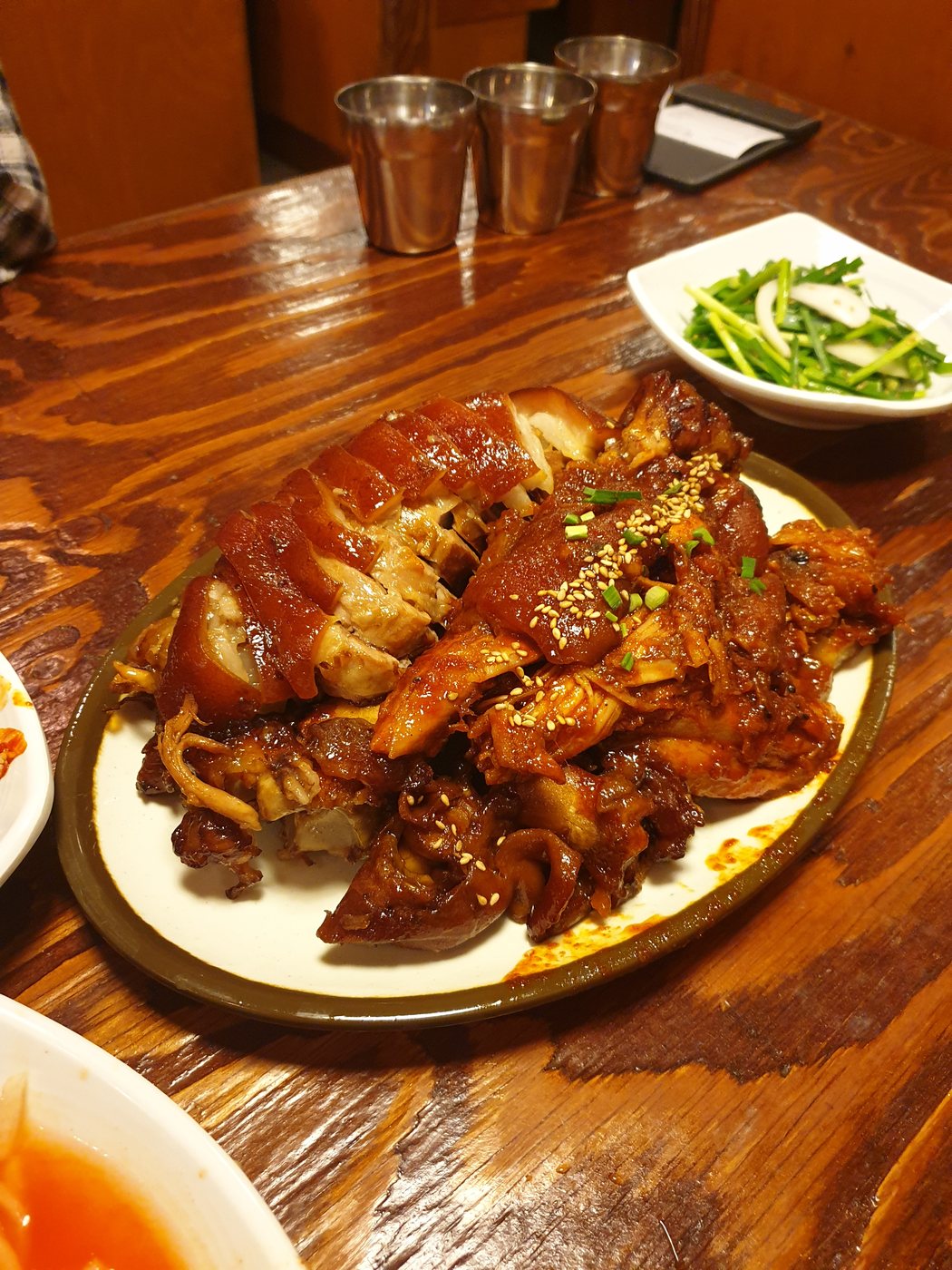
If you’re confident with spicy food, give it a go!
5. Say This When You Order
SAY THIS
“사장님, 여기 보쌈 2인분 주세요!”
Sajangnim, yeogi bossam i-inbun juseyo!
“Two servings of bossam, please!”
SAY THIS
“사장님, 여기 족발 대짜 주세요!”
Sajangnim, yeogi jokbal daejja juseyo!
“A large jokbal, please!”
SAY THIS
“사장님, 족발은 앞다리로 주세요!”
Sajangnim, jokbareun apdariro juseyo!
“The front-leg jokbal, please!”
SAY THIS
“사장님, 막걸리 한 병 주세요!”
Sajangnim, makgeolli han byeong juseyo!
“One bottle of makgeolli, please!”