Quick Help
- What it is: Miyeokguk (미역국), Korean seaweed soup, is a familiar part of a Korean birthday meal.
- Look for: 생일상 means a birthday spread; 미역국 means seaweed soup.
- Good to know: Avoiding it before an exam is a superstition, not a rule you need to follow.
- Ingredients: Seaweed is the star, often joined by beef, shellfish, or other ingredients depending on the recipe.
Hey, Sikgu!
Wondering what “Sikgu” means? Find out here
Today, let’s pull up a chair at a Korean birthday table!
The word 생일상 (saengilsang) breaks down into 생일 + 상: birthday + a table set with food. In other words, a birthday spread.
There’s one dish that immediately comes to mind when Koreans think of birthdays. Can you guess?
It’s miyeokguk, seaweed soup!
“Wait—seaweed? In soup?”
Read the name as 미역 + 국: seaweed + soup. It might sound unfamiliar at first, but in Korea, this soup and birthdays go hand in hand.
Let’s Read Hangul!
| 미 mi ㅁ + ㅣ | 역 yeok ㅇ + ㅕ + ㄱ | 국 guk ㄱ + ㅜ + ㄱ |
미 + 역 + 국 → 미역국
Miyeokguk — seaweed soup
These are the three syllable blocks to recognize. For the meaning, group them as 미역 (seaweed) + 국 (soup).
1. Why Seaweed Soup on Your Birthday?
Korea has a long tradition of mothers eating miyeokguk after giving birth. Birthday seaweed soup is often explained in connection with that custom.
The soup a mother ate when her child was born also appears on that child’s birthday table.
That’s why someone might ask you on your birthday:
“어~ 오늘 생일인데 미역국 먹었어?”
“Oh, it’s your birthday! Did you have miyeokguk?” Haha.
It’s almost a little birthday equation: birthday = seaweed soup.
2. But Not on Exam Day?
This birthday favorite gets a different reception before a big exam, such as the Suneung, Korea’s college entrance exam, or an important interview. Some people avoid it then.
Why? Seaweed is slippery!
In Korean, 미끄러지다 (to slip) can also mean failing an exam or not getting accepted. So the superstition goes: eat slippery seaweed, and you might ‘slip’ on your exam!
Of course, this is a superstition, not something that determines your exam results. Haha.
A welcome guest at birthdays, but suddenly out of favor on exam day. Same soup, very different treatment!
3. A Birthday Table Made with Care
I once cooked galbijjim (braised ribs), miyeokguk, and side dishes for my wife’s birthday.
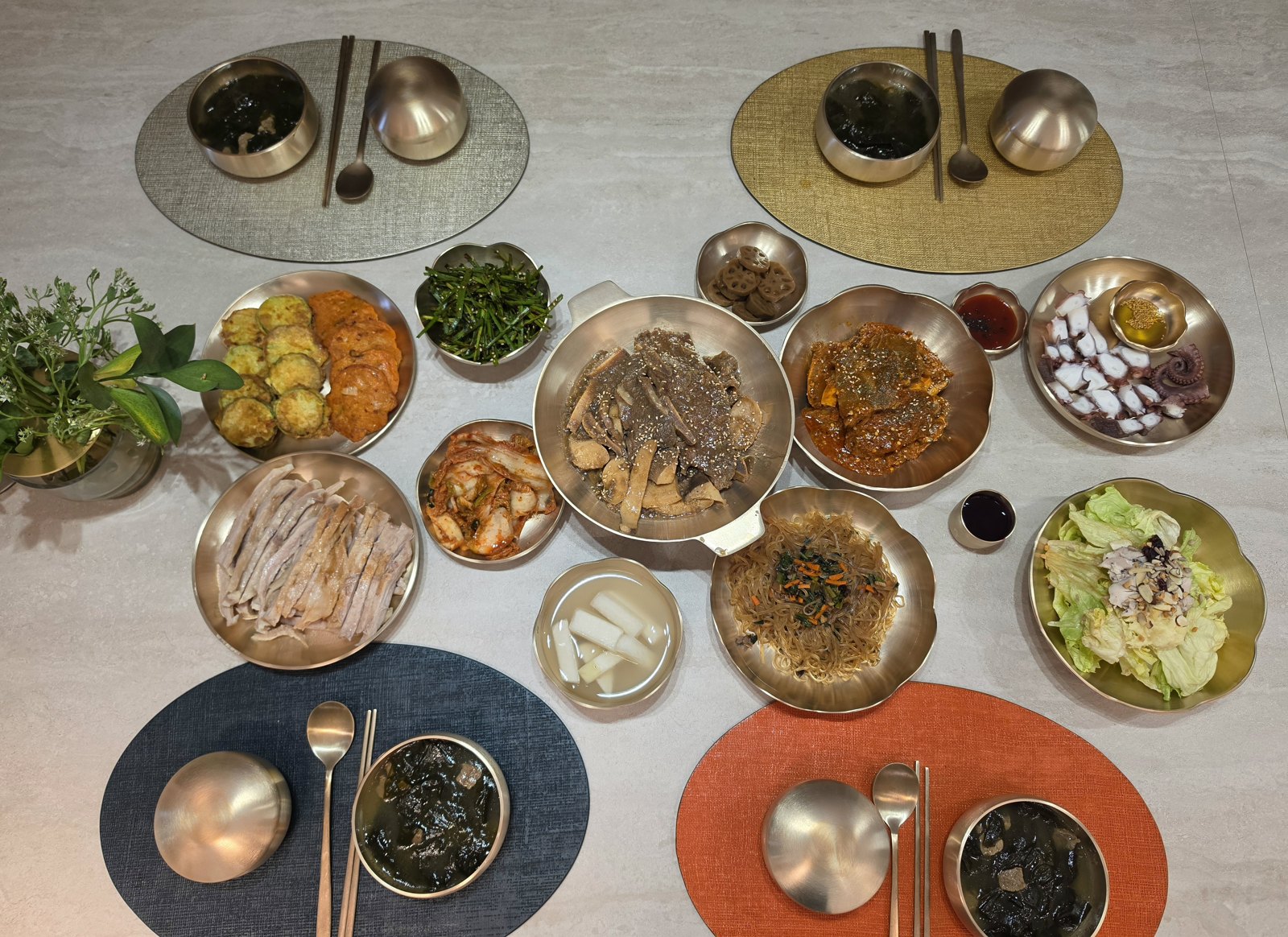
A birthday spread usually centers on what the birthday person wants to eat. Every family does things a little differently, but alongside rice and seaweed soup, you might find:
- Galbijjim (갈비찜): Beef or pork ribs braised with seasonings such as a soy-based sauce.
- Pork suyuk (돼지고기 수육): Pork cooked by boiling or steaming.
- Japchae (잡채): Glass noodles with vegetables, meat, and soy-based seasoning.
- Jeon (전): Often introduced as “Korean pancakes,” although that description doesn’t tell the whole story. There are so many kinds—let’s save them for another post!
The family gathers around the food, eats together, and celebrates.