Hey, Sikgu!
Wondering what “Sikgu” means? Find out here →
Today’s dish is jjajangmyeon—Korean-style Chinese noodles tossed in a thick, dark sauce. If you’ve never seen it before, you might think of squid ink pasta. But trust me, this tastes nothing like it!
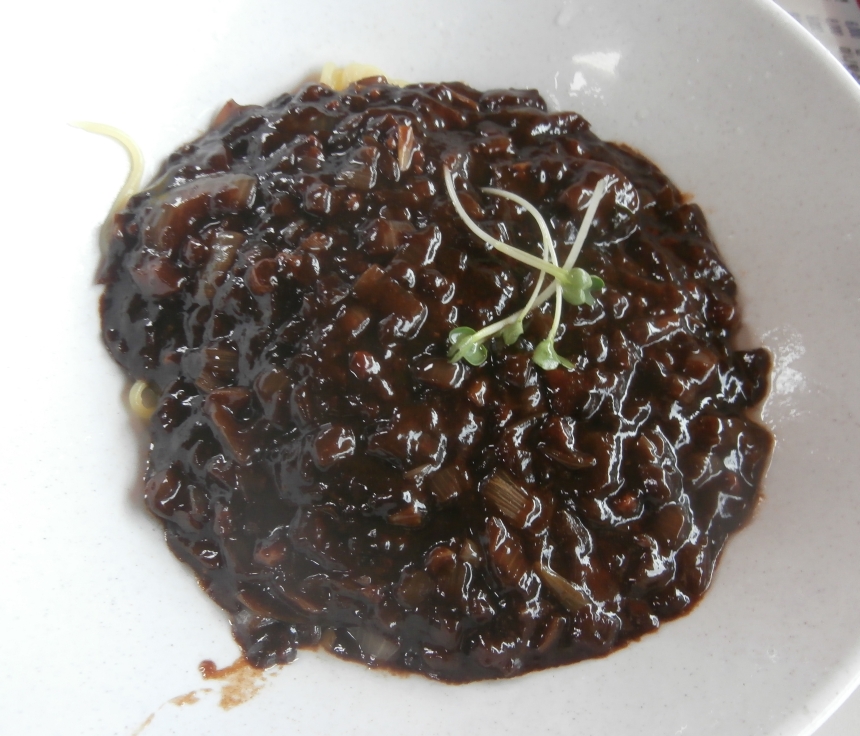
So What’s That Black Sauce?
It starts with chunjang (춘장), a dark, fermented soybean-and-wheat paste used in Korean-Chinese cooking. Stir-fry it with plenty of onions, pork, and a few other ingredients, and you get the rich sauce that makes jjajangmyeon so good. It’s savory, a little sweet, and wonderfully satisfying.
Remember what we learned about Korean food names? Myeon (면) means noodles. Put jjajang and myeon together, and there you have it!
Read the Korean menu
짜장면
Jjajangmyeon
Noodles with black bean sauce
짜
jja · ㅉ + ㅏ
장
jang · ㅈ + ㅏ + ㅇ
면
myeon · ㅁ + ㅕ + ㄴ
짜장 (jjajang) — the dark, savory sauce
면 (myeon) — noodles
Put them together: 짜장 + 면 = 짜장면
Moving Day in Korea? Time for Jjajangmyeon!
Here’s a fun little bit of Korean life.
For years, ordering jjajangmyeon on moving day has been a familiar tradition in Korea. Imagine spending the whole day carrying boxes and unpacking. Who wants to cook after all that? A simple noodle delivery was just the thing.
There are plenty of other delivery options these days, but many Koreans still associate moving day with jjajangmyeon. Ask a Korean friend about it—you might get a story or two!
Four Best Friends of Jjajangmyeon
1. Danmuji — Yellow Pickled Radish
Danmuji (단무지) is that bright yellow pickled radish often served on the side. Take a bite of noodles, then a bite of danmuji. The fresh, tangy crunch balances the rich sauce beautifully. Or try them together!
2. Gochugaru (고춧가루) — Korean Red Chili Powder
Here’s a little trick: sprinkle some gochugaru (고춧가루) over your noodles before mixing them. A little heat cuts through the richness and gives the dish a whole new kick. Just start with a pinch!
3. Tangsuyuk — Sweet and Sour Pork
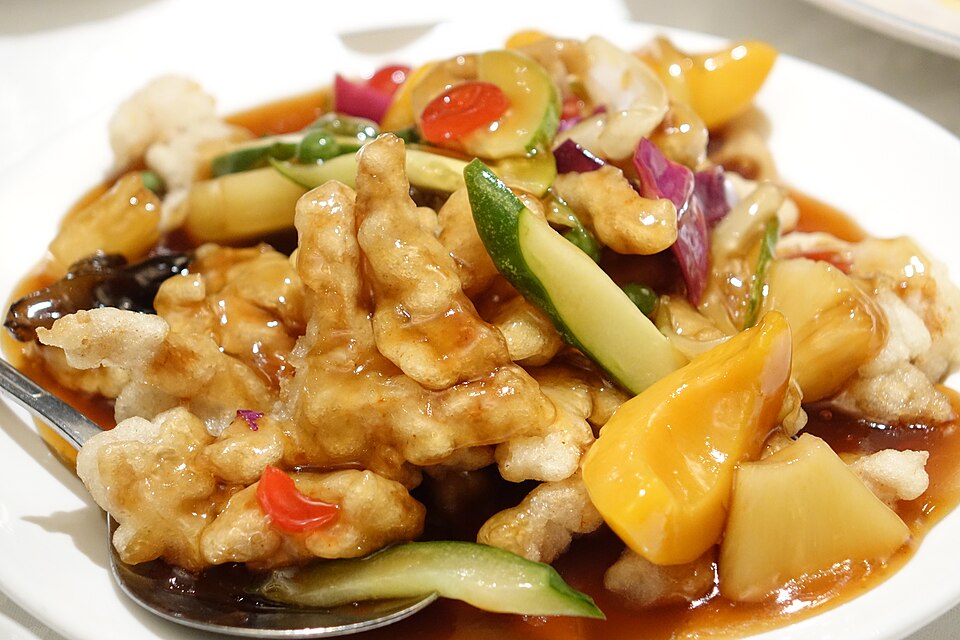
Want something extra with your noodles? Order tangsuyuk (탕수육)! It’s crispy fried pork served with a sweet-and-sour sauce, usually enjoyed as a sharing dish.
Jjajangmyeon and tangsuyuk together? Now we’re talking.
4. Gonggitbap — A Bowl of Steamed Rice
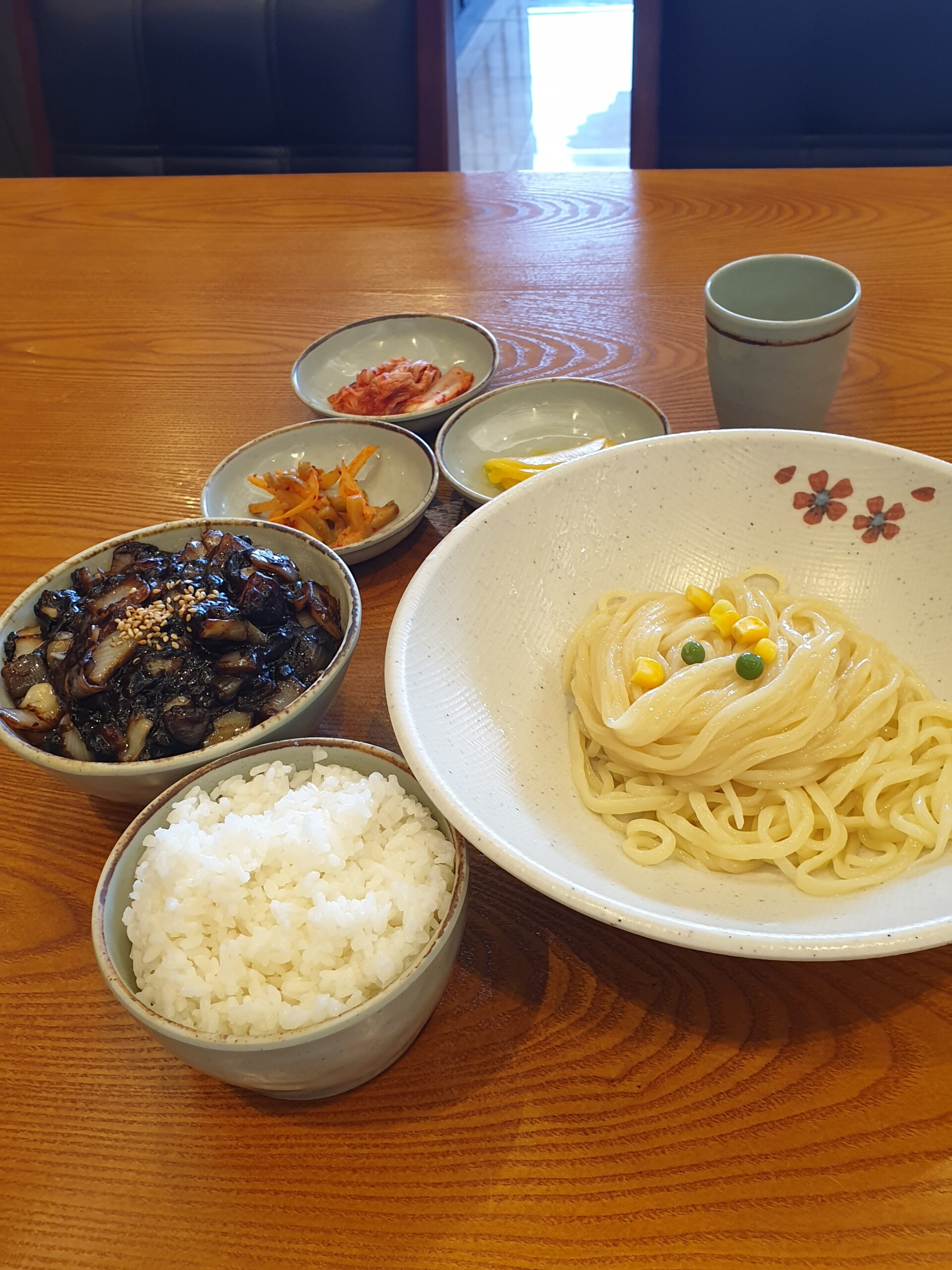
Finished your noodles but still have some jjajang sauce left? Order gonggitbap (공깃밥), a separate bowl of steamed rice, and mix it right in.
Suddenly, your leftover sauce turns into something like jjajangbap (짜장밥)—rice with jjajang sauce. Another delicious round!
And no, gonggi here doesn’t mean “air.” It’s the Korean word for a rice bowl in this context.
Wait, What’s Ganjjajang?
You might spot another name on a Korean menu: ganjjajang (간짜장). Is that just another word for jjajangmyeon?
Not quite. Ganjjajang is typically stir-fried with onions and chunjang, using little or no added water or stock. The sauce is often thicker, with more bite from the onions, and many restaurants serve it separately from the noodles.
Pour that sauce over the noodles, give everything a good mix, and dig in. Even if you’ve tried regular jjajangmyeon, ganjjajang is worth a go!
One more name to read
간짜장
Ganjjajang
Thicker stir-fried jjajang sauce with noodles
간
gan · ㄱ + ㅏ + ㄴ
짜
jja · ㅉ + ㅏ
장
jang · ㅈ + ㅏ + ㅇ
간짜장면 (ganjjajangmyeon) — another menu name for ganjjajang noodles
What to expect: a richer sauce, often served in a separate bowl
Ready to Order in Korean?
You’ve read the menu. Now let’s order! You can say han geureut (“one bowl”) or simply hana (“one”). Both work when ordering noodles.
짜장면 한 그릇 주세요.
Jjajangmyeon han geureut juseyo.
One bowl of jjajangmyeon, please.
간짜장 하나 주세요.
Ganjjajang hana juseyo.
One ganjjajang, please.
짜장면 하나랑 탕수육 소짜 하나 주세요.
Jjajangmyeon hanarang tangsuyuk sojja hana juseyo.
One jjajangmyeon and one small tangsuyuk, please.
Menu tip: Tangsuyuk often comes in different sizes. You might see 소 (so) — Small, 중 (jung) — Medium, and 대 (dae) — Large on the menu. Portions vary by restaurant.
One Last Tip: Eat Your First Bowl at the Restaurant
When your jjajangmyeon arrives, mix the noodles and sauce really well before taking that first bite. Remember the mixing we talked about with bibimbap? Same idea!
And one personal recommendation: if this is your first jjajangmyeon, eat it at the restaurant rather than getting delivery. Noodles can soften while they’re on the way, and I want you to try them freshly served.
So, Sikgu—if you spot those mysterious black noodles in Korea, now you know exactly what to do. Enjoy your jjajangmyeon!