Hey, Sikgu!
Wondering what “Sikgu” means? Find out here →
Today, I’m making a bold claim: donkkaseu is the ultimate comfort food for Korean guys. Well, at least for this Korean guy!
That’s right. Donkkaseu!
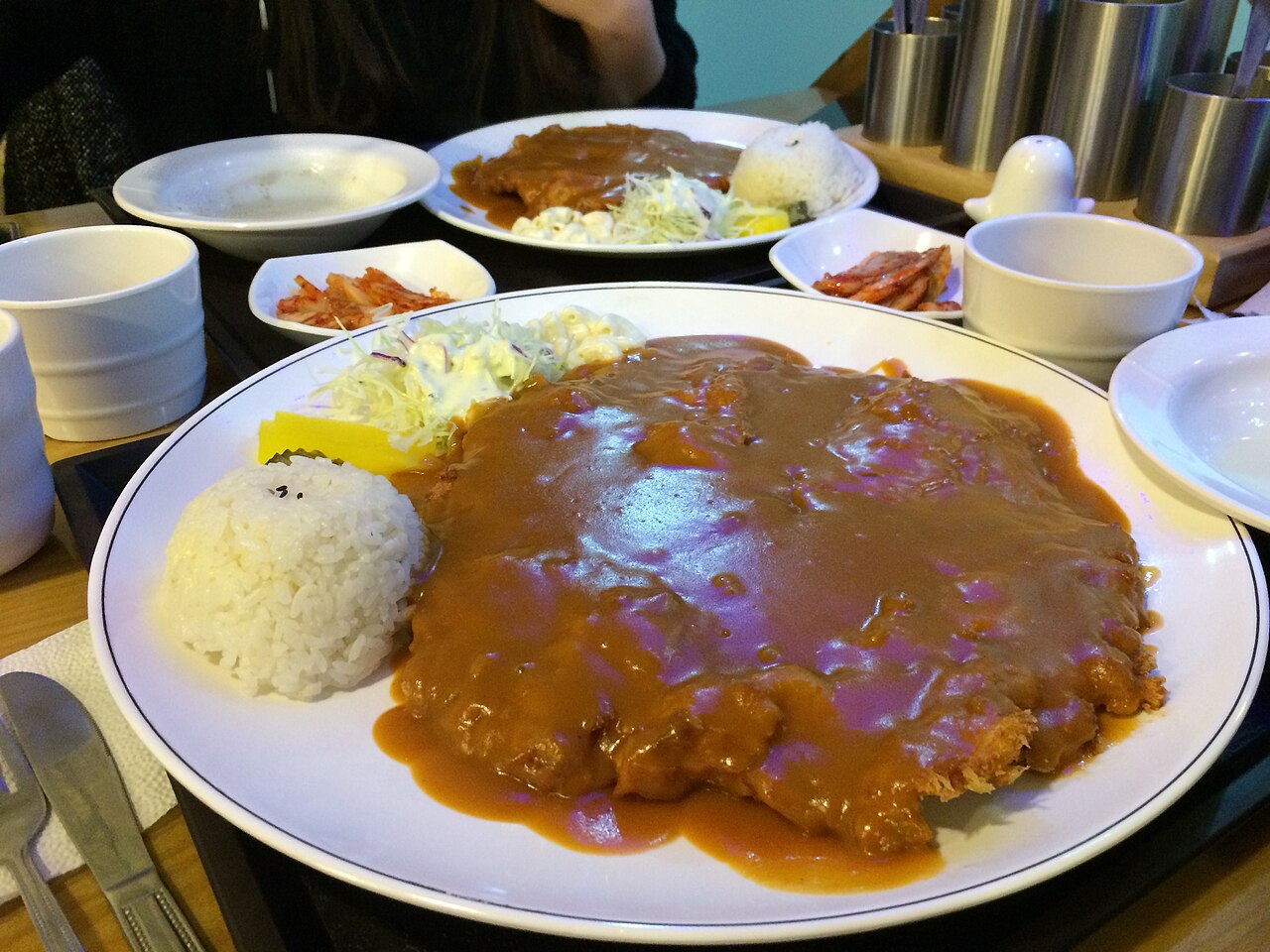
It’s pork coated in breadcrumbs and fried until crispy. The old-school Korean version is usually thin and huge, with brown sauce generously poured all over it.
But wait a second!
Don-kka-seu???
Don (money) + gas? Is this some kind of money-powered meal?
Nope!
The don here comes from the Chinese character 豚, meaning “pig” — not the everyday Korean word for money, which happens to sound the same. And kkaseu comes from the Japanese katsu (cutlet). The dish made its way to Korea and became a familiar favorite under the name donkkaseu.
So why is it my comfort food?
Maybe because I grew up eating it. Honestly, I’m not sure.
I just love donkkaseu.
1. Donkkaseu Is NOT Tonkatsu!
You might be thinking of Japanese tonkatsu. And yes, the two are related.
But the old-school Korean-style donkkaseu I’m talking about is a little different.
The biggest giveaway? The sauce.
In a classic Korean-style Western diner — called a gyeongyangsik restaurant — the pork cutlet is often pounded thin, fried wide, and covered in a sweet, tangy brown sauce.
Many restaurants make their own take on a demi-glace-style sauce. That sauce is a big part of the experience.
And there’s one more thing!
You might get soup!
Some old-school diners bring it out before your cutlet; others serve it alongside the meal. And some don’t serve soup at all.
Picture a big plate with donkkaseu, rice, shredded cabbage, yellow pickled radish, and maybe even macaroni salad.
Now that’s my kind of Korean donkkaseu.
2. Let’s Read “Donkkaseu” in Hangul!
Now that you know what it is, let’s see if you can recognize it on a Korean menu.
Three blocks, three sounds: don + kka + seu. Spot these characters on a menu and you’ve already read your first donkkaseu!
New to Hangul? Start with our beginner’s Korean menu reading guide →
3. How I Eat Donkkaseu — Korean Style!
- Got soup? Enjoy it first, or have it alongside your donkkaseu. Either way works.
- Cut it up! Slice the cutlet into bite-size pieces. I like to cut the whole thing before I start eating.
- Add a little rice. Try a bite of donkkaseu with rice. Simple and delicious.
- Want more crunch? When you order, ask if the sauce can come on the side. If the restaurant can do that, you can dip each bite yourself.
- Don’t forget the danmuji (단무지)! That’s the crunchy yellow pickled radish served on the side. Try a bite of cutlet with some danmuji. And a bite of rice in between!
Okay, here’s my personal donkkaseu trick.
When there’s sauce left on the plate, I mix in some shredded cabbage, chopped pickled radish, rice, and little pieces of donkkaseu.
Then I scoop it all up with a spoon — one big bite!
It’s my own very Korean-style way of finishing the meal.
Sounds a little strange?
Give it a try if you’re feeling adventurous. Haha!
5. Your Turn — Order in Korean!
Ready to sound like you know your way around a Korean restaurant? Try one of these.
Koreans sometimes shorten an order when the dish is obvious. But on your first visit, saying the full name — 치즈 돈까스 (chijeu donkkaseu, cheese pork cutlet) — is the safer bet.
And there you have it — the Korean comfort food I never get tired of!
Donkkaseu came from a dish with Japanese roots, but the old-school Korean diner version developed a character of its own.
If you visit Korea, give gyeongyangsik donkkaseu a try. And maybe even test my slightly unusual one-spoonful trick!
Enjoy your donkkaseu!