Craving fried chicken on your trip to Korea?
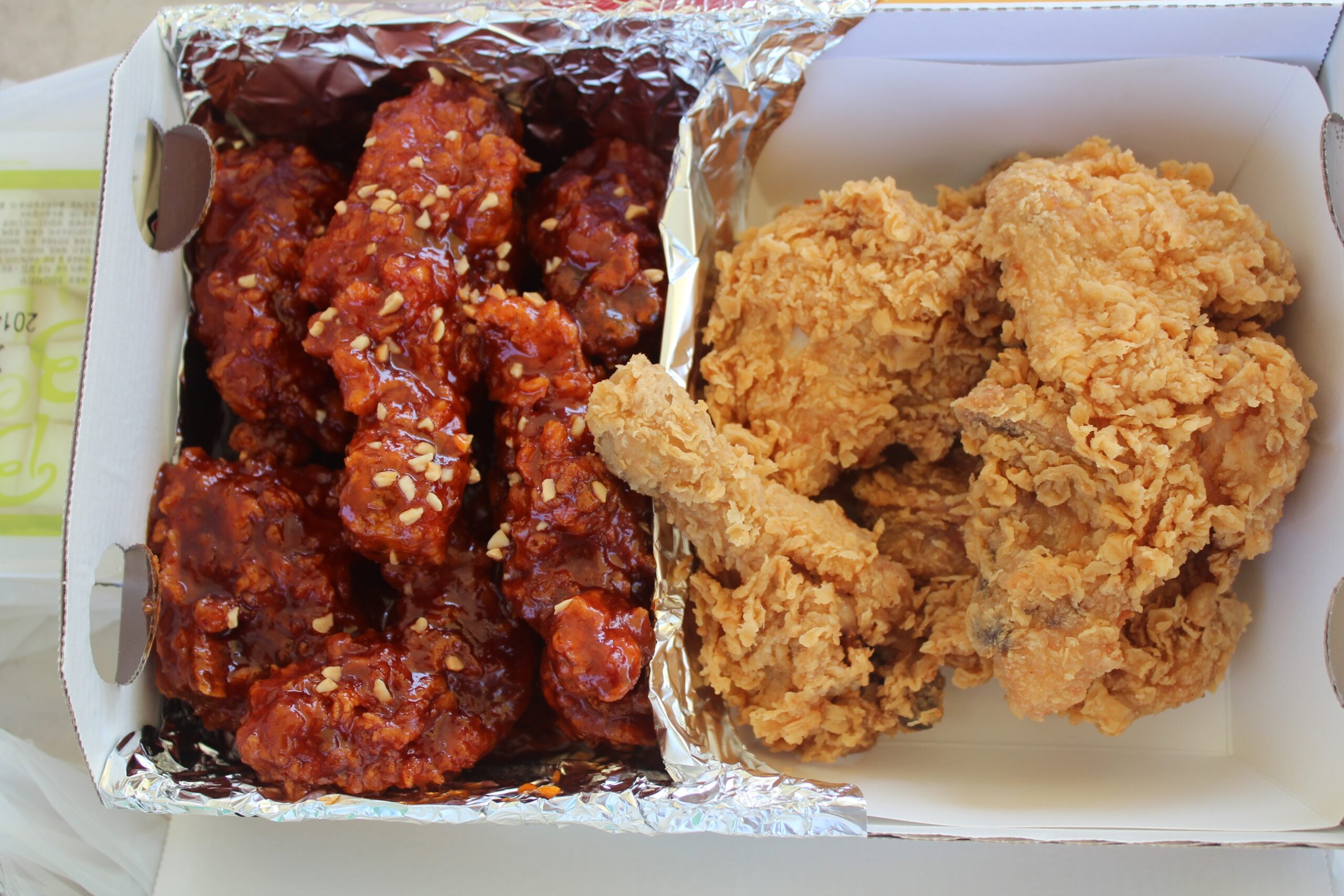
There are dozens of flavors at Korean chicken shops, but start with two classics: huraideu (fried chicken) and yangnyeom (sweet and spicy glazed chicken).
Love a good crunch? Go with fried. Prefer something sweet and sticky? Try yangnyeom.
Can’t choose? No problem. Korea has banban chicken — half and half!
Chicken in a Yellow Paper Bag: An Old Korean Memory
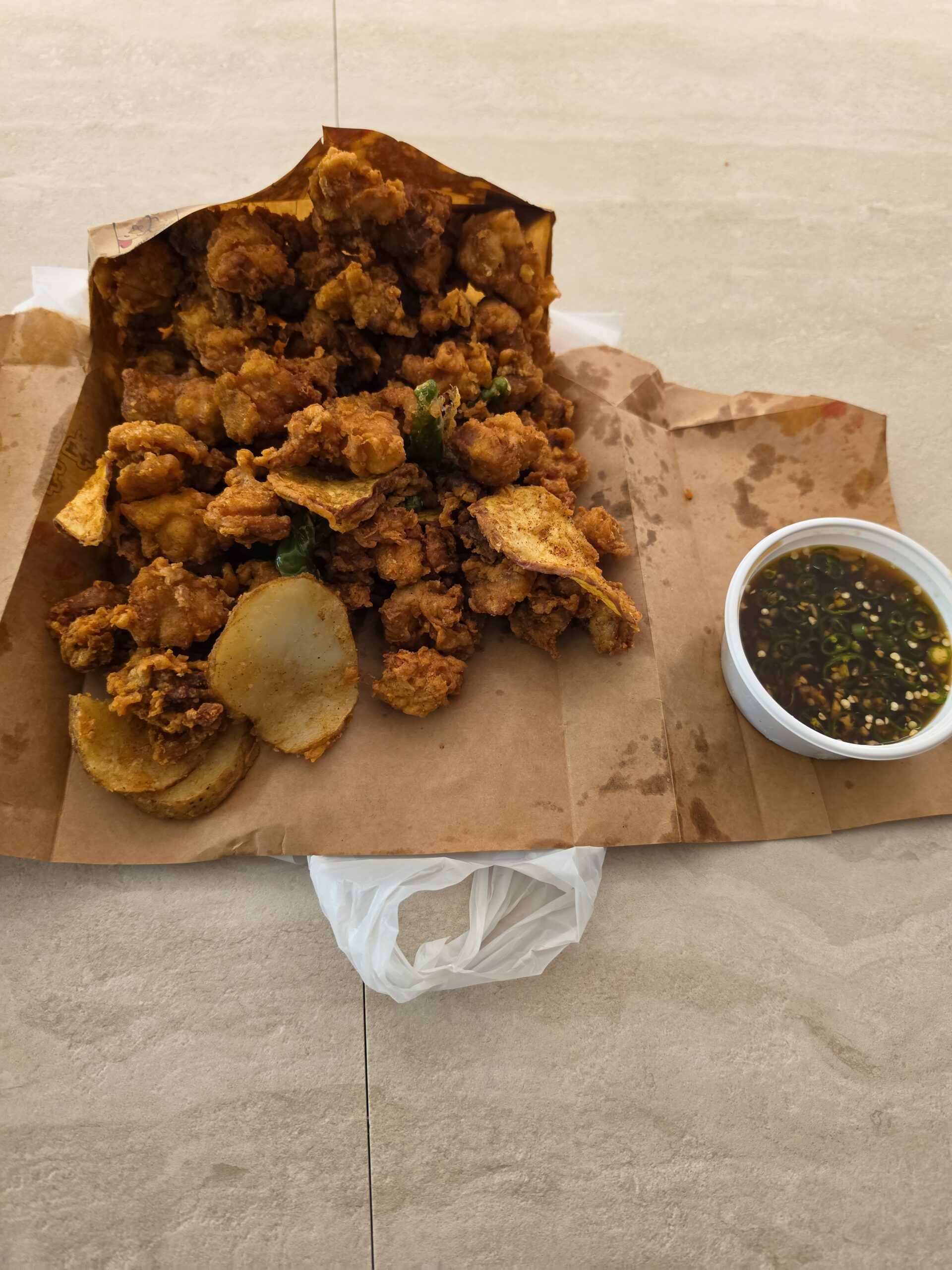
For some Koreans, chicken brings back a childhood memory: Dad coming home on payday with a whole fried chicken in a yellow paper bag.
That delicious smell drifting out of the bag, and the taste of freshly fried chicken — some things are hard to forget.
Then came the 1980s, when yangnyeom chicken changed the scene.
Crispy fried chicken tossed in a sweet, spicy red sauce?
Seriously, who came up with such a delicious idea?
Today, think Friday night with chicken and cold beer, or friends watching soccer or baseball with a box of chicken on the table.
1. Fried Chicken vs. Yangnyeom Chicken
Fried Chicken — Where It All Starts
To me, classic fried chicken is the canvas for Korean chicken.
Chicken is usually seasoned or brined before frying. Each brand has its own recipe: the coating, the crunch, the spices, even the seasoning on the meat.
That’s why I think classic fried chicken is the best way to get a feel for each brand’s style. Even a plain-looking piece can surprise you.
Yangnyeom Chicken — Sweet, Spicy, and Very Korean
When Koreans say yangnyeom chicken, many of us picture that glossy red sauce.
It’s a sweet and spicy glaze, often using gochujang (chili paste) or gochugaru (chili flakes), tossed with fried chicken.
But don’t assume every yangnyeom chicken is super spicy. The heat and sweetness vary from brand to brand.
Now there are soy-garlic, garlic, cheese-seasoned, and countless other flavors. Enough to keep you trying something new for weeks!
The Big Dilemma: What If You Want Both? Banban!
Want fried chicken and yangnyeom?
Don’t worry. Just look for 반반치킨 (banban chikin).
Half fried + half yangnyeom!
It’s usually a full-size order split between two flavors. Some shops even let you mix other flavors, like yangnyeom and soy-garlic. Not every combination is available everywhere, though, so check the menu.
Remember: half-and-half doesn’t mean half the amount of chicken. A full order can be a lot for one person.
Can’t decide? Remember one word: banban!
2. Let’s Read a Korean Chicken Menu!
In English, chicken means the bird or its meat. In Korea, “Let’s get 치킨 (chikin)!” usually means food from a chicken shop, especially fried chicken.
Let’s read 치킨, a Korean word borrowed from English.
In Hangul, consonants and vowels combine into syllable blocks. Here, i sounds roughly like ee in “see.” These are handy reading cues, not exact English sound equivalents.
Now let’s try three words you might see on a real menu:
Try breaking them into smaller chunks: 후-라-이-드, 양-념, and 반-반.
반 (ban) means “half,” so 반반 (banban) means half and half. Spot it on a menu and you’ll know what you’re ordering.
Want to read more Korean food names? Start with our beginner’s Hangul menu guide →
3. Bone-In or Boneless?
You’ve picked a flavor. Now: bone-in or boneless?
Bone-In Chicken — Different Cuts, Different Bites
Bone-in chicken comes with drumsticks, breast, thighs, and wings — different cuts, different textures.
Some people go straight for the juicy drumsticks; others love the wings. Finding your favorite piece is part of the fun.
Boneless Chicken — Easy to Eat
순살치킨 (sunsal chikin) means boneless chicken. Easy to eat and share, with no bones to deal with.
But here’s something worth knowing: brands use different cuts. Some use breast meat, some thigh meat, and others a mix.
If you prefer juicy thigh meat, check which cut the shop uses.
4. Fried Chicken’s Best Friends
First: Chicken-mu — The Pickled Radish
Order chicken in Korea and you’ll often get white cubes of sweet-and-sour pickled radish: 치킨무 (chikin-mu).
When the chicken starts to feel a little rich, take a bite of that tangy, crunchy radish. It freshens up your mouth — and suddenly you’re ready for another piece of chicken.
Seriously, whoever invented chicken-mu deserves an award.
Second: Beer — Hello, Chimaek!
In Korea, chicken and beer are such a popular pair that we have a word for them: 치맥 (chimaek) — from 치킨 (chikin, chicken) and 맥주 (maekju, beer).
Chicken with beer is practically an unwritten rule here. Personally, I think a cold, fizzy lager is a perfect match.
After a long day, one bite of crispy chicken and one sip of cold beer… ah, life is good.
Third: Soda Works Too!
Not drinking beer? Cola or Korean cider (a clear, lemon-lime soda) works beautifully too.
That fizzy sip cuts through the richness and makes the next bite taste just as good.
5. Now, Let’s Order in Korean!
Ready to order? Here are a few things you can say at a Korean chicken shop.
ORDER IN KOREAN · READ IT · SAY IT · ENJOY IT
One more tip: at a chicken shop, you don’t always need to say the word “chicken.” Just saying “양념 한 마리요!” (yang-nyeom han mariyo — one order of yangnyeom, please) is perfectly natural.
There’s something special about reading a menu and ordering your own chicken in Korean. It might feel a little awkward at first, but give it a try. Now enjoy it with a cold beer or soda.